What Are the Real Cost of Issuing EMV Chip Cards?

At Rambus, we create cutting-edge semiconductor and IP products, providing industry-leading chips and silicon IP to make data faster and safer.
Eftpos today announced a new partnership with Bell ID to build a flexible, domestic mobile payments capability, including secure tokenization services.
Bell ID’s Token Service Provider platform will integrate with the eftpos Hub: a reliable, secure and scalable centralized switch that provides the Australian industry with a cost effective, real time payments processing platform with the capability to implement new products and services.
Tokenization provides additional security by giving eftpos the ability to replace card numbers with unique reference numbers so that the information cannot be compromised.
eftpos Managing Director, Bruce Mansfield, said the new capability would enable eftpos payments to be made securely across various digital platforms and applications being developed by Australian industry participants.
“It’s great to be partnering with Bell ID on this important project because they have an excellent international reputation in the dynamic area of mobile payments and tokenization,” Mr Mansfield said. “This new capability will enhance competition in the Australian mobile payments market and help eftpos meet the growing needs of this rapidly changing area of payments technology. It will also provide the Australian industry with the choice of a domestic, secure tokenization service.”
Executive Chairman at Bell ID, Pat Curran, said: “Bell ID is excited to partner with eftpos and to contribute to the mobile payments advancement in Australia. With our Token Service Provider platform, eftpos has the freedom to integrate any of its Members to offer secure tokenization services and provision tokens to a wide array of mobile form factors and channels. This enables eftpos to adapt to the market’s constantly changing dynamics.”
Mr Mansfield added that the new mobile payments capability would complement eftpos’ centralized payments processing hub, the “eftpos Hub”, that is scheduled to be upgraded for online payments this month and tokenization in early 2016.
Since being launched in September 2014, the Hub is already processing almost 2 million eftpos CHQ and SAV transactions a day.

Mobile payments specialist, Bell ID, today announces that its host card emulation (HCE) mobile solution has been certified by three of the largest global payments schemes. Bell ID is the first vendor to receive approval from three schemes for its HCE platform, offering its customers the broadest range of options available on the market today.
The HCE specialist’s software manages the lifecycle of virtual cards, keys, certificates and NFC payment credentials in a secure, remote environment rather than in the mobile device, providing banks with the independence and control to manage customer payment assets.
“Bell ID was among the first to market with an HCE solution with Secure Element in the Cloud back in 2013, so we’re delighted to report a repeat performance in achieving compliance with the scheme’s specifications,” comments Pat Curran, Executive Chairman at Bell ID. “Despite the market’s rapid development, cloud-based mobile payments remain in their infancy so, understandably, issuers are seeking quality and interoperability reassurances both from third party vendors and the payment networks. The validation of our cloud-based payment solution in this way provides peace of mind that our application meets the major schemes’ worldwide functional and interoperability requirements.”
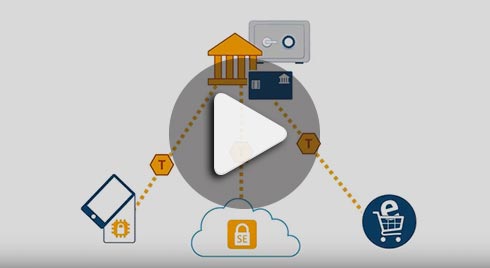
Bell ID® Secure Element in the Cloud provides the functionality to complete transactions through a remote secure element using a standard EMV contactless terminal and acceptance infrastructure. When consumers tap their phones to make transactions, card credentials are safely accessed and used securely to perform the transactions with the point-of-sale terminals. The data is presented in the same format as in a standard physical contactless card-present transaction.
In order to achieve these certifications, Bell ID was subjected to a number of stringent security and functionality reviews. The platform is aligned with global requirements supporting, for example, multiple application identifiers (AIDs) in the same funding account, in line with the specific requirements of the US market.
To find out more about mobile cloud payments using HCE, visit the Bell ID website. Bell ID’s full suite of mobile solutions supports cloud-based solutions using HCE, EMVCo tokenization, trusted services management (TSM) for SIM-based projects and for embedded secure element solutions.