
On 3 January 2018, Google’s Project Zero reported that a technique used to improve the performance of modern microprocessors could be abused to efficiently leak information, leading to what it described as “arbitrary virtual memory read vulnerabilities across local security boundaries”.
Search Results for: security
NFC, QR Codes, In-app and beyond…
‘Mobile payments’ is a broad term. As the ecosystem has developed, various new technologies have emerged to change the way we act and transact in-store.
Integrating new with the old
Some mobile payment technologies are focused on seamlessly connecting the mobile device to the existing payments infrastructure.

NFC leading the way
After an uncertain start, NFC has emerged as a leading proximity payment technology. The advent of host card emulation (HCE) significantly reduced the complexity for banks and retailers deploying NFC payment solutions, enabling users to make standardized EMV® contactless transactions with their mobile device. The position of NFC within the ecosystem was then cemented by the launch of the various OEM Pay platforms, which all use the technology.
As the OEM Pay platforms and mobile wallets solutions mature, NFC mobile payments are here for the long-run, supported by the wider proliferation of NFC-enabled smartphones and an expanding EMV contactless infrastructure. A key future growth trend is the significant increase in the deployment and adoption of wearable payment solutions.
Return of the QR Code
The most impressive growth across mobile proximity payments, however, has been QR Codes. To date, this has been largely driven by China. QR Code-based payment platforms AliPay and WeChat Pay have emerged as cultural phenomena, accounting for close to $5.5 trillion in transactions in 2016 and essentially rendering cash obsolete in urbanized areas.
The success of QR Codes is not just limited to Asia, though. Indeed, the largest retail mobile payment platforms worldwide are united in their use of optical scanning technology such as QR Codes and barcodes, including Walmart and Starbucks.
Retailers across the globe are therefore moving to leverage the simplicity and flexibility afforded by QR Codes at the point-of-sale. And with EMVCo introducing dedicated QR Code specifications in 2017 to promote global interoperability and enhance security, deployments are set to accelerate.
Creating new buying experiences
Importantly, the power of mobile payments lies not only in simplifying existing payment processes, but in enabling new, enhanced, seamless buying experiences.
Simple in-aisle payments
Nobody likes waiting in line. For retailers, removing friction at the checkout is central to enhancing the overall customer experience. Mobile wallets incorporating scan-and-go technology enable consumers to easily scan their items as they shop, and then checkout in-aisle with a simple in-app purchase.
This removes the need for a traditional, static point-of-sale, reducing checkout lines and freeing up valuable real estate.
Enabling invisible payments with Bluetooth Low Energy (BLE)
A step beyond in-aisle payments are ‘invisible payments’, which require no conscious interaction between the consumer and the retailer.
The technology integrations required to enable truly invisible payments are highly complex, and there is significant innovation in this space as various schemes and pilots explore different approaches. BLE beacons are essential for enabling in-store invisible payments, as they allow retailers to monitor a consumer’s activity in-store by communicating with their connected devices. As retailers continue to drive payments innovation, BLE is likely to have a significant role to play.
Tokenization – unifying mobile payments security
Regardless of the payment method deployed, tokenization technology is an essential element to enable secure mobile transactions. Payment tokenization replaces a customer’s primary account number (PAN) with a unique payment token that is restricted in its usage, for example, to a specific device, merchant, transaction type or channel. This means tokenization can help to secure in-store transactions made via mobile wallets across various differing payment technologies, whether it be NFC, QR Codes or BLE. It also reduces the risk and impact of card-on-file fraud using stored credentials, enhancing the security of in-app and in-aisle payments.
As mobile payment technologies emerge and evolve, the way we pay in-store is set for unprecedented change. The promotion of safe, secure experiences is key to establishing consumer confidence and driving the adoption of new payment methods. The role of tokenization, therefore, is poised for significant expansion across the mobile payments ecosystem.

Rambus at CES 2018: Running with Cybertrust’s Hamon
Rambus and Cybertrust Corporation, a security services company based in Tokyo, will introduce a new user experience through the Rambus “CryptoManager™ IoT Security Service” and Cybertrust’s “Secure IoT Platform®” (SIOTP) for a wearable IoT total service “hamon®” provided by Mitsufuji Corporation. The hamon will be exhibited at Mitsufuji’s booth (Halls A-D, Booth 45637) during CES (Consumer Electronics Show) 2018, the world’s largest consumer electronics fair held in Las Vegas, USA from January 9th to 12th, 2018.
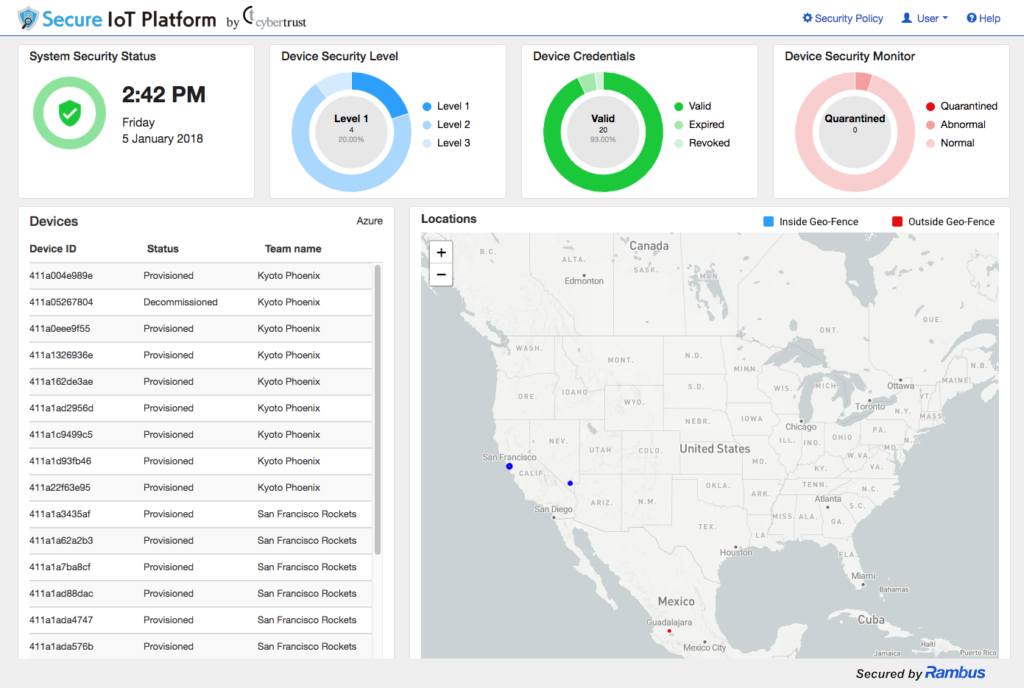
The “hamon®” consists of a wearable device that incorporates AGposs®, a silver fiber based yarn, that enables biometric information monitoring, such as ECG, heartrate, and daily activity. Additionally, the hamon service enables visualization of real-time data during an athlete’s training that includes analysis of training content and vital data in real-time, to help professional athletes maximize their performance.
hamon’s Security Features
Although this service can be utilized flexibly in all types of environments, a mechanism for strengthening security, such as software update and terminal authentication, is required as a vulnerability countermeasure to prevent threats from external networks. Thanks to the Cybertrust platform and Rambus service, the hamon can deliver easy visualization and automation of device security management and monitoring for IT administrators.
Speaking about IoT security, Mitsufuji President Mitera said that “Security is important than anything else when ensuring the required confidentiality of biological information. We hope to adopt Cybertrust and Rambus ‘Secure IoT platform’ to build a robust security foundation on which we can safely offer the ‘hamon®’ service.”
Rambus CryptoManager IoT Security Service is a turnkey security service for IoT Service providers and OEMs. Running on the Microsoft Azure IoT cloud service platform or AWS IoT platform, our one-stop-shop solution provides seamless device-to-cloud secure connectivity, device lifecycle management, and advanced device monitoring capabilities to protect service high-availability and help mitigate a variety of attacks including distributed denial of service (DDoS).
The IoT Security Service reduces the risk of devices being hijacked, copied, re-purposed, or even disabled, by a remote attacker by leveraging strong authentication between the device and service.
What to expect at CES
At CES 2018, the product will provide visual data of athletes’ performances to their coach and trainers along with the security monitoring of the training devices by the team IT administrators. Those in professional team sports understand the necessity of quick decisions based on real-time, objective data to maximize their performance.
Coaches can use the device to analyze training content and vital data at real-time for optimization of performance and manage signs of excessive stress to properly control the training contents to prevent injuries. IT administrators can monitor the status of multiple devices in real time from remote locations and, in case of abnormality, respond in real time from remote locations. There is a possibility for the platform to expand beyond sports into factory work and medicine.
Mr. Mitera hopes that, “in the coming years, with the support from the two companies,” Mitsufuji looks forward to providing “more users the opportunity to utilize the IoT devices with confidence on a global scale.”
Put your money where your mouth is: Financial institutions and mobile payments
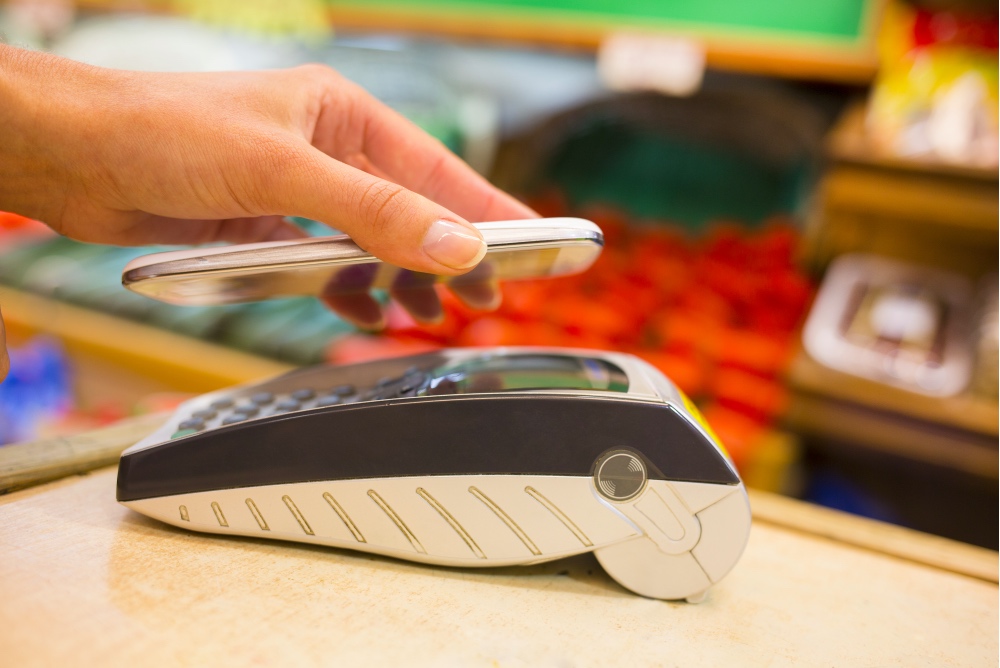
The adoption of digital wallets, according to a Goldman Sachs analyst, has been “underwhelming to date by nearly every objective standard.” While Apple Pay is the dominant digital wallet leader in the US, accounting for 90% of all contactless mobile payments, it is still struggling to gain real traction in the United States. According to the Nilson Report, only a third of US stores accept Apple Pay as a form of payment.
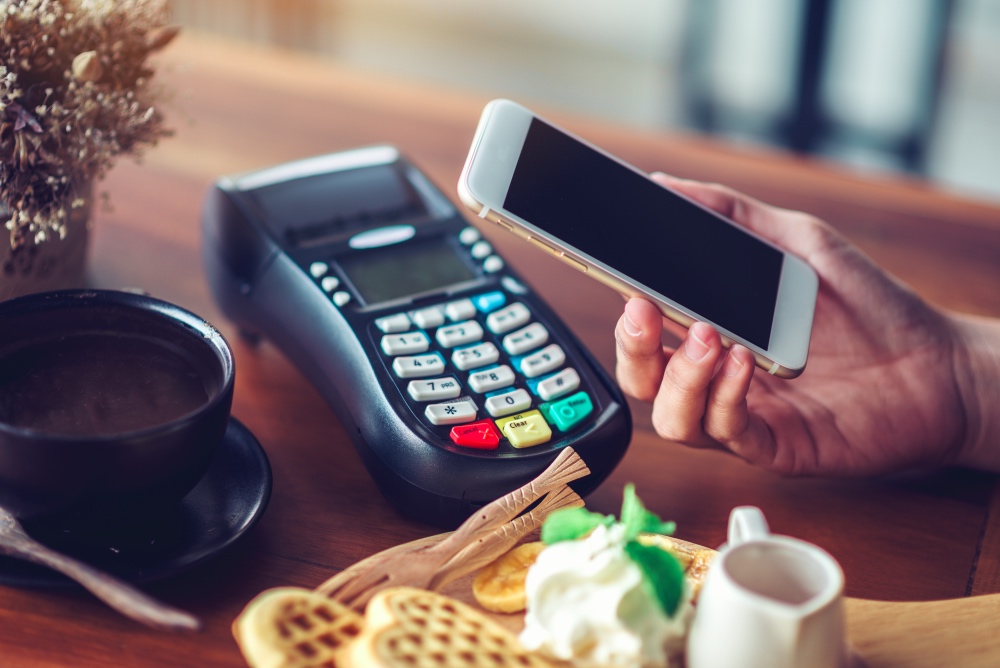
While mobile payments have not caught on at the pace that technology manufacturers would have hoped, they are nevertheless poised to completely upheave the landscape of payments. The US Bank Cash Behavior Survey reports that “47% of consumers preferred the use of digital payment apps to cash.” A Juniper Research report also found that 53% of global transactions at Point of Sale (PoS) terminals will be contactless within five years, up from 15% in 2017.
How Financial Institutions Feel About Alternative Payment Solutions
The Digital Banking Report’s Digital Payments and Mobile Wallets, written to determine the potential of alternative payment methods and strategies being used to expand acceptance and use of digital wallets and Peer to Peer (P2P) payments, found that financial institutions are increasing investments in alternative payment solutions mostly to improve the customer experience and to support new solutions. Financial institutions are focusing particularly on P2P payments, mobile wallets, and debit cards, and believe that the former two are increasing in importance to other payment solutions. They also acknowledge that current payment security is inadequate and are working on security measures, like biometric verification.
A writer for the Financial Brand asked and surveyed financial institutions about the future of payments. The participants unanimously agreed that real-time payments were a great opportunity for the banking industry and that there will be an investment in real-time payments. As for P2P payments, the institutions were not as optimistic, despite the fact that they felt they were more prepared to offer P2P solutions than real-time payments.
Wearables and Open APIs
Still, most financial organizations are not actively investing or developing in the space of open APIs and wearables, which the report found to have potential. When the Financial Brand asked organizations about wearables, they responded across the board that they found that opportunity and readiness to offer is higher for mobile wallets than wearables. The article believed the reason behind the lack of enthusiasm for wearables stemmed from the notion that the use of wearables does not go beyond checking balances.

As for open APIs, organizations believed the opportunities to be quite ample and that APIs would improve innovations and provide compliance challenges. However, the institutions disagreed on whether they were committed to investing in open banking, or that there would be significant revenue streams from APIs. It is important to note that many of those surveyed were from smaller organizations who do not prioritize open APIs because they are more concerned with meeting both payment and digitalization challenges.
Conclusion
The introduction of alternatives to credit cards and cash, while catching on slower than expected, are nevertheless poised to shake up the future of mobile payments. There is an emphasis on convenience, speed, digitalization, and security. It is clear that financial institutions are investing in alternative payment methods and discovering ways to improve customer experience. The critical question is: who will be prepared to be the providers of these alternative payment methods in the future?
Is this the year ‘weaponised’ AI bots do battle?
Technology of Business has garnered opinions from dozens of companies on what they think will be the dominant global tech trends in 2018. Artificial intelligence (AI) dominates the landscape, closely followed, as ever, by cyber-security. But is AI an enemy or an ally?
Protecting Electronic Systems from Side-Channel Attacks
Side-channel attacks conducted against electronic systems are relatively simple and inexpensive to execute. An attacker does not need to know specific implementation details of the cryptographic device to perform these attacks and extract keys. As all physical electronic systems routinely leak information, effective side-channel countermeasures such as Rambus’ DPA Resistant Hardware Cores (DPARC) or DPA Software Library (DPASL) should be implemented at the design stage to ensure protection of sensitive keys and data. After the implementation of hardware or software countermeasures, systems should be carefully evaluated with a Test Vector Leakage Assessment (TVLA) platform such as the Rambus DPA Workstation (DPAWS) to confirm the cessation of sensitive side-channel leakage.


