
Developing semiconductors for safety-critical markets such as automotive, industrial and medical involves a growing list of extra steps that need to be taken pre- and post-manufacturing to ensure product integrity, reliability and security.
Search Results for: security
The challenge of securing smart homes
Understanding smart homes
Although there is little consensus regarding a specific definition, the “Internet of Things” generally refers to the multiple networks of devices (“things”) that communicate with each other via wired and wireless network protocols – without direct human interaction. IoT-enabled devices help facilitate the rapid and efficient transfer of data used to support a wide range of activities and operations. The IoT encompasses a multitude of complementary network of things in various service sectors, such as efficient energy production and distribution, M2M and other industrial and manufacturing controls, smart city water and transport management, smart homes, and health care.
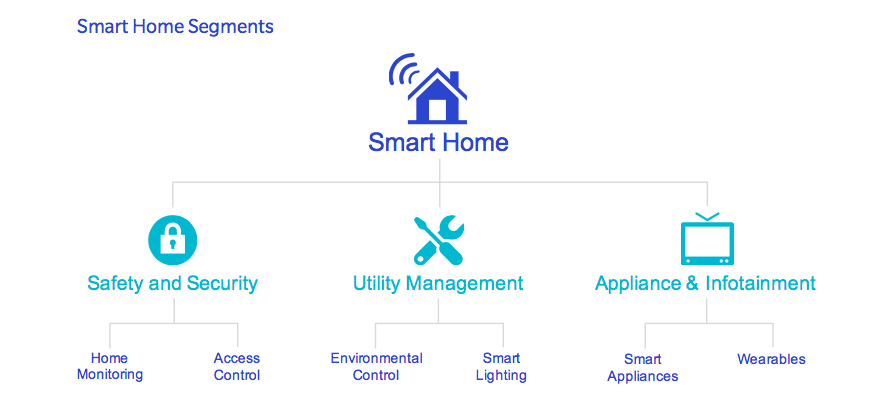
Like the IoT, the term smart home has been widely, yet inconsistently used. However, in an effort to standardize the meaning of the term, Coldwell Banker Real Estate and CNET have defined a smart home as “a [residence] that is equipped with network-connected products (aka ‘smart products’) connected via Wi-Fi, Bluetooth or similar protocols for controlling, automating, and optimizing functions such as temperature, lighting, security, safety or entertainment, either remotely by a phone, tablet, computer or a separate system within the home itself.”
The U.S. smart home market
U.S. smart home penetration was reported at 32.5 % in 2017, and is expected to hit 60.7 % in 2021. Some of the most popular smart home products include connected cameras (40%) and video doorbells (26%). Family safety (63%) and convenience (54%) are currently the top motivators for adopting smart home technology, which allows residents to more precisely manage cooling, heating, electricity, gas, water, and other resources. Pet owners also benefit from smart home technology, as cameras can be used to monitor dogs and cats, while feeding tools are automated to ensure precise portion control. As an example, the success of Amazon’s Echo smart speaker and Nest’s intelligent products such as thermostats and smoke detectors illustrate the growing popularity of smart home devices that are designed to anticipate consumer needs.
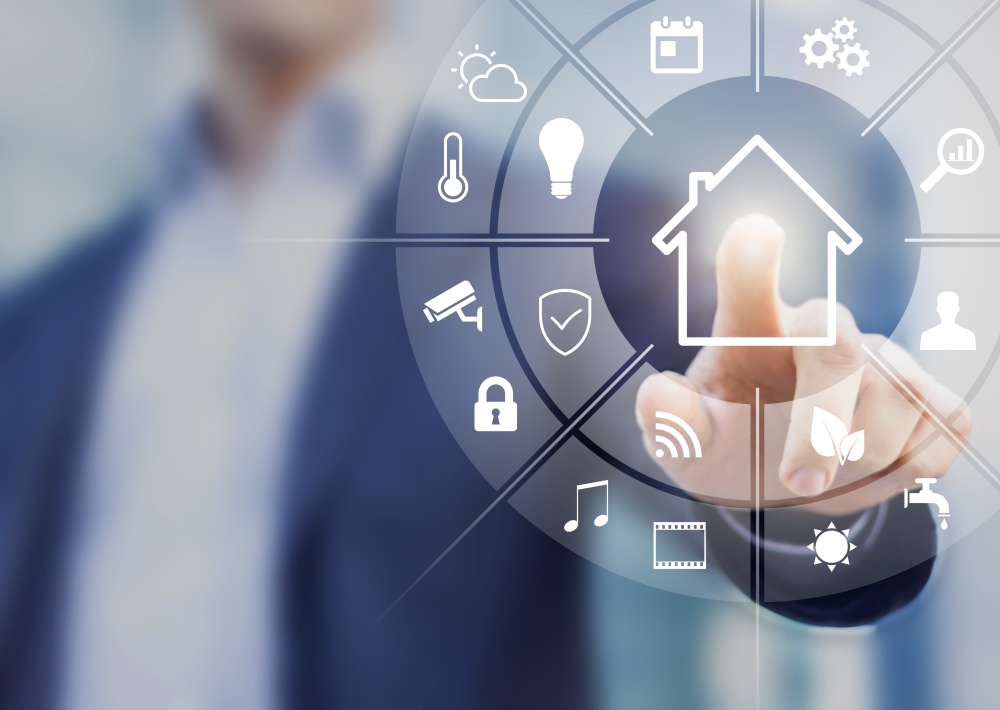
Smart home security challenges
An estimated 80% of IoT devices are vulnerable to a wide range of attacks. Clearly, connecting traditionally ‘stand-alone’ smart devices such as lights, appliances and locks introduces numerous cyber security risks. For example, a connected home door lock is designed to collect and transfer data to the cloud about the entry and exit habits of family members. This can be exploited if the smart door lock device is compromised by cyber criminals.
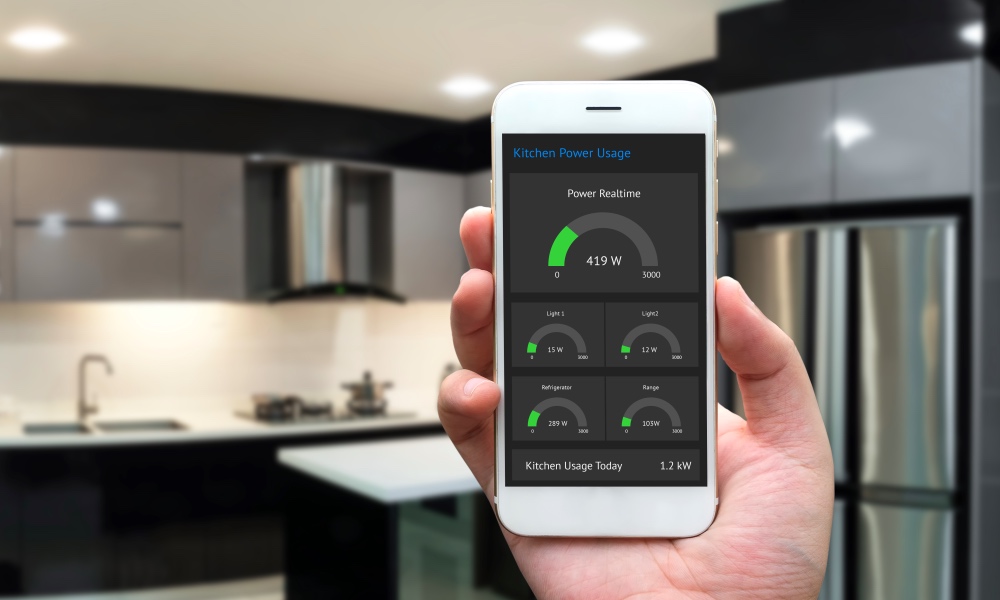
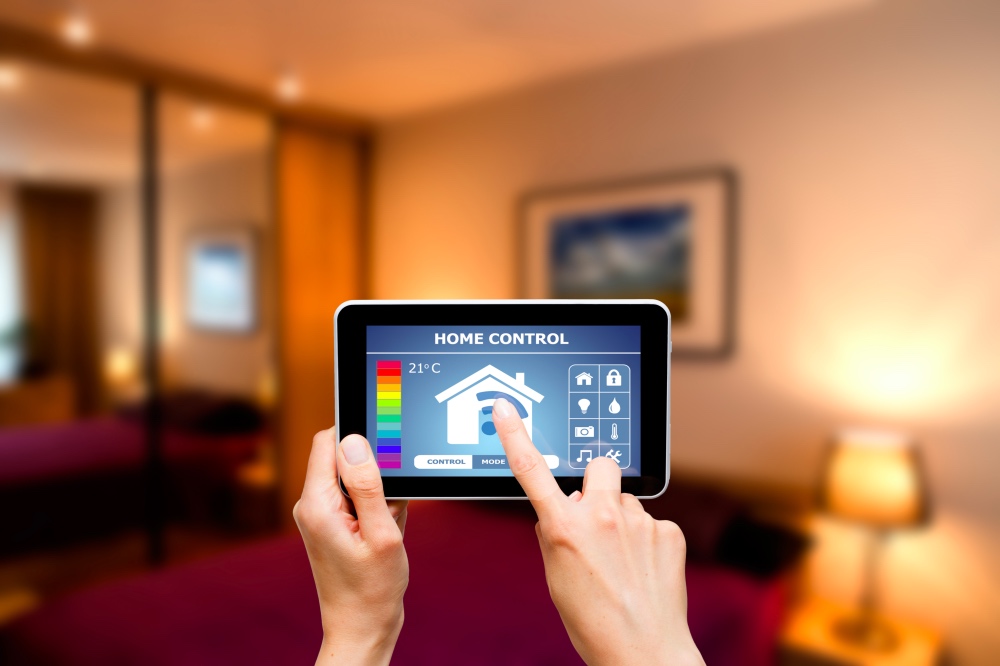
Similarly, a smart thermostat that collects usage data for real-time energy optimization must be designed to protect information from unauthorized access that could indicate a home is empty – making it an ideal target for burglars. Even connected baby monitors are vulnerable to digital intruders, as a number of horrified parents belatedly discovered when hackers spoke to their young children via compromised devices.
There is clearly no shortage of threats targeting IoT devices. Indeed, vulnerable devices can be hijacked and even physically disabled, while unencrypted or unverified data transmissions can be intercepted, leaked or spoofed. A leak or deliberate falsification of sensitive customer data will inevitably damage a brand and decrease consumer confidence in smart home devices. Despite the real-world risks, service providers and OEMs are understandably concerned that implementation of a comprehensive IoT security solution could potentially incur additional costs and delay time to market. As such, the most effective IoT security solution is one that does not negatively impact profitability or time to market. Put simply, a practical, simple and secure solution that can be easily and widely adopted by service providers is far more effective than a ‘super solution’ with only limited adoption.
Rambus IoT Device Management
The Rambus IoT Device Management is a turnkey security service for smart home service providers and OEMs. Our one-stop shop solution provides seamless device-to-cloud secure connectivity, protects service high-availability and helps mitigate a variety of attacks, including distributed denial of service (DDoS). Rambus CryptoManager IoT Device Management uses pre-provisioned unique device keys to automatically identify and authenticate a device. The device is then securely provisioned by IoT Device Management over the air, creating a secure communication channel between the device and the service. Our one-stop-shop solution also offers device lifecycle management and advanced device monitoring capabilities.
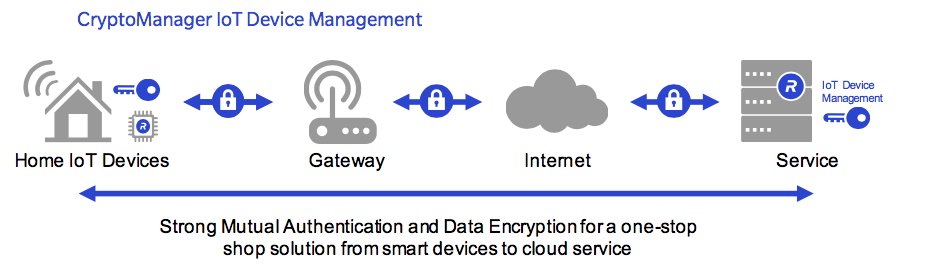
The CryptoManager IoT Device Management solution comprises multiple software modules that are pre-integrated with the device and the selected cloud Platform as a Service (PaaS) via their relevant SDKs. When a device is powered up and connected to the internet, it automatically connects to the IoT Device Management service, seamlessly authenticates and provisions relevant security credentials.
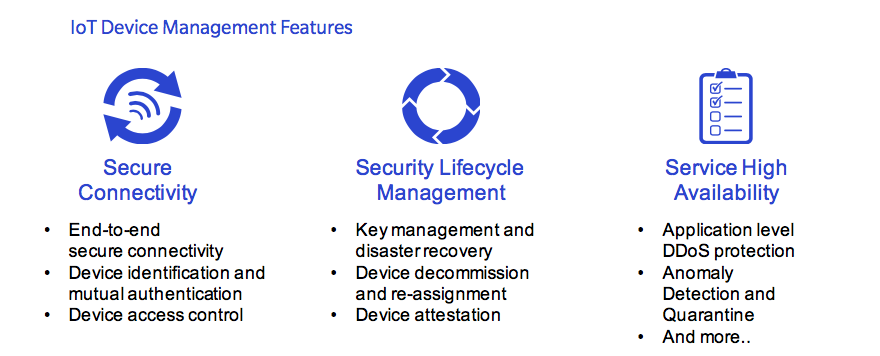
In conclusion, the widespread use of connected smart home devices has created an attractive target for cyber criminals and other unscrupulous operators. Smart home security should therefore be viewed as a primary design goal, rather than a tertiary afterthought. To be sure, consumers increasingly expect their devices to be protected out of the box, with seamless over-the air-updates (OTA) implemented securely. However, OEMs need to be assured that securing smart home devices is not an insurmountable goal that negatively impacts profitability or time to market. As such, smart home devices should be protected by a turnkey security solution that can be easily implemented, maintained and upgraded to meet the evolving challenges of a dynamic threat landscape.
Interested in learning more about securing smart homes? You can download our white paper below on the subject.
The challenge of securing smart cities
Defining smart cities
The U.S. Department of Homeland Security (DHS) defines smart cities as urban centers that integrate cyber-physical technologies and infrastructure to create environmental and economic efficiency while improving the overall quality of life. To accomplish this, smart cities gather and analyze data from IoT devices and sensors embedded in roadways, power grids, buildings and other infrastructure.
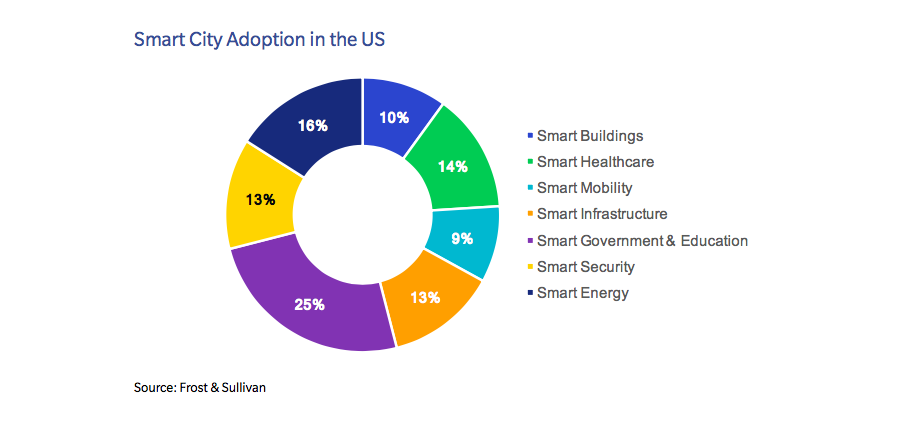
Smart city attack vectors
The interconnectedness of devices between cyber systems and the physical world creates a wide attack surface for malicious actors. Attackers could potentially target IoT devices comprising smart city infrastructure for a number of reasons, such as boasting rights, political grievances, financial gain (ransomware) and even terror. Prime targets include smart grids and meters, community energy management systems (CEMS), building energy management systems (BEMS), smart transportation, traffic lights, air quality monitoring systems, cellular networks, public Wi- Fi connections, data repositories and water-related infrastructure.
Targeted infrastructure
Perhaps not surprisingly, cyber criminals have already begun targeting smart city infrastructure around the globe. In 2016, San Francisco’s (MUNI) public transportation ticket machines were locked down after ransomware attackers demanded $73,000 – with passengers riding free until the issue was resolved.

Additional attacks include a hacked siren system in Dallas which jarred residents awake and flooded 911 with thousands of calls; a compromised electric transmission station which blacked out a portion of the Ukrainian capital (Kiev) equivalent to a fifth of its total power capacity; a DDoS offensive that halted heating distribution in at least two properties in the Finnish city of Lappeenranta during winter; and a digitally hijacked tram system in Poland that derailed four vehicles and injured 12 people.
Clearly, smart city devices, as well as the data they generate, must be protected against a wide range of cyber threats. Indeed, vulnerable devices can be hijacked and even physically disabled, while unencrypted or unverified data transmissions can be intercepted, leaked or spoofed.
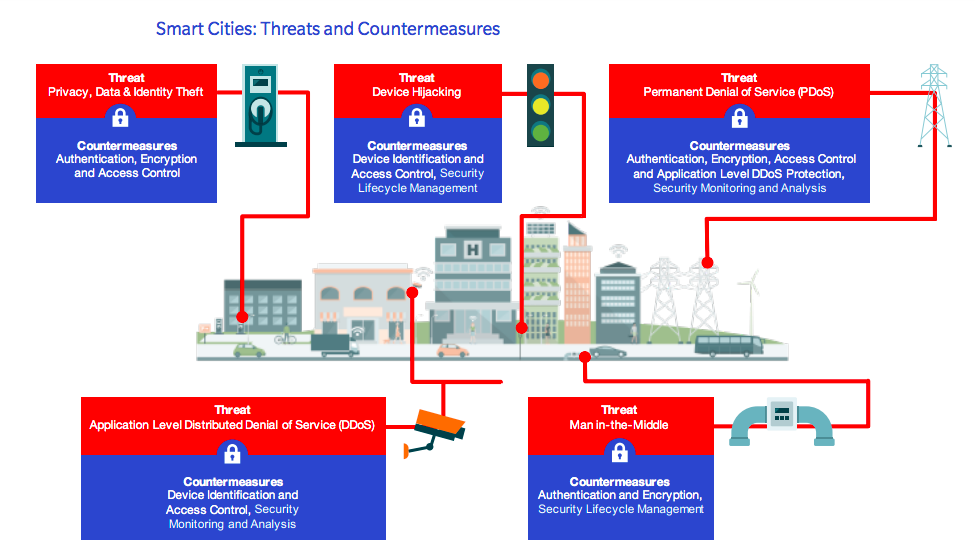
Despite the real-world risks, service providers and OEMs are understandably concerned that implementation of a comprehensive IoT security solution for smart city infrastructure could potentially incur additional costs and delay time to market. As such, the most effective security solution is one that does not negatively impact profitability or time to market. Put simply, a practical, simple and secure solution that can be easily and widely adopted by service providers is far more effective than a ‘super solution’ with only limited adoption.
Rambus CryptoManager IoT Device Management
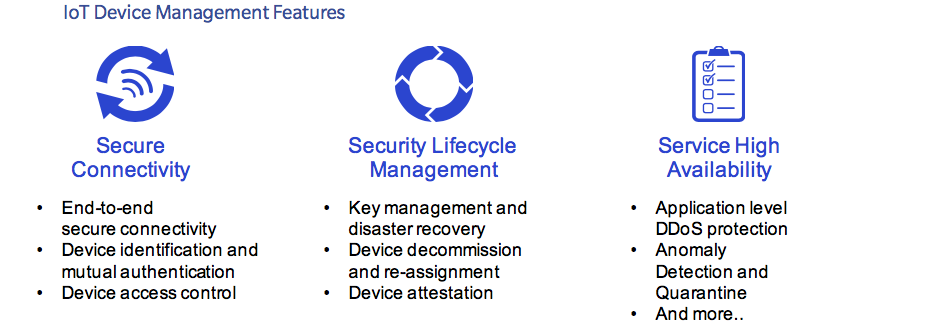
The Rambus CryptoManager IoT Device Management is a turnkey device-to-cloud solution that uses pre-provisioned unique device keys to automatically identify and authenticate a device. The device is then securely provisioned by IoT Device Management over the air, creating a secure communication channel between the device and the service. Features included in our one-stop-shop solution include seamless device-to-cloud secure connectivity, device lifecycle management, and advanced device monitoring capabilities to protect service high-availability and help mitigate a variety of attacks including distributed denial of service (DDoS).
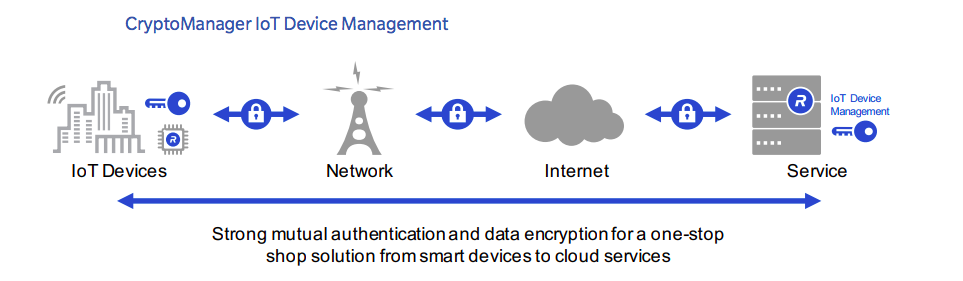
The CryptoManager IoT Device Management solution comprises multiple software modules that can be pre-integrated in smart city devices and the selected cloud Platform as a Service (PaaS). When a smart city device is powered up and connected to the internet, it automatically connects to the IoT Device Management service, seamlessly authenticates and provisions relevant security credentials.
Interested in learning more securing smart cities? You can download our white paper below.
The driving force behind mobile wallet adoption
We believe that the driving force behind mobile adoption is consumer experience. The Rambus Unified Payment Platform enables merchants to integrate multiple forms of interactions with consumers to create a robust and powerful user experience.
What is the Rambus Unified Payment Platform?
The Rambus Unified Payment Platform is a comprehensive solution for retailers, merchant acquirers and banks that delivers enhanced security, reduced cost and increased revenue. The platform comprises four primary components: A Digital Value Manager, a Retail Wallet Engine, a white-label retail app and a set of optional modules to support credit/debit cards, gift cards, loyalty points and coupons.
The Rambus Unified Payment Platform also offers customers access to a set of optional and fully customizable modules. The modules enable retailers and merchant acquirers to easily and securely connect with third-party services, convert various types of digital value to a unified currency, as well as manage gift card, loyalty and coupon services in-house. Specific modules include:
- Credit/Debit Card: Allows retailers to add a credit or debit card, while connecting the scheme to a token gateway for secure access to digitize physical cards into a single wallet.
- Gift Card: Enables consumers to add or purchase gift cards, redeem gift cards, reload, provide balance inquiry and transfer value.
- Loyalty: Tracks new and existing loyalty cards, adds points on purchase, supports payment with points and adds bonus points to incentivize users to buy additional products.
- Coupons: Adds and redeems coupons, enabling retailers to push coupons to consumers in-store or within virtual carts.
Split payments, scan-and-go, and in-aisle check-out
The Rambus Unified Payment Platform offers a myriad of benefits for consumers, retailers and financial institutions. For retailers, the platform allows businesses to engage consumers with an immersive, in-app experience that starts when the shopper enters a store and continues well beyond the initial transaction.
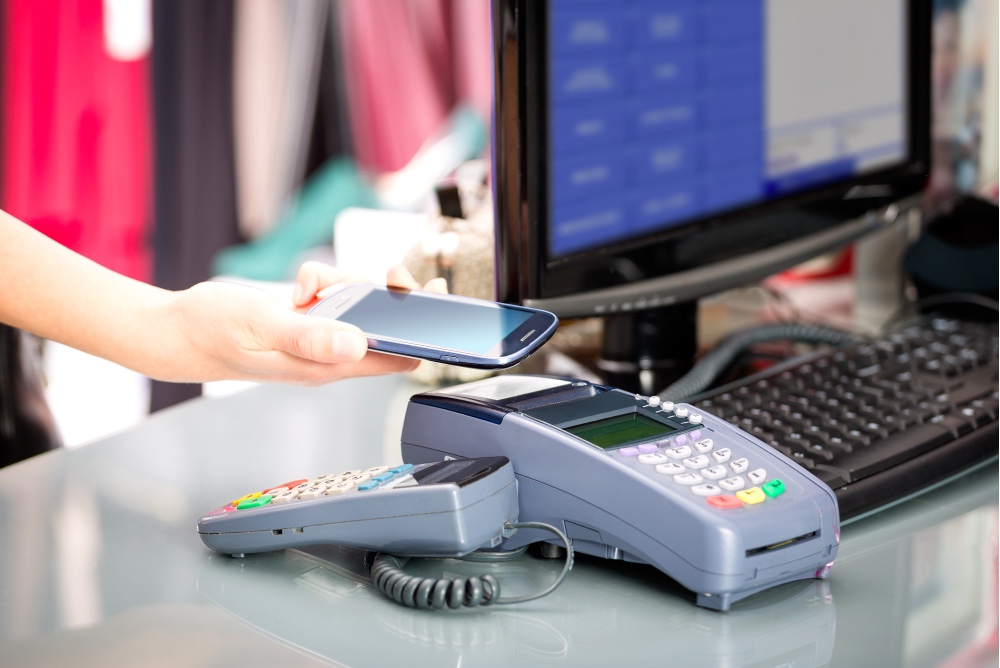
More specifically, the Rambus Unified Payment Platform helps increase revenue (per user) by facilitating cross- or up-sell opportunities with integrated loyalty points and coupons. The Unified Payment Platform also provides direct access to detailed shopping data, allowing retailers, banks and merchant acquirers to offer a personalized shopping experience and effectively compete in a crowded marketplace. In addition, the Retail Wallet Engine enables in-aisle check-out options to lower overhead costs and reduce the number of required POS terminals in store.
For consumers, the Rambus Unified Payment Platform provides a convenient, “scan-and-go” frictionless commerce experience that seamlessly integrates payments, gift cards, loyalty rewards and coupons, as well as digitized receipts and transaction history of purchases, in a single retail app. For banks, mobile wallets, which are far more secure than credit or debit cards, have fast become a strategic focus as consumer interest ramps up.
Security
Consumers require assurances that their mobile payment information will remain secure. Similarly, stores and financial institutions need to be confident that the technology behind mobile payments is secure and easy-to-use before it can be truly embraced. This is precisely why the Rambus Unified Payment Platform utilizes tokenization to reduce the risk of fraudulent transactions by replacing key account information with temporary data. When a payment card is provisioned to a mobile wallet, the token service provider (TSP) tokenizes the primary account number (PAN) and stores the token in a smartphone.
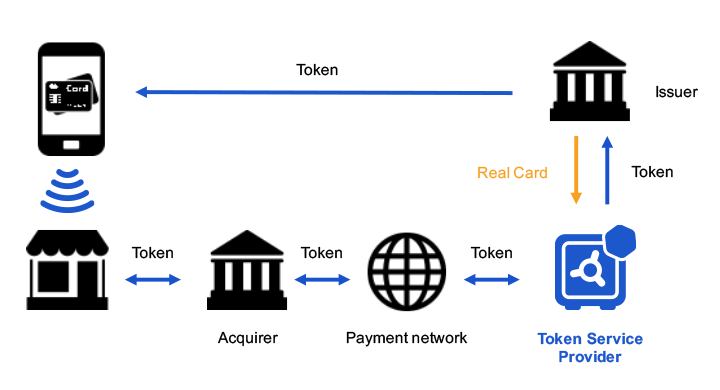
The tokenized PAN is worthless if stolen, as it essentially acts as a reference for a consumer’s original card data which only the card networks and/or the consumer’s bank can map back to the original account. Any fraud attempt, or specific data breach, only impacts a specific token (or domain). It should also be noted that Rambus’ Unified Payment Platform allows banks to easily integrate multiple mobile payment schemes with a single software platform to manage tokenization activity across a range of ‘OEM Pay’ mobile wallets. The platform also effectively ensures banks are always in sync with the latest credit and debit platform requirements.
Interested in learning more about having your own mobile wallet? You can download the eBook below.
The importance of securing smart homes
Earlier this month, Rambus Sr. Director of Security Products Asaf Ashkenazi wrote an article for Semiconductor Engineering that discusses the importance of securing smart homes. As Ashkenazi notes, OEMs are inadvertently creating major security risks in their rush to market by shipping smart home products with inadequate security and un-patched vulnerabilities. In fact, an estimated 80% of IoT devices are vulnerable to a wide range of attacks.
“For example, a connected home door lock is designed to collect and transfer data to the cloud about the entry and exit habits of family members. This can be exploited if the smart door lock device is compromised by cyber criminals,” he explained.
“Similarly, a smart thermostat that collects usage data for real-time energy optimization must be designed to protect information from unauthorized access that could indicate a home is empty – making it an ideal target for burglars. Even connected baby monitors are vulnerable to digital intruders, as a number of horrified parents belatedly discovered when hackers spoke to their young children via compromised devices.”
According to Ashkenazi, common cyber security threats and attacks against smart home devices include data and theft, man-in-the-middle, device hijacking, Permanent Denial of Service (PDoS) and Distributed Denial of Service (DDoS). In terms of the latter, says Ashkenazi, a Denial-of-Service Attack (DoS attack) attempts to render a machine or network resource unavailable to its intended users by temporarily or indefinitely disrupting services of a host connected to the Internet.
Meanwhile, a Distributed Denial-of-Service attack (DDoS) sees incoming traffic (originating from multiple sources) flooding a target, making it difficult to stop the cyber offensive by simply blocking a single source.
“In fact, DDoS attacks doubled from 3% to 6% in 2016, primarily due to the lack of security in IoT devices. This isn’t surprising, especially as infected devices are forced to join vast botnet armies that execute crippling DDoS attacks,” he added.
As Ashkenazi emphasizes, there is obviously no shortage of threats targeting IoT endpoints. As such, connected smart home devices should be protected by a comprehensive IoT security solution (device to cloud) that does not disrupt an OEM’s profitability or time to market.
“A practical and simple, yet secure solution that can be easily and widely adopted by OEMs and services is more effective than a ‘super solution’ that will inevitably fail to gain serious traction. More specifically, a comprehensive IoT security solution should offer secure boot, mutual authentication, secure (encrypted) communication, as well as agnostic capabilities that are scalable and interoperable across multiple devices,” he concluded.
The role of the mobile wallet driving the buying experience
The personalization of mobile wallets
According to Rambus CMO Jerome Nadel, mobile wallets of the future will be personalized and contextually integrated to intelligently interact with retailers. One such example, says Nadel, is the concept of beacons automatically activating a digital wallet when shoppers enter a particular store.
“The wallet will provide shoppers with relevant and contextual information to help them determine what they need,” he explained.
“So, mobile wallets need to be personalized and reflect the merchant that I’m interacting with. Of course, mobile wallets need to be efficient and utilitarian, but they also should provide real value.”
Meanwhile, Nigel Reavley of FIME told Rambus Press that the mobile wallet will be a sort of “concentrator” that combines payments with other applications, such as loyalty and rewards in the context of transport ticketing. These mobile wallets should also project the brand of the provider, whether a bank or OEM pay.
“In Europe, many of the Scandinavian banks have their own mobile wallets. This makes it very easy for you to make transactions either from you to a company or peer-to-peer to another a person,” said Reavley. “Another example includes retailers. We can see examples of big retailers in the market bringing mobile wallets to their customers to make it very simple and easy for [consumers] to purchase from [a particular merchant]. This obviously builds loyalty and at the same time, brings convenience to customers [who] use the mobile wallet.”
Martin Koderisch of Edgar, Dunn & Company expressed similar sentiments.
“[While] the mobile wallet is important as a standalone app, I think it’s more important when it’s [presented] in conjunction with an existing ecosystem and established retail experience that you have or know – such as such as a user experience or grocery app store,” he added.
Accelerating mobile payment adoption
As we’ve previously discussed on Rambus Press, simplicity alone does not guarantee adoption of mobile payments. For many industry players, there is now a focus on delivering a compelling shopping experience to the consumer, rather than purely simplifying the physical process of paying. As can be seen with successful mobile applications, such as Starbucks, the intelligent, specific deployment of value-added services is key to establishing a compelling reason for use and delivering a buying experience to the consumer.
Although the OEM pay platforms, banks and retailers recognize the value of value-added services, at present their deployment across the wider industry is fragmented. Schemes are often limited to specific merchants, cardholders, applications, locations or operating systems. To reference Starbucks, a key part of their success is the fact that users can earn and deploy their loyalty points with any smartphone, anywhere. With over three billion loyalty cards predicted to have been provisioned to mobile applications by 2021, however, consumers will soon enjoy a far more consistent experience.
Predictive analytics and machine learning are another way for banks and retailers to build a compelling shopping experience. Mobile applications can leverage past behavior and intelligently deploy vast swathes of user data to deliver smart recommendations. In addition, augmented reality enables consumers to analyze product information and read reviews in-store and in real time, rather than having to research at home before heading out to the store. By 2020, consumers will expect a lot more than just convenience from their mobile payments application. Success will therefore be dependent on the effective integration of these value-added components.
Rambus Unified Payment Platform
The Rambus Unified Payment Platform redefines the traditional shopping experience for a new age of frictionless commerce that is securely built on an economy of digital trust. For consumers, the Rambus Unified Payment Platform combines payments, gift cards, loyalty rewards and coupons in a single retail app. For retailers, the Rambus Unified Payment Platform offers tangible value beyond the initial transaction by facilitating lucrative upselling and cross-selling opportunities with integrated loyalty points and coupons. The platform also provides direct access to detailed consumer data, allowing retailers, banks and merchant acquirers to offer a personalized shopping experience and more effectively compete in a crowded marketplace.

***


