
Rambus Inc. has teamed up with eftpos to help support secure transactions with Apple Pay for users in Australia. Through integration with the Rambus Token Service Provider (TSP) technology, eftpos is able to support Apple Pay, the easy, secure and private way to pay. By utilizing tokenization, this TSP technology replaces sensitive information with unique reference numbers and is more secure than traditional plastic cards.
Search Results for: security
Rambus, eftpos Team Up in Australia to Support Apple Pay
Rambus Inc. (NASDAQ: RMBS) has teamed up with eftpos, the Australian domestic debit network, to help support secure transactions with Apple Pay for users in Australia. Through integration with the Rambus Token Service Provider (TSP) technology, eftpos is able to support Apple Pay, the easy, secure and private way to pay. By utilizing tokenization, this TSP technology replaces sensitive information with unique reference numbers and is more secure than traditional plastic cards.
Rambus and eftpos team up in Australia to support Apple Pay
Rambus and eftpos support Apple Pay transactions in Australia
Rambus has teamed up with domestic debit network eftpos to help provide secure transactions for Apple Pay users in Australia. Through integration with Rambus’ Token Service Provider (TSP) technology, eftpos is able to support Apple Pay security and hardware features to maintain the privacy of consumer data. Put simply, tokenization minimizes the risk of fraud by replacing sensitive information with unique reference numbers.

Image Credit: ZDNet
According to Chakib Bouda, CTO of the Rambus Payments Division, eftpos is the country’s most popular debit payment method, with millions of eftpos-only debit cards distributed across Australia by its members. The partnership between Rambus and eftpos, says Bouda, will allow more than a million consumers to enjoy secure mobile payments with Apple Pay.
“Security and privacy are at the core of Apple Pay. When customers use eftpos debit cards with Apple Pay, the actual card numbers are not stored on the device, nor on Apple servers,” he explained. “Instead, a unique device account number is assigned, encrypted and securely stored in the secure element on a device. Each transaction is authorized with a one-time unique dynamic security code.”
By integrating Rambus’ tokenization software, says Bouda, participating eftpos members can use eftpos debit cards for mobile payments with increased protection, as sensitive primary account numbers (PAN) are replaced with tokens.
Meanwhile, eftpos Acting CEO Paul Jennings noted that eftpos was excited to be one of the world’s first domestic networks to offer tokenization services and support for Apple Pay in Australia.
“Our partnership with Rambus gives us the ability to accelerate our secure mobile payments strategy to support Apple Pay,” he stated.
A closer look at Token Service Providers (TSPs)
In today’s mobile payment ecosystem, TSPs are entities that generate and deliver payment tokens to registered token requestors, such as OEM Pay wallets or e-commerce merchants, to safely complete mobile payment transactions.
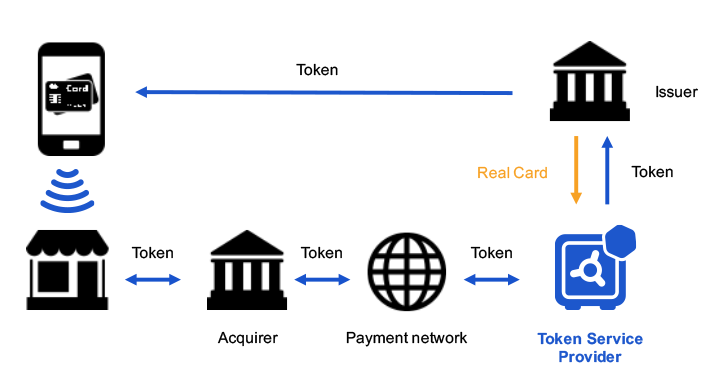
As we briefly discussed above, tokenization is used to protect payment credentials by replacing them with a randomly generated number that resembles the customer’s PAN. The unique identifier, known as a ‘payment token’ or ‘tokenized PAN’, is worthless if stolen, as it essentially acts as a reference for a consumer’s original card data which only the card networks and/or the consumer’s bank can map back to the original account.
Tokens are used in a number of environments to replace and protect the underlying value of credentials. In the payments world, tokenization is primarily used to secure payment card data. This can be done using EMVCo Tokenization for card payment transactions or Payment Card Industry (PCI) Tokenization for card-on-file data, which is stored in merchants’ or acquirers’ systems after a transaction is completed.
Rambus Token Service Provider
The Rambus Token Service Provider is a comprehensive software platform that offers multiple solutions within the tokenized payment infrastructure. Some of the key capabilities featured in the platform include:
- Tokenization Management – reduces fraud by removing confidential consumer card data from the payment network and replacing it with unique tokens. This includes tokenization of primary account numbers (PAN), token vault, de-tokenization, domain management, clearing and settlement support and identification and verification support.
- Host Card Emulation – emulates the functionality of a physical secure element (SE) in the cloud for use with Near Field Communication (NFC) transactions, compliant with American Express, VISA, and MasterCard specifications featuring a plug-in for mobile wallets.
- Transaction Management – enables issuers to perform transactions by calculating cryptogram version numbers (CVNs) on behalf of the authorization host. It includes cryptogram validation, assurance level validation, PAN processing and messaging.
- Trusted Service Manager – issues contactless payment cards and provisions static card data and dynamic key material to a physical SE on a mobile device.
For additional information about Rambus’ mobile payment solutions, please visit our product portfolio here.
Rambus, eftpos Team Up in Australia to Support Apple Pay
SUNNYVALE, Calif. – Oct. 17, 2017 – Rambus Inc. (NASDAQ: RMBS) today announced it has teamed up with eftpos, the Australian domestic debit network, to help support secure transactions with Apple Pay for users in Australia. Through integration with the Rambus Token Service Provider (TSP) technology, eftpos is able to support Apple Pay, the easy, secure and private way to pay. By utilizing tokenization, this TSP technology replaces sensitive information with unique reference numbers and is more secure than traditional plastic cards.
“With millions of eftpos-only debit cards distributed across Australia by its members, eftpos is the country’s most popular debit payment method,” said Chakib Bouda, CTO of the Rambus Payments Division. “This partnership allows more than a million consumers to enjoy secure mobile payments using Apple Pay, leveraging our proven EMV tokenization software for trusted transactions.”
The Rambus TSP technology replaces traditional primary account numbers (PAN) with unique identifiers called payment tokens. By integrating the Rambus tokenization software, participating eftpos members can use eftpos debit cards with Apple Pay for increased protection.
“Our partnership with Rambus gives us the ability to accelerate our secure mobile payments strategy and support Apple Pay,” said eftpos Acting CEO, Paul Jennings. “We are excited to move from our traditional card based payment method into mobile, offering our members in Australia the opportunity to benefit from the convenience and security of Apple Pay.”
Security and privacy are at the core of Apple Pay. When customers use eftpos debit cards with Apple Pay, the actual card numbers are not stored on the device, nor on Apple servers. Instead, a unique Device Account Number is assigned, encrypted and securely stored in the Secure Element on your device. Each transaction is authorized with a one-time unique dynamic security code.
For more information on Apple Pay, visit apple.com/apple-pay.
For more information on Rambus mobile payment solutions, visit rambus.com/payments.
Do contactless payment users prefer fingerprint sensors and voice recognition?
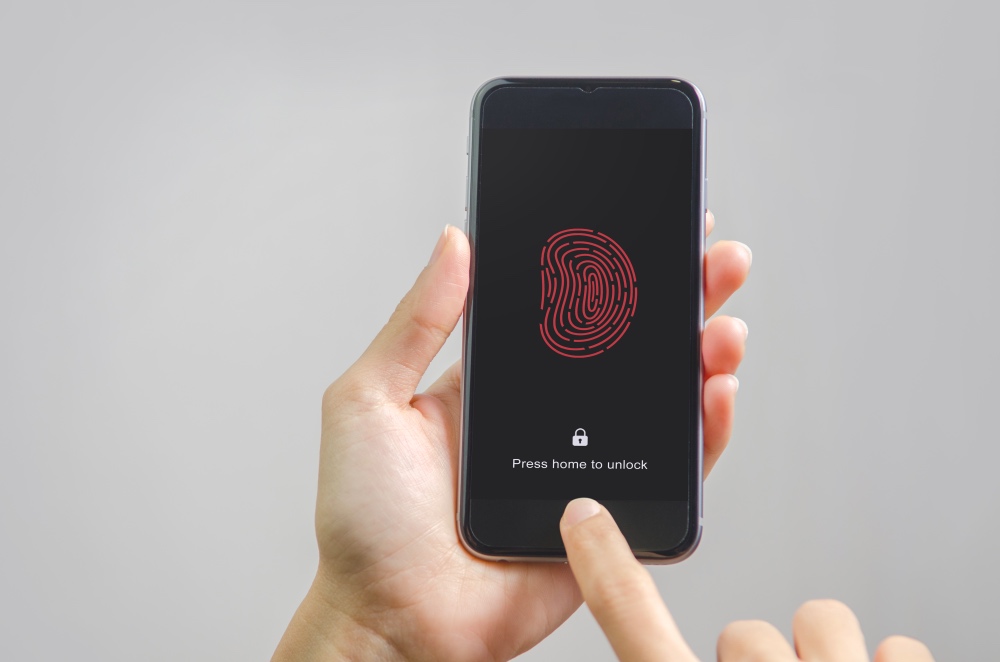
A new survey conducted by Juniper Research has concluded that 40% of iOS users in the U.S. consider themselves unlikely to use facial recognition as a payment security technology. Instead, contactless payment users said they considered fingerprint sensors and voice recognition more appealing authentication methods – with 74% and 62% stating they are likely to use these technologies.
The survey also found that while contactless payment non-users have less concerns overall, 32% have concerns about the security of the transactions, a far higher proportion than users (14%). As Juniper Research analyst James Moar points out, mobile banking has a similar pattern, with 30% of non-users concerned about the security of transactions, compared to 10% of users.
“Transaction security is a key barrier for mobile financial services adoption,” he explained. “Addressing these concerns will bring many consumers to the point where they will consider using such services.”
In related news, new data from Morning Consult (and cited by eMarketer) indicates that consumers are somewhat split when it comes to mobile devices with facial recognition capabilities.
“Its survey of US internet users in September 2017 showed that 34% of respondents had a favorable view of facial recognition software in personal devices. In contrast, 39% of those polled felt the opposite way. And over a quarter (26%) said they either weren’t sure how they felt, or had no opinion about it,” reported Rimma Kats of eMarketer. “Women were more likely than men to feel at least somewhat unfavorably toward this type of technology. For example, while 30% of women surveyed had at least a somewhat favorable view of facial recognition software, 41% expressed the opposite sentiment. Men, on the other hand, were nearly split in their attitudes.”
Nevertheless, says Kats, there’s no denying that smartphones with biometrics will soon be the norm. Indeed, Acuity Market Intelligence estimates that more than 500 biometric-enabled smartphone models have been introduced since Q1 2013. Meanwhile, a Grand View Research study estimates the biometric sensor market will reach $1.83 billion by 2024. Clearly, biometric security has already changed the experience and daily life of the mobile contactless payment user, with companies such as Qualcomm developing fingerprint technology to support secure mobile payments and services.
As we’ve previously discussed on Rambus Press, biometric authentication is steadily evolving to meet industry expectations for quick, effortless and secure mobile payment transactions. Nevertheless, consumers require assurances that their mobile payment information will remain secure. Similarly, stores and financial institutions need to be confident that the technology behind mobile payments is secure and easy-to-use before it can be truly embraced. As such, mass adoption of mobile payments will only be achieved when there is a single, unified platform built on an economy of digital trust that ensures an uninterrupted physical to digital experience.

UN highlights Blockchain in new report
A new United Nations (UN) report highlights the important role digital payment systems are playing in developing and evolving the global economy. According to the UN, digital payment systems refer to the use of debit and credit cards, online and mobile payments and systems based on distributed ledger technologies, such as blockchain.
“In general, digital payments make transactions faster, reduce frictions and lower transaction costs, offering productivity gains and enabling firms to engage in trade,” the report elaborates.

“They free banks and merchants from the financial and non-financial costs of manual acceptance of payments, record keeping, counting, storage, security, delays, transparency of payment tracking, the risk of non-payment at cash-on-delivery, recipient security and transportation of physical currency.”
In the future, says the UN, distributed ledger technologies such as blockchain may increasingly be used for cross-border payments. This technology can make online payments safe – and being peer-to-peer – it is less expensive than intermediated payment platforms.
“While few Internet users currently prefer this method of payment, it is gradually being adopted as it improves security, accelerates settlement, reduces the size of the minimum viable transaction and executes digitized versions of traditional contracts (aka smart contracts),” the report continues. “Its properties enable cross-border micro-transactions, including remittances, which would otherwise not be made due to high fixed costs or lack of trust among parties.”
In related news, Gartner analysts are confirming that the banking industry will derive $1 billion in business value from the use of blockchain-based cryptocurrencies by the end of 2020. Indeed, the current combined value of cryptocurrencies in circulation worldwide is $155 billon – and this value has only increased as tokens continue to proliferate and market interest grows.
“Cryptocurrencies are more mature than the technical and business infrastructure that supports them. This is, in part, due to the lack of credibility tokenized developments have received from mainstream businesses,” Gartner analysts explain. “However, once banks start to see cryptocurrencies and digital assets in the same context as more traditional financial instruments, more distributed business value will begin to accrue.”
This, says Gartner, will require every industry to rethink aspects of current fiat-based business models such as pricing of goods and services, accounting and tax methods, payment systems and risk management capabilities to accommodate these new forms of value in their business strategies.
As we’ve previously discussed on Rambus Press, blockchain is a shared digital ledger collectively updated and maintained by its enrolled users, which enables parties to transact with each other in a completely transparent manner. Each transaction is public and its details, together with the time and date, are unanimously verified by the other users on the network. Since there is no mediator between parties, completing a transaction becomes cheaper and simpler to achieve.
Security is ensured due to complex cryptographic rules that prevent any single participant from updating the system without seeking validation from the network. This makes the system immune to manipulation as inconsistencies are automatically identified and rejected. Since no single participant holds a master copy of the ledger (multiple copies are simultaneously updated by different participants), no single party can take full operating control. These factors ensure that the system maintains its integrity without the oversight of a centralized authority.
Interested in learning more about blockchain? You can check out our article archive on the subject here.


