- Record quarterly revenue of $207.4 million, up 20% year over year, exceeding revenue guidance range
- GAAP diluted earnings per share of $0.61 and non-GAAP diluted earnings per share of $0.77, exceeding non-GAAP diluted earnings per share guidance range
- Record product revenue of $99.2 million, up 13% quarter over quarter and 22% year over year
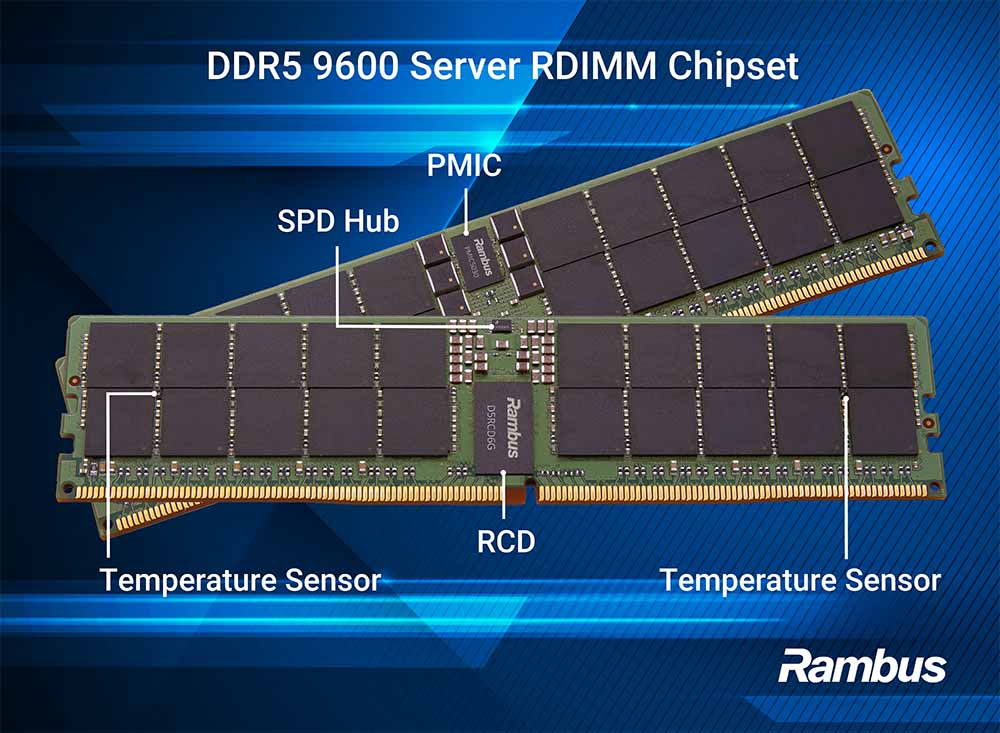
- Expanded product and IP offerings for next-generation AI systems, including complete chipsets for DDR5 9600 server and client memory modules, and PCIe 7 Switch IP
SAN JOSE, Calif. – July 27, 2026 – Rambus Inc. (NASDAQ:RMBS), a provider of industry-leading chips and IP making data faster and safer, today reported financial results for the second quarter ended June 30, 2026. Total revenue for the second quarter was $207.4 million, product revenue was $99.2 million, royalties revenue was $84.2 million and contract and other revenue was $24.0 million. GAAP diluted earnings per share was $0.61 and non-GAAP diluted earnings per share was $0.77. The Company also generated $61.2 million in cash from operating activities in the second quarter.
Management Commentary
“Rambus had an outstanding second quarter, delivering a new all-time high in revenue and non-GAAP earnings, fueled by record product revenue that grew more than 20% year over year,” said Luc Seraphin, president and chief executive officer of Rambus. “We continue to execute on our roadmap of high-performance chip and IP solutions to meet the accelerating demands of data center and AI infrastructure. We are well positioned to capitalize on the strong secular trends driven by the rapid expansion of AI inference and agentic workloads, supporting our continued product momentum and long-term profitable growth.”
| GAAP | Non-GAAP (1) | |||||||||||||||
| Quarterly Financial Review | Three Months Ended June 30, |
Three Months Ended June 30, |
||||||||||||||
| (In millions, except percentages and per share amounts) | 2026 | 2025 | 2026 | 2025 | ||||||||||||
| Revenue | ||||||||||||||||
| Product revenue | $ | 99.2 | $ | 81.3 | $ | 99.2 | $ | 81.3 | ||||||||
| Royalties revenue | 84.2 | 68.6 | 84.2 | 68.6 | ||||||||||||
| Contract and other revenue | 24.0 | 22.3 | 24.0 | 22.3 | ||||||||||||
| Total revenue | 207.4 | 172.2 | 207.4 | 172.2 | ||||||||||||
| Cost of product revenue | 39.6 | 32.4 | 39.4 | 32.2 | ||||||||||||
| Cost of contract and other revenue | 0.8 | 0.6 | 0.8 | 0.6 | ||||||||||||
| Amortization of acquired intangible assets (included in total cost of revenue) | 1.6 | 1.8 | — | — | ||||||||||||
| Total operating expenses | 92.7 | 74.4 | 73.5 | 60.4 | ||||||||||||
| Operating income | $ | 72.7 | $ | 63.0 | $ | 93.7 | $ | 79.0 | ||||||||
| Operating margin | 35% | 37% | 45% | 46% | ||||||||||||
| Net income | $ | 67.6 | $ | 57.9 | $ | 84.4 | $ | 67.1 | ||||||||
| Diluted earnings per share | $ | 0.61 | $ | 0.53 | $ | 0.77 | $ | 0.62 | ||||||||
- See “Supplemental Reconciliation of GAAP to Non-GAAP Results” table included below. Note that the applicable non-GAAP measures are presented and that revenue is solely presented on a GAAP basis.
GAAP revenue for the quarter was $207.4 million, which exceeded the Company’s guidance range of $192 million to $198 million. The Company had product revenue of $99.2 million, royalties revenue of $84.2 million and contract and other revenue of $24.0 million. The Company also had licensing billings of $84.1 million, which is an operational metric that reflects amounts invoiced to our licensing customers during the period, as adjusted for certain differences relating to advanced payments for variable licensing agreements.
The Company had total GAAP cost of revenue of $42.0 million and operating expenses of $92.7 million. The Company also had total non-GAAP operating expenses of $113.7 million (including non-GAAP cost of revenue of $40.2 million). The Company had GAAP diluted earnings per share of $0.61 and non-GAAP diluted earnings per share of $0.77. The Company’s basic share count was 108 million shares and its diluted share count was 110 million shares.
Cash, cash equivalents, and marketable securities as of June 30, 2026 were $824.9 million, an increase of $38.8 million as compared to March 31, 2026, mainly due to $61.2 million in cash provided by operating activities, partially offset by $14.3 million in payments of taxes related to net share settlement of equity awards and $12.2 million paid for capital expenditures.
2026 Third Quarter Outlook
| (In millions, except per share amounts) | GAAP | Non-GAAP (1) | ||
| Revenue | $210 – $216 | $210 – $216 | ||
| Product revenue | $110 – $116 | $110 – $116 | ||
| Royalties revenue | $69 – $75 | $69 – $75 | ||
| Contract and other revenue | $25 – $31 | $25 – $31 | ||
| Total operating costs and expenses | $137 – $133 | $119 – $115 | ||
| Diluted earnings per share | $0.59 – $0.67 | $0.75 – $0.82 |
- See “Reconciliation of GAAP Forward-Looking Estimates to Non-GAAP Forward-Looking Estimates” table included below. Note that the applicable non-GAAP measures are presented and that revenue is solely presented on a GAAP basis.
For the third quarter of 2026, the Company expects revenue to be between $210 million and $216 million. The Company also expects product revenue to be between $110 million and $116 million, royalties revenue to be between $69 million and $75 million, and contract and other revenue to be between $25 million and $31 million. Revenue is not without risk and achieving revenue in this range will require that the Company sign customer agreements for various product sales and solutions licensing, among other matters.
The Company also expects GAAP operating costs and expenses to be between $137 million and $133 million and non-GAAP operating costs and expenses to be between $119 million and $115 million. The Company expects interest and other income to be $7 million. These expectations also assume a GAAP tax rate of 18.7%, a non-GAAP tax rate of 16% and a diluted share count of 110 million shares, and exclude stock-based compensation expense of $15.7 million, amortization of acquired intangible assets of $1.5 million and other one-time adjustments of $0.8 million.
Additionally, the Company expects GAAP diluted earnings per share to be between $0.59 and $0.67 and non-GAAP diluted earnings per share to be between $0.75 and $0.82.
Conference Call
The Company’s management will discuss the results of the quarter during a conference call scheduled for 2:00 p.m. PT today. The call will be audio, slides will be available online at investor.rambus.com, and a replay will be available for the next week at the following numbers: (800) 770-2030 (domestic) or (+1) 609-800-9909 (international) with ID# 9039474.
Non-GAAP Financial Information
In the commentary set forth above and in the financial statements included in this earnings release, the Company presents the following non-GAAP financial measures: cost of product revenue, operating expenses, operating income, gross margin, operating margin, net income and diluted net income per share (diluted earnings per share). In computing each of these non-GAAP financial measures, the following items were considered as discussed below: stock-based compensation expense, restructuring charges, acquisition-related costs, amortization of acquired intangible assets, facility closure costs, income tax adjustment, and certain other one-time adjustments. The non-GAAP financial measures disclosed by the Company should not be considered a substitute for, or superior to, financial measures calculated in accordance with GAAP, and the financial results calculated in accordance with GAAP and reconciliations from these results should be carefully evaluated. Management believes the non-GAAP financial measures are appropriate for both its own assessment of, and to show investors, how the Company’s performance compares to other periods. The non-GAAP financial measures used by the Company may be calculated differently from, and therefore may not be comparable to, similarly titled measures used by other companies. A reconciliation from GAAP to non-GAAP results is included in the financial statements contained in this release.
The Company’s non-GAAP financial measures reflect adjustments based on the following items:
Stock-based compensation expense. These expenses primarily relate to employee stock purchase plans, and employee non-vested equity stock and non-vested stock units. The Company excludes stock-based compensation expense from its non-GAAP measures primarily because such expenses are non-cash expenses that the Company does not believe are reflective of ongoing operating results. Additionally, given the fact that other companies may grant different amounts and types of equity awards and may use different valuation assumptions, excluding stock-based compensation expense permits more accurate comparisons of the Company’s results with peer companies.
Restructuring charges. These charges include severance, exit costs and other related costs. The Company excludes these charges because such charges are not directly related to ongoing business results and do not reflect expected future operating expenses.
Acquisition-related costs. These expenses include all direct costs of certain acquisitions and the current periods’ portion of any retention bonus expense associated with the acquisitions. The Company excludes these expenses in order to provide better comparability between periods as they are related to acquisitions and have no direct correlation to the Company’s operations.
Amortization of acquired intangible assets. The Company incurs expenses for the amortization of intangible assets acquired in acquisitions. The Company excludes these items because these expenses are not reflective of ongoing operating results in the period incurred. These amounts arise from the Company’s prior acquisitions and have no direct correlation to the operation of the Company’s core business.
Facility closure costs. These charges consist of exit costs associated with building leases that were abandoned. The Company excludes these charges because such charges are not directly related to ongoing business results and do not reflect expected future operating expenses.
Income tax adjustment. For purposes of internal forecasting, planning and analyzing future periods that assume net income from operations, the Company estimates a fixed, long-term projected tax rate of approximately 16 percent and 20 percent for 2026 and 2025, respectively, which consists of estimated U.S. federal and state tax rates, and excludes tax rates associated with certain items such as withholding tax, tax credits, deferred tax asset valuation allowance and the release of any deferred tax asset valuation allowance. Accordingly, the Company has applied these tax rates to its non-GAAP financial results for all periods in the relevant years to assist the Company’s planning.
On occasion in the future, there may be other items, such as significant gains or losses from contingencies, that the Company may exclude in deriving its non-GAAP financial measures if it believes that doing so is consistent with the goal of providing useful information to investors and management.
About Rambus Inc.
Rambus delivers industry-leading chips and silicon IP for data-intensive computing systems, focusing on data center and AI infrastructure. With over three decades of advanced semiconductor experience, our products and technologies address the critical bottlenecks between memory and processing to accelerate data-intensive workloads. By enabling greater bandwidth, efficiency and security across next-generation computing platforms, we make data faster and safer. For more information, visit rambus.com.
Forward-Looking Statements
This release contains forward-looking statements under the Private Securities Litigation Reform Act of 1995, including those relating to Rambus’ expectations regarding business opportunities, the Company’s ability to deliver long-term, profitable growth, product and investment strategies, and the Company’s outlook and financial guidance for the third quarter of 2026 and related drivers, and the Company’s ability to effectively manage market challenges. Such forward-looking statements are based on current expectations, estimates and projections, management’s beliefs and certain assumptions made by the Company’s management. Actual results may differ materially. The Company’s business generally is subject to a number of risks which are described more fully in Rambus’ periodic reports filed with the Securities and Exchange Commission. The Company undertakes no obligation to update forward-looking statements to reflect events or circumstances after the date hereof.
Contact
Sumeet Gagneja
Senior Vice President and Chief Financial Officer
(408) 462-8000
[email protected]
Rambus Inc.
Condensed Consolidated Balance Sheets
(Unaudited)
| (In thousands) | June 30, 2026 |
December 31, 2025 |
||||||
| ASSETS | ||||||||
| Current assets: | ||||||||
| Cash and cash equivalents | $ | 87,720 | $ | 182,826 | ||||
| Marketable securities | 737,228 | 579,005 | ||||||
| Accounts receivable | 144,094 | 137,476 | ||||||
| Unbilled receivables | 22,768 | 25,209 | ||||||
| Inventories | 74,836 | 44,098 | ||||||
| Prepaids and other current assets | 20,750 | 20,202 | ||||||
| Total current assets | 1,087,396 | 988,816 | ||||||
| Intangible assets, net | 6,875 | 10,171 | ||||||
| Goodwill | 286,812 | 286,812 | ||||||
| Property and equipment, net | 114,523 | 113,051 | ||||||
| Operating lease right-of-use assets | 14,855 | 17,112 | ||||||
| Deferred tax assets | 94,619 | 105,542 | ||||||
| Other assets | 7,248 | 8,041 | ||||||
| Total assets | $ | 1,612,328 | $ | 1,529,545 | ||||
| LIABILITIES & STOCKHOLDERS’ EQUITY | ||||||||
| Current liabilities: | ||||||||
| Accounts payable | $ | 37,640 | $ | 35,915 | ||||
| Accrued salaries and benefits | 21,667 | 22,044 | ||||||
| Deferred revenue | 21,179 | 29,980 | ||||||
| EDA tools software licenses liability | 14,815 | 14,884 | ||||||
| Operating lease liabilities | 6,035 | 6,310 | ||||||
| Other current liabilities | 10,150 | 11,441 | ||||||
| Total current liabilities | 111,486 | 120,574 | ||||||
| Long-term operating lease liabilities | 15,768 | 18,671 | ||||||
| Long-term EDA tools software licenses liability | 13,367 | 20,908 | ||||||
| Other long-term liabilities | 5,048 | 4,967 | ||||||
| Total long-term liabilities | 34,183 | 44,546 | ||||||
| Total stockholders’ equity | 1,466,659 | 1,364,425 | ||||||
| Total liabilities and stockholders’ equity | $ | 1,612,328 | $ | 1,529,545 | ||||
Rambus Inc.
Condensed Consolidated Statements of Income
(Unaudited)
| Three Months Ended June 30, |
Six Months Ended June 30, |
|||||||||||||||
| (In thousands, except per share amounts) | 2026 | 2025 | 2026 | 2025 | ||||||||||||
| Revenue: | ||||||||||||||||
| Product revenue | $ | 99,154 | $ | 81,325 | $ | 187,156 | $ | 157,634 | ||||||||
| Royalties | 84,261 | 68,607 | 153,903 | 142,582 | ||||||||||||
| Contract and other revenue | 23,970 | 22,277 | 46,515 | 38,657 | ||||||||||||
| Total revenue | 207,385 | 172,209 | 387,574 | 338,873 | ||||||||||||
| Cost of revenue: | ||||||||||||||||
| Cost of product revenue | 39,575 | 32,418 | 73,304 | 63,001 | ||||||||||||
| Cost of contract and other revenue | 778 | 631 | 1,906 | 1,177 | ||||||||||||
| Amortization of acquired intangible assets | 1,620 | 1,721 | 3,295 | 3,434 | ||||||||||||
| Total cost of revenue | 41,973 | 34,770 | 78,505 | 67,612 | ||||||||||||
| Gross profit | 165,412 | 137,439 | 309,069 | 271,261 | ||||||||||||
| Operating expenses: | ||||||||||||||||
| Research and development | 51,099 | 46,331 | 101,328 | 88,951 | ||||||||||||
| Sales, general and administrative | 38,262 | 28,115 | 69,932 | 56,173 | ||||||||||||
| Restructuring charges | 3,320 | — | 3,320 | — | ||||||||||||
| Total operating expenses | 92,681 | 74,446 | 174,580 | 145,124 | ||||||||||||
| Operating income | 72,731 | 62,993 | 134,489 | 126,137 | ||||||||||||
| Interest income and other income (expense), net | 7,060 | 5,228 | 14,211 | 10,084 | ||||||||||||
| Interest expense | (302) | (382) | (581) | (759) | ||||||||||||
| Interest and other income (expense), net | 6,758 | 4,846 | 13,630 | 9,325 | ||||||||||||
| Income before income taxes | 79,489 | 67,839 | 148,119 | 135,462 | ||||||||||||
| Provision for income taxes | 11,884 | 9,904 | 20,656 | 17,224 | ||||||||||||
| Net income | $ | 67,605 | $ | 57,935 | $ | 127,463 | $ | 118,238 | ||||||||
| Net income per share: | ||||||||||||||||
| Basic | $ | 0.62 | $ | 0.54 | $ | 1.18 | $ | 1.10 | ||||||||
| Diluted | $ | 0.61 | $ | 0.53 | $ | 1.16 | $ | 1.09 | ||||||||
| Weighted-average shares used in per share calculations: | ||||||||||||||||
| Basic | 108,428 | 107,586 | 108,230 | 107,412 | ||||||||||||
| Diluted | 109,977 | 108,520 | 109,852 | 108,639 | ||||||||||||
Rambus Inc.
Supplemental Reconciliation of GAAP to Non-GAAP Results
(Unaudited)
| Three Months Ended June 30, |
||||||||
| (In thousands, except per share amounts) | 2026 | 2025 | ||||||
| Cost of product revenue | $ | 39,575 | $ | 32,418 | ||||
| Adjustment: | ||||||||
| Stock-based compensation expense | (188) | (227) | ||||||
| Non-GAAP cost of product revenue | $ | 39,387 | $ | 32,191 | ||||
| Total operating expenses | $ | 92,681 | $ | 74,446 | ||||
| Adjustments: | ||||||||
| Stock-based compensation expense | (15,698) | (14,006) | ||||||
| Restructuring charges | (3,320) | — | ||||||
| Facility closure costs | (104) | — | ||||||
| Acquisition-related costs | — | (84 | ||||||
| Non-GAAP total operating expenses | $ | 73,559 | $ | 60,356 | ||||
| Operating income | $ | 72,731 | $ | 62,993 | ||||
| Adjustments: | ||||||||
| Stock-based compensation expense | 15,886 | 14,233 | ||||||
| Amortization of acquired intangible assets | 1,620 | 1,721 | ||||||
| Restructuring charges | 3,320 | — | ||||||
| Facility closure costs | 104 | — | ||||||
| Acquisition-related costs | — | 84 | ||||||
| Non-GAAP total operating income | $ | 93,661 | $ | 79,031 | ||||
| Net income | $ | 67,605 | $ | 57,935 | ||||
| Stock-based compensation expense | 15,886 | 14,233 | ||||||
| Amortization of acquired intangible assets | 1,620 | 1,721 | ||||||
| Restructuring charges | 3,320 | — | ||||||
| Facility closure costs | 104 | — | ||||||
| Acquisition-related costs | — | 84 | ||||||
| Income tax adjustment | (4,183) | (6,871) | ||||||
| Non-GAAP net income | $ | 84,352 | $ | 67,102 | ||||
| Non-GAAP diluted earnings per share | $ | 0.77 | $ | 0.62 | ||||
| Weighted-average shares used in non-GAAP diluted per share calculation | 109,977 | 108,520 | ||||||
Rambus Inc.
Reconciliation of GAAP Forward-Looking Estimates to Non-GAAP Forward-Looking Estimates
(Unaudited)
| 2026 Third Quarter Outlook | Three Months Ended September 30, 2026 |
|||||||
| (In millions, except per share amounts) | Low | High | ||||||
| Forward-looking operating costs and expenses | $ | 137.0 | $ | 133.0 | ||||
| Adjustments: | ||||||||
| Stock-based compensation expense | (15.7) | (15.7) | ||||||
| Amortization of acquired intangible assets | (1.5) | (1.5) | ||||||
| Other | (0.8) | (0.8) | ||||||
| Forward-looking Non-GAAP operating costs and expenses | $ | 119.0 | $ | 115.0 | ||||
| Forward-looking net income | $ | 65.0 | $ | 73.2 | ||||
| Adjustments: | ||||||||
| Stock-based compensation expense | 15.7 | 15.7 | ||||||
| Amortization of acquired intangible assets | 1.5 | 1.5 | ||||||
| Other | 0.8 | 0.8 | ||||||
| Income tax adjustment | (0.7) | (0.5) | ||||||
| Forward-looking Non-GAAP net income | $ | 82.3 | $ | 90.7 | ||||
| Forward-looking Non-GAAP diluted earnings per share | $ | 0.75 | $ | 0.82 | ||||
| Forward-looking weighted-average shares used in non-GAAP diluted per share calculation | 110.0 | 110.0 | ||||||