Government









At Rambus, we create cutting-edge semiconductor and IP products, providing industry-leading chips and silicon IP to make data faster and safer.
SUNNYVALE, Calif. – July 30, 2018 – Rambus Inc. (NASDAQ:RMBS) today reported financial results for the second quarter ended June 30, 2018 under GAAP Accounting Standards Codification Topic 606 (“ASC 606”), which superseded the revenue recognition requirements in ASC Topic 605, Revenue Recognition (“ASC 605”) that was previously applicable. Total revenue for the quarter under ASC 606 was $56.5 million, with GAAP diluted net loss per share of $0.14 and non-GAAP diluted net loss per share of $0.03.
Rambus also reported financial results as they would have been presented under ASC 605. This ASC 605 presentation is required under the modified retrospective transition method that Rambus has chosen to adopt under ASC 606. Rambus notes that this presentation allows a more relevant comparability with prior results, which were all reported under ASC 605. Total revenue for the quarter ended June 30, 2018 under ASC 605 would have been $98.8 million, 9% higher than a year ago excluding the impact of the Lighting Division which was wound down in the first quarter, with GAAP diluted net income per share of $0.13 and non-GAAP diluted net income per share of $0.21.
“With a record number of licensing deals this quarter and record revenue in the first half of the year for our Memory and Interface IP Cores, we continue to execute on key strategic programs for the data center and mobile edge,” said Luc Seraphin, interim chief executive officer of Rambus. “We are also seeing growing traction for our Security products with recent customer announcements for our Unified Payment Platform and HCE Ticketing.”
Business Review
For the Memory and Interface division, Q2 was a positive quarter with broad OEM and cloud customer qualifications in chips and record first half revenue for IP cores. For server DIMM chipsets, our DDR4 memory buffer chip business continues to grow with steady gains in market share and revenue growth remains on track to meet our targets for 2018. For the next-generation DDR5 memory buffer chips, we maintain our leadership position as the first and only supplier with working silicon that supports the top-end speeds for both the Register Clock Driver (RCD) and Data Buffer (DB) chips, and we continue to engage with our customers and the ecosystem. We also continue our leadership in high-speed IP Cores, with multiple new customer wins for GDDR6 and HBM2 on advanced process nodes. As the first IP supplier to offer a broadly-available GDDR6 PHY, we continue to see traction from customers across multiple high-performance applications including AI, automotive and networking.
Our Security Division, which consists of our Cryptography, Ticketing and Payments groups, had a solid quarter with new customer announcements and the launch of the CryptoManager Root of Trust core. The CryptoManager Root of Trust builds upon our first-generation CryptoManager Security Engine by adding flexible and secure processing capabilities within the trust boundary of the core. Featuring a secure RISC-V CPU custom designed by our security experts, the core helps to address wide-reaching CPU vulnerabilities, like Meltdown and Spectre, in a broad range of applications including IoT, networking and automotive. As a market leader in smart ticketing solutions, we announced the implementation of our smart ticketing software with West Midlands, and have been selected to roll out our Host Card Emulation, or HCE, Ticket Wallet Service for mobile ticketing to passengers on Scotland’s national rail network. Finally, our Payment Product Group announced last week that the Unified Payment Platform has been selected by Coles, one of Australia’s largest retail groups, to secure its Digital Payments Solutions to enhance the customer buying journey and provide a hassle-free, omni-channel payment service.
Lastly, our Emerging Solutions Division which focuses on advanced research, innovation and IP development continues its partnerships with industry leaders like Microsoft and IBM to build our portfolio of advanced memory IP and develop technologies that help move the industry forward. Both our cold memory and hybrid memory programs continue to progress with each in varying stages of prototype development. By collaborating on research and development for the future memory architectures, which includes a growing list of ecosystem partners, we are also able to leverage our learnings to drive licensing and product engagements with our memory and security customers.
| Financial Review – GAAP | Three Months Ended June 30, | ||||||||||||||
| (In millions, except for percentages and per share amounts) | 2018 | 2017 | |||||||||||||
| As Reported ASC 606 | Adjustments (1) | ASC 605 (1) | As Reported ASC 605 | ||||||||||||
| Royalties | $30.1 | $43.5 | $73.6 | $70.0 | |||||||||||
| Product revenue | 8.1 | 0.1 | 8.2 | 8.4 | |||||||||||
| Contract and other revenue | 18.3 | (1.3) | 17.0 | 16.3 | |||||||||||
| Total revenue | $56.5 | $42.3 | $98.8 | $94.7 | |||||||||||
| Total operating costs and expenses | $76.4 | $— | $76.4 | $86.5 | |||||||||||
| Operating income (loss) | $(19.9) | $42.3 | $22.4 | $8.2 | |||||||||||
| Operating margin | (35)% | 58% | 23% | 9% | |||||||||||
| Net income (loss) | $(15.4) | $29.6 | $14.2 | $2.6 | |||||||||||
| Diluted net income (loss) per share | $(0.14) | $0.27 | $0.13 | $0.02 | |||||||||||
| Licensing billings (1) | $73.2 | $— | $73.2 | $72.9 | |||||||||||
| Net cash provided by operating activities | $3.6 | $— | $3.6 | $25.0 | |||||||||||
(1) As noted above, Rambus is presenting the ASC 606 results together with the adjustments made to reconcile the ASC 606 presentation to the results that would have been applicable under ASC 605. The ASC 605 information should be considered in addition to, not as a substitute for, nor superior to or in isolation from, the financial information prepared in accordance with ASC 606.
(2) Licensing billings is an operational metric that reflects amounts invoiced to our licensing customers during the period, as adjusted for certain differences.
| Financial Review – Non-GAAP (1) | Three Months Ended June 30, | ||||||||||||||
| (In millions, except for percentages and per share amounts) | 2018 | 2017 | |||||||||||||
| As Reported ASC 606 | Adjustments (2) | ASC 605 (2) | As Reported ASC 605 | ||||||||||||
| Royalties | $30.1 | $43.5 | $73.6 | $70.0 | |||||||||||
| Product revenue | 8.1 | 0.1 | 8.2 | 8.4 | |||||||||||
| Contract and other revenue | 18.3 | (1.3) | 17.0 | 16.3 | |||||||||||
| Total revenue | $56.5 | $42.3 | $98.8 | $94.7 | |||||||||||
| Total operating costs and expenses | $66.8 | $— | $66.8 | $69.3 | |||||||||||
| Operating income (loss) | $(10.3) | $42.3 | $32.0 | $25.4 | |||||||||||
| Operating margin | (18)% | 50% | 32% | 27% | |||||||||||
| Net income (loss) | $(3.1) | $26.9 | $23.8 | $15.6 | |||||||||||
| Diluted net income (loss) per share | $(0.03) | $0.24 | $0.21 | $0.14 | |||||||||||
(1) See “Reconciliation of GAAP Forward Looking Estimates to Non-GAAP Forward Looking Estimates” tables included below. Note that the applicable non-GAAP measures are presented and that revenue is solely presented on a GAAP basis.
(2) See note (1) under “Financial Review-GAAP” above for a description of the Adjustments and ASC 605 presentations.
Revenue for the quarter was $56.5 million, above the high end of our expectations, due to the structure of our licensing agreements signed within the quarter. Revenue under ASC 605 would have been $98.8 million, in line with our expectations. We had GAAP total operating costs and expenses of $76.4 million and non-GAAP total operating costs and expenses of $66.8 million. We also had $0.14 of GAAP diluted net loss per share and $0.03 of non-GAAP diluted net loss per share. Total GAAP and non-GAAP diluted net income per share under ASC 605 would have been $0.13 and $0.21, respectively, and were in line with our expectations.
Cash, cash equivalents, and marketable securities as of June 30, 2018 were $298.3 million. Adjusted EBITDA under ASC 605 for the quarter would have been $34.6 million.
2018 Third Quarter Outlook
Effective January 1, 2018, the Company adopted ASC 606 which materially impacted the timing of revenue recognition for the Company’s fixed-fee intellectual property licensing arrangements. The adoption of ASC 606 did not have a material impact on the Company’s other revenue streams, net cash provided by operating activities or its underlying financial position.
The Company has provided its third quarter outlook under ASC 606 and ASC 605 in order to provide additional transparency. The Company believes that providing this additional disclosure in the short term will help its investors and analysts understand the impact of the change in revenue recognition standards, especially given the material difference in the timing of revenue recognition for its fixed-fee licensing arrangements as mentioned above. Note that the presentation under ASC 605 is not a substitute for the new ASC 606 revenue recognition rules under current GAAP.
| 2018 Third Quarter Outlook (ASC 606) | |||
| (In millions, except per share amounts) | GAAP | Non-GAAP (1) | |
| Revenue | $45 – $51 | $45 – $51 | |
| Total operating costs and expenses | $81 – $77 | $69 – $65 | |
| Operating loss | $36 – $26 | $24 – $14 | |
| Diluted net loss per share | $0.24 – $0.17 | $0.13 – $0.06 |
(1) See “Reconciliation of GAAP Forward Looking Estimates to Non-GAAP Forward Looking Estimates” tables included below. Note that the applicable non-GAAP measures are presented and that revenue is solely presented on a GAAP basis.
For the third quarter of 2018, the Company expects revenue under ASC 606 to be between $45 million and $51 million. Revenue is not without risk and achieving revenue in this range will require that the Company sign customer agreements for patent licensing, various product sales, mobile payments software and solutions licensing among other matters.
The Company also expects operating costs and expenses to be between $81 million and $77 million, and diluted net loss per share to be between $0.24 and $0.17. Additionally, the Company expects non-GAAP operating costs and expenses to be between $69 million and $65 million, and non-GAAP diluted net loss per share to be between $0.13 and $0.06. These expectations also assume non-GAAP interest and other income and expense of ($6 million), tax rate of 24% (refer to non-GAAP financial information below – income tax adjustments) and diluted share count of 108 million, and exclude stock-based compensation expense ($8 million), amortization expense ($5 million) and non-cash interest expense on convertible notes ($3 million).
| 2018 Third Quarter Outlook (ASC 605) | |||
| (In millions, except per share amounts) | GAAP | Non-GAAP (1) | |
| Revenue | $97 – $103 | $97 – $103 | |
| Total operating costs and expenses | $81 – $77 | $69 – $65 | |
| Operating income | $16 – $26 | $29 – $39 | |
| Diluted net income per share | $0.08 – $0.15 | $0.19 – $0.25 |
(1) See “Reconciliation of GAAP Forward Looking Estimates to Non-GAAP Forward Looking Estimates” tables included below. Note that the applicable non-GAAP measures are presented and that revenue is solely presented on a GAAP basis.
For the third quarter of 2018, the Company expects that revenue under ASC 605 would be between $97 million and $103 million. Revenue is not without risk and achieving revenue in this range will require that the Company sign customer agreements for patent licensing, various product sales, mobile payments software and solutions licensing among other matters.
The Company also expects that operating costs and expenses would be between $81 million and $77 million, and diluted net income per share would be between $0.08 and $0.15. Additionally, the Company expects that non-GAAP operating costs and expenses would be between $69 million and $65 million, and non-GAAP diluted net income per share would be between $0.19 and $0.25. These expectations also assume non-GAAP interest and other income and expense of $1 million, tax rate of 24% (refer to non-GAAP financial information below – income tax adjustments) and diluted share count of 111 million, and exclude stock-based compensation expense ($8 million), amortization expense ($5 million) and non-cash interest expense on convertible notes ($3 million).
Conference Call:
Rambus management will discuss the results of the quarter during a conference call scheduled for 2:00pm PT today. The call, audio and slides will be available online at investor.rambus.com and a replay will be available for the next week at the following numbers: (855) 859-2056 (domestic) or (404) 537-3406 (international) with ID# 3034809.
Non-GAAP Financial Information:
In the commentary set forth above and in the financial statements included in this earnings release, the Company presents the following non-GAAP financial measures: operating costs and expenses, operating margin, operating income (loss), net income (loss) and, diluted net income (loss) per share, presented both under ASC 606 and as they would have been presented under ASC 605. In computing each of these non-GAAP financial measures, the following items were considered as discussed below: stock-based compensation expenses, acquisition-related transaction costs and retention bonus expense, amortization expenses, non-cash interest expense and certain other one-time adjustments. The non-GAAP financial measures disclosed by the Company should not be considered a substitute for, or superior to, financial measures calculated in accordance with GAAP, and the financial results calculated in accordance with GAAP and reconciliations from these results should be carefully evaluated. Management believes the non-GAAP financial measures are appropriate for both its own assessment of, and to show investors, how the Company’s performance compares to other periods. The non-GAAP financial measures used by the Company may be calculated differently from, and therefore may not be comparable to, similarly titled measures used by other companies. Reconciliation from GAAP to non-GAAP results is included in the financial statements contained in this release.
The Company’s non-GAAP financial measures reflect adjustments based on the following items:
Stock-based compensation expense. These expenses primarily relate to employee stock options, employee stock purchase plans, and employee non-vested equity stock and non-vested stock units. The Company excludes stock-based compensation expense from its non-GAAP measures primarily because such expenses are non-cash expenses that the Company does not believe are reflective of ongoing operating results. Additionally, given the fact that other companies may grant different amounts and types of equity awards and may use different option valuation assumptions, excluding stock-based compensation expense permits more accurate comparisons of the Company’s results with peer companies.
Acquisition-related transaction costs and retention bonus expense. These expenses include all direct costs of certain acquisitions and the current periods’ portion of any retention bonus expense associated with the acquisitions. The Company excludes these expenses in order to provide better comparability between periods.
Restructuring charges (recoveries). These charges (recoveries) may consist of severance, contractual retention payments, exit costs and other charges (recoveries) and are excluded because such charges (recoveries) are not directly related to ongoing business results and do not reflect expected future operating expenses.
Amortization expense. The Company incurs expenses for the amortization of intangible assets acquired in acquisitions. The Company excludes these items because these expenses are not reflective of ongoing operating results in the period incurred. These amounts arise from the Company’s prior acquisitions and have no direct correlation to the operation of the Company’s core business.
Non-cash interest expense on convertible notes. The Company incurs non-cash interest expense related to its convertible notes. The Company excludes non-cash interest expense related to its convertible notes to provide more accurate comparisons of the Company’s results with other peer companies and to more accurately reflect the Company’s ongoing operations.
Income tax adjustments. For purposes of internal forecasting, planning and analyzing future periods that assume net income from operations, the Company estimates a fixed, long-term projected tax rate of approximately 24 percent for 2018 and 35 percent for 2017, which consists of estimated U.S. federal and state tax rates, and excludes tax rates associated with certain items such as withholding tax, tax credits, deferred tax asset valuation allowance and the release of any deferred tax asset valuation allowance. Accordingly, the Company has applied these tax rates to its non-GAAP financial results for all periods in the relevant years to assist the Company’s planning. The Company has provided below a reconciliation of its GAAP provision for income taxes and GAAP effective tax rate to the assumed non-GAAP provision for income taxes and non-GAAP effective tax rate.
On occasion in the future, there may be other items, such as significant gains or losses from contingencies that the Company may exclude in deriving its non-GAAP financial measures if it believes that doing so is consistent with the goal of providing useful information to investors and management.
Forward-Looking Statements
This release contains forward-looking statements under the Private Securities Litigation Reform Act of 1995 including those relating to Rambus’ expectations regarding our new product and service offerings, growth for 2018 and financial guidance for the third quarter of 2018, including revenue, operating costs and expenses, earnings per share and estimated, fixed, long-term projected tax rates, both on a GAAP and non-GAAP basis as appropriate. Such forward-looking statements are based on current expectations, estimates and projections, management’s beliefs and certain assumptions made by Rambus’ management. Actual results may differ materially. Rambus’ business generally is subject to a number of risks which are described more fully in Rambus’ periodic reports filed with the Securities and Exchange Commission. Rambus undertakes no obligation to update forward-looking statements to reflect events or circumstances after the date hereof.
Rambus Inc.
Condensed Consolidated Balance Sheets
(In thousands)
(Unaudited)
|
|
June 30, 2018 | December 31, 2017 | |||||
| ASSETS | |||||||
| Current assets: | |||||||
| Cash and cash equivalents | $248,284 | $225,844 | |||||
| Marketable securities | 50,056 | 103,532 | |||||
| Accounts receivable | 39,263 | 25,326 | |||||
| Unbilled receivables | 179,606 | 566 | |||||
| Inventories | 6,041 | 5,159 | |||||
| Prepaids and other current assets | 14,456 | 11,317 | |||||
| Total current assets | 537,706 | 371,744 | |||||
| Intangible assets, net | 70,940 | 91,722 | |||||
| Goodwill | 208,680 | 209,661 | |||||
| Property, plant and equipment, net | 50,235 | 54,303 | |||||
| Deferred tax assets | 82,111 | 159,099 | |||||
| Unbilled receivables, long-term | 571,269 | — | |||||
| Other assets | 4,832 | 4,543 | |||||
| Total assets | $1,525,773 | $891,072 | |||||
| LIABILITIES & STOCKHOLDERS’ EQUITY | |||||||
| Current liabilities: | |||||||
| Accounts payable | $8,386 | $9,614 | |||||
| Accrued salaries and benefits | 17,385 | 17,091 | |||||
| Deferred revenue | 13,583 | 18,272 | |||||
| Income taxes payable, short-term | 18,794 | 258 | |||||
| Convertible notes, short-term | 80,648 | 78,451 | |||||
| Other current liabilities | 13,402 | 9,156 | |||||
| Total current liabilities | 152,198 | 132,842 | |||||
| Long-term liabilities: | |||||||
| Convertible notes, long-term | 138,647 | 135,447 | |||||
| Long-term imputed financing obligation | 36,816 | 37,262 | |||||
| Long-term income taxes payable | 84,804 | 3,344 | |||||
| Other long-term liabilities | 7,823 | 10,593 | |||||
| Total long-term liabilities | 268,090 | 186,646 | |||||
| Total stockholders’ equity | 1,105,485 | 571,584 | |||||
| Total liabilities and stockholders’ equity | $1,525,773 | $891,072 | |||||
Rambus Inc.
Condensed Consolidated Statements of Operations
(In thousands, except per share amounts)
(Unaudited)
| Three Months Ended June 30 | Six Months Ended June 30 | ||||||||||||||
| 2018 | 2017 | 2018 | 2017 | ||||||||||||
| Revenue | |||||||||||||||
| Royalties | $30,049 | $69,990 | $51,423 | $138,946 | |||||||||||
| Product revenue | 8,087 | 8,401 | 15,400 | 19,305 | |||||||||||
| Contract and other revenue | 18,322 | 16,329 | 36,061 | 33,820 | |||||||||||
| Total revenue | 56,458 | 94,720 | 102,884 | 192,071 | |||||||||||
| Operating costs and expenses: | |||||||||||||||
| Cost of product revenue (1) | $4,199 | $7,480 | $8,556 | $12,730 | |||||||||||
| Cost of contract and other revenue | 11,089 | 14,337 | 23,211 | 28,818 | |||||||||||
| Research and development (1) | 37,696 | 37,522 | 77,813 | 73,522 | |||||||||||
| Sales, general and administrative (1) | 24,483 | 27,137 | 54,681 | 55,323 | |||||||||||
| Restructuring charges (recoveries) | (1,022) | — | 2,223 | — | |||||||||||
| Total operating costs and expenses | 76,445 | 86,476 | 166,484 | 170,393 | |||||||||||
| Operating income (loss) | (19,987) | 8,244 | (63,600) | 21,678 | |||||||||||
| Interest income and other income (expense), net | 8,249 | 129 | 17,365 | 283 | |||||||||||
| Interest expense | (4,634) | (3,261) | (9,055) | (6,467) | |||||||||||
| Interest and other income (expense), net | 3,615 | (3,132) | 8,310 | (6,184) | |||||||||||
| Income (loss) before income taxes | (16,372) | 5,112 | (55,290) | 15,494 | |||||||||||
| Provision for (benefit from) income taxes | (1,015) | 2,507 | (4,244) | 9,883 | |||||||||||
| Net income (loss) | $(15,357) | $2,605 | $(51,046) | $5,611 | |||||||||||
| Net income (loss) per share: | |||||||||||||||
| Basic | $(0.14) | $0.02 | $(0.47) | $0.05 | |||||||||||
| Diluted | $(0.14) | $0.02 | $(0.47) | $0.05 | |||||||||||
| Weighted average shares used in per share calculation | |||||||||||||||
| Basic | 107,737 | 110,060 | 108,542 | 110,758 | |||||||||||
| Diluted | 107,737 | 112,565 | 108,542 | 114,091 | |||||||||||
_________
(1) Total stock-based compensation expense for the three and six months ended June 30, 2018 and 2017 is presented as follows:
| Three Months Ended June 30, | Six Months Ended June 30, | ||||||||||||||
| 2018 | 2017 | 2018 | 2017 | ||||||||||||
| Cost of product revenues | $2 | $19 | $5 | $33 | |||||||||||
| Research and development | $3,286 | $3,067 | $6,478 | $6,079 | |||||||||||
| Sales, general and administrative | $(1,400) | $3,523 | $2,919 | $7,093 | |||||||||||
Rambus Inc.
Supplemental Reconciliation of GAAP to Non-GAAP Results
(In thousands)
(Unaudited)
| Three Months Ended June 30, | |||||||||||
| ASC 606 | ASC 605 | ||||||||||
| 2018 | 2018 | 2017 | |||||||||
| Operating costs and expenses | $76,445 | $76,445 | $86,476 | ||||||||
| Adjustments: | |||||||||||
| Stock-based compensation expense | (1,888) | (1,888) | (6,609) | ||||||||
| Acquisition-related transaction costs and retention bonus expense | (30) | (30) | (90) | ||||||||
| Amortization expense | (8,738) | (8,738) | (10,450) | ||||||||
| Restructuring charges (recoveries) | 1,022 | 1,022 | — | ||||||||
| Non-GAAP operating costs and expenses | $66,811 | $66,811 | $69,327 | ||||||||
| Operating income (loss) | $(19,987) | $22,375 | $8,244 | ||||||||
| Adjustments: | |||||||||||
| Stock-based compensation expense | 1,888 | 1,888 | 6,609 | ||||||||
| Acquisition-related transaction costs and retention bonus expense | 30 | 30 | 90 | ||||||||
| Amortization expense | 8,738 | 8,738 | 10,450 | ||||||||
| Restructuring charges (recoveries) | (1,022) | (1,022) | — | ||||||||
| Non-GAAP operating income (loss) | $(10,353) | $32,009 | $25,393 | ||||||||
| Income (loss) before income taxes | $(16,372) | $18,949 | $5,112 | ||||||||
| Adjustments: | |||||||||||
| Stock-based compensation expense | 1,888 | 1,888 | 6,609 | ||||||||
| Acquisition-related transaction costs and retention bonus expense | 30 | 30 | 90 | ||||||||
| Amortization expense | 8,738 | 8,738 | 10,450 | ||||||||
| Restructuring charges (recoveries) | (1,022) | (1,022) | — | ||||||||
| Non-cash interest expense on convertible notes | 2,717 | 2,717 | 1,774 | ||||||||
| Non-GAAP income (loss) before income taxes | $(4,021) | $31,300 | $24,035 | ||||||||
| GAAP provision for (benefit from) income taxes | ((1,015) | 4,791 | 2,507 | ||||||||
| Adjustment to GAAP provision for (benefit from) income taxes | 50 | 2,721 | 5,905 | ||||||||
| Non-GAAP provision for (benefit from) income taxes | (965) | 7,512 | 8,412 | ||||||||
| Non-GAAP net income (loss) | $(3,056) | $23,788 | $15,623 | ||||||||
| Non-GAAP basic net income (loss) per share | $(0.03) | $0.22 | $0.14 | ||||||||
| Non-GAAP diluted net income (loss) per share | $(0.03) | $0.21 | $0.14 | ||||||||
| Weighted average shares used in non-GAAP per share calculation: | |||||||||||
| Basic | 107,737 | 107,737 | 110,060 | ||||||||
| Diluted | 107,737 | 111,157 | 112,565 | ||||||||
Supplemental Reconciliation of GAAP to Non-GAAP Effective Tax Rate (1)
| Three Months Ended June 30, | ||||||||
| ASC 606 | ASC 605 | ASC 605 | ||||||
| 2018 | 2018 | 2017 | ||||||
| GAAP effective tax rate | 6% | 25% | 49% | |||||
| Adjustment to GAAP effective tax rate | 18% | (1)% | (14)% | |||||
| Non-GAAP effective tax rate | 24% | 24% | 35% | |||||
(1) For purposes of internal forecasting, planning and analyzing future periods that assume net income from operations, the Company estimates a fixed, long-term projected tax rate of approximately 24 percent for 2018 and 35 percent for 2017, which consists of estimated U.S. federal and state tax rates, and excludes tax rates associated with certain items such as withholding tax, tax credits, deferred tax asset valuation allowance and the release of any deferred tax asset valuation allowance. Accordingly, the Company has applied these tax rates to its non-GAAP financial results for all periods in the relevant year to assist the Company’s planning for future periods.
Rambus Inc.
Reconciliation of Other GAAP to Non-GAAP Items
(In thousands, except percentages)
(Unaudited)
| GAAP | Non-GAAP | ||||||||||||||||||||||
| Three Months Ended June 30, | Three Months Ended June 30, | ||||||||||||||||||||||
| ASC 606 | ASC 605 | ASC 606 | ASC 605 | ||||||||||||||||||||
| 2018 | 2018 | 2017 | 2018 | 2018 | 2017 | ||||||||||||||||||
| Revenue (i) | $56,458 | $98,820 | $94,720 | $56,458 | $98,820 | $94,720 | |||||||||||||||||
| Operating income (loss) (ii) | (19,987) | 22,375 | 8,244 | (10,353) | 32,009 | 25,393 | |||||||||||||||||
| Operating margin (ii/i) | (35)% | 23% | 9% | (18)% | 32% | 27% | |||||||||||||||||
| Three Months Ended June 30, | |||||||
| ASC 605 | |||||||
| 2018 | 2017 | ||||||
| Net income | $14,158 | $2,605 | |||||
| Add back: | |||||||
| Interest and other income (expense), net | 3,426 | 3,132 | |||||
| Provision for income taxes | 4,791 | 2,507 | |||||
| Depreciation expense | 2,587 | 3,330 | |||||
| Amortization expense | 8,738 | 10,450 | |||||
| EBITDA (1) | $33,700 | $22,024 | |||||
| Adjustments: | |||||||
| Stock-based compensation expense | 1,888 | 6,609 | |||||
| Acquisition-related transaction costs and retention bonus expense | 30 | 90 | |||||
| Restructuring recoveries | (1,022) | — | |||||
| Adjusted EBITDA (2) | $34,596 | $28,723 | |||||
(1) EBITDA is a non-GAAP measure that management uses to evaluate the cash generating capacity of the company. The most directly comparable GAAP measure is net income. EBITDA is net income adjusted for net interest expense, income taxes, and depreciation and amortization. It should not be considered as an alternative to net income computed under GAAP.
(2) Adjusted EBITDA excludes the impact of other non-GAAP adjustments indicated in the above tables.
Rambus Inc.
Reconciliation of GAAP Forward Looking Estimates to Non-GAAP Forward Looking Estimates
(In millions, except per share amounts)
(Unaudited)
| ASC 606 | ASC 605 | ||||||||||||||
| Three Months Ended September 30, 2018 | Three Months Ended September 30, 2018 | ||||||||||||||
| Low | High | Low | High | ||||||||||||
| Forward-looking operating costs and expenses | $81.4 | $77.4 | $81.4 | $77.4 | |||||||||||
| Adjustments: | |||||||||||||||
| Stock-based compensation expense | (7.5) | (7.5) | (7.5) | (7.5) | |||||||||||
| Amortization expense | (5.4) | (5.4) | (5.4) | (5.4) | |||||||||||
| Forward-looking Non-GAAP operating costs and expenses | $68.5 | $64.5 | $68.5 | $64.5 | |||||||||||
| Forward-looking operating income (loss) | $(36.4) | $(26.4) | $15.6 | $25.6 | |||||||||||
| Adjustments: | |||||||||||||||
| Stock-based compensation expense | 7.5 | 7.5 | 7.5 | 7.5 | |||||||||||
| Amortization expense | 5.4 | 5.4 | 5.4 | 5.4 | |||||||||||
| Forward-looking Non-GAAP operating income (loss) | $(23.5) | $(13.5) | $28.5 | $38.5 | |||||||||||
| Forward-looking income (loss) before income taxes | $(33.5) | $(23.5) | $11.5 | $21.5 | |||||||||||
| Adjustments: | |||||||||||||||
| Stock-based compensation expense | 7.5 | 7.5 | 7.5 | 7.5 | |||||||||||
| Amortization expense | 5.4 | 5.4 | 5.4 | 5.4 | |||||||||||
| Non-cash interest expense on convertible notes | 2.7 | 2.7 | 2.7 | 2.7 | |||||||||||
| Forward-looking Non-GAAP income (loss) before income taxes | $(17.9) | $(7.9) | $27.1 | $37.1 | |||||||||||
| Forward-looking GAAP provision for (benefit from) income taxes | (8.0) | (5.6) | 2.8 | 5.2 | |||||||||||
| Adjustment to Forward-looking GAAP provision for (benefit from) income taxes | 3.7 | 3.7 | 3.7 | 3.7 | |||||||||||
| Forward-looking Non-GAAP provision for (benefit from) income taxes | (4.3) | (1.9) | 6.5 | 8.9 | |||||||||||
| Forward-looking Non-GAAP net income (loss) | $(13.6) | $(6.0) | $20.6 | $28.2 | |||||||||||
| Forward-looking Non-GAAP basic net income (loss) per share | $(0.13) | $(0.06) | $0.19 | $0.26 | |||||||||||
| Forward-looking Non-GAAP diluted net income (loss) per share | $(0.13) | $(0.06) | $0.19 | $0.25 | |||||||||||
| Weighted average shares used in forward-looking Non-GAAP per share calculation: | |||||||||||||||
| Basic | 108.0 | 108.0 | 108.0 | 108.0 | |||||||||||
| Diluted | 108.0 | 108.0 | 111.0 | 111.0 | |||||||||||
Scott Best, a technical director at Rambus Security, has written an article for Semiconductor Engineering about the important role a hardware root-of-trust plays in an anti-counterfeiting IC. As Best explains, during manufacture, an anti-counterfeiting security IC is securely programmed with secret data. Subsequently, during operation, it proves to a verifying host that it knows that secret data.
“This prove-you-know-the-secret authentication process between the security IC and a verifying host can be implemented in many ways, from incredibly simple to incredibly secure,” he explained. “For example, the security IC might contain nothing more than non-volatile storage, and the verifying host could simply read the secret data to confirm that the security IC is authentic.”

According to Best, the above-mentioned scenario isn’t secure, as an adversary who wishes to impersonate an authentic chip (e.g., to ship a cloned or counterfeit consumable product, such as a cellphone replacement battery) would simply have to monitor the data exchange between the verifying host and the security IC.
“A more secure proof-of-knowledge protocol involves cryptographic functions and there are as many possible protocols as there are cryptographic functions. [However], one aspect all secure protocols have in common is the concept of ‘challenge response,’” he stated. “That is, a verifying host creates a random challenge and delivers that message to the security IC. The security IC then uses its secret data to operate on the challenge in some cryptographic manner, and then returns a response.”
Put simply, this means an adversary monitoring the communication between the verifying host and the security IC would observe only random challenge values and the cryptographically-secure outputs, which, by definition, also appear random, or uncorrelated to both the challenge and secret-data input values. Nevertheless, despite the strength of the cryptographic primitives used to secure a challenge-response protocol, a determined adversary will be merely delayed, not defeated.
Indeed, certain markets for electronic consumables (e.g., printer ink and toner cartridges) are worth more than $50B USD annually, creating high incentive for skilled adversaries to penetrate security barriers. Moreover, there are dozens of techniques in an attacker’s arsenal, with most of them relying on a simple truth: to prove that it knows the secret data, the security IC must perform a calculation involving that secret key data.
“While cryptographic functions are probably secure at the mathematical level, that perfection is compromised when the math is executed in circuits – semiconductor processors utilize structures that are typically not reflected in the math, including power delivery, data busses, clocking, setup and hold margins, etc,” he explained. “All of these imperfect transformations between math and circuit create ‘side-channels’ [such as Differential Power Analysis, or DPA] that can be exploited by an adversary to determine the secret-key data utilized during a challenge-response calculation.”
As Best points out, the Cryptography group of the Rambus Security Division pioneered the Differential Power Analysis (DPA) technique, along with the most effective countermeasures to prevent information leakage due to that side channel.
“Once a side-channel attack is effective and the adversary has obtained the secret data of an authentic security IC, are counterfeits close behind? The answer is usually yes,” said Best. “While there are as many different challenge-response protocols in market as there are anti-counterfeiting security IC vendors, they almost all rely on standard cryptographic algorithms (e.g., AES, SHA, Elliptic Curve, etc.). So once an adversary has obtained the secret-data, it is relatively straightforward for them to program a low-cost, off-the-shelf MCU to imitate the challenge-response behavior of an authentic chip.”
According to Best, these types of anti-counterfeiting solutions can be broadly categorized as software root-of-trust systems. Meaning, their security depends on algorithms and data, which – though the algorithms execute in hardware and the data is stored in transistor-based non-volatile memory – can be effectively executed and represented in software. In contrast, a more difficult-to-copy solution is known as a hardware root-of-trust. In this approach, part of the cryptographic processing is performed in a circuit that cannot be cost-effectively executed in software running on a low-cost MCU.
“Suppose, for example, that the anti-counterfeiting security IC contained a customized processor that could complete the equivalent of one-billion 128-bit transformations every few milliseconds. Suppose further that this processing engine applied its algorithm to every input challenge,” he wrote. “In this case, even if the adversary learned the chip’s secret-data, they could not program a low-cost off-the-shelf MCU to mimic the transformation circuit necessary to mimic the protocol. Well, they could, but the low-cost MCU would require several hours to complete a single challenge-response calculation. In this way, a hardware root-of-trust can add a ‘proof-of-work’ layer in addition to proof-of-knowledge security.”
Most importantly, Best emphasizes, an adversary can no longer copy a hardware root-of-trust security IC simply by copying the software and data – they must expend the effort to copy the customized hardware itself.
“Semiconductor hardware is much more expensive and time-consuming to copy than the software and data within the semiconductor. This is how anti-MCU, or anti-emulation transformation circuits elevate typical software root-of-trust solutions into more robust hardware root-of-trust anti-counterfeiting solutions and how such solutions can deter and delay an adversary’s introduction of counterfeit products into the market,” he concluded.
Keep reading: Hardware Root of Trust: Everything you need to know »
SUNNYVALE, Calif. – May 7, 2018 – Rambus Inc. (NASDAQ:RMBS) today reported financial results for the first quarter ended March 31, 2018 under the newly adopted GAAP Accounting Standards Codification Topic 606 (“ASC 606” or “New Revenue Accounting Standard”), which superseded the revenue recognition requirements in ASC Topic 605, Revenue Recognition (“ASC 605”) that was previously applicable. Total revenue for the quarter under ASC 606 was $46.4 million, with GAAP diluted net loss per share of $0.36 and non-GAAP diluted net loss per share of $0.10.
Rambus also reported financial results as they would have been presented under ASC 605. This ASC 605 presentation is required under the modified retrospective transition method that Rambus has chosen to adopt under ASC 606. Rambus notes that this presentation allows a more relevant comparability with prior results, which were all reported under ASC 605. Total revenue for the quarter ended March 31, 2018 under ASC 605 would have been $100.5 million, 4% higher than a year ago excluding the impact of the Lighting Division, with GAAP diluted net income per share of $0.05 and non-GAAP diluted net income per share of $0.21.
“We delivered a solid first quarter and are making strong progress across all of our businesses as we maintain our growth trajectory, making data faster and safer for the data center and mobile edge markets,” said Dr. Ron Black, chief executive officer of Rambus. “We continue to gain traction with our products, services and licensing, while expanding partnerships with industry leaders to extend our reach to new technologies and market segments.”
Business Review
We had a very positive quarter in our Memory and Interfaces Division, with ongoing customer traction for our DIMM buffer chipset and record revenue for IP cores. We increased our market footprint for our DDR4 memory buffer chipset with further OEM and cloud customer qualifications leading to more design wins at our key customers. As we look to the next-generation, we maintain our leadership position, leveraging our head start in learnings for DDR5 memory buffer chips as the first and only supplier with working silicon for both the RCD and DB chips. For IP cores, we continue to grow our portfolio with new technologies and expand to new market segments. With the launch of our new GDDR6 memory PHY as part of a comprehensive solution alongside ecosystem partners Micron, Norwest Logic and Avery Design, we are the first IP supplier to offer a broadly available GGDR6 PHY and closed our first major design win for non-graphics applications.
Our Security Division, which consists of our Cryptography, Ticketing and Payments groups, had a solid quarter with the Cryptography team launching the CryptoManager Root of Trust core. Representing the next-generation of programmable secure processing, the core features a RISC-V CPU that has been customized by our security experts to go beyond a secure vault and enable the siloed execution of secure code within the core to help protect against vulnerabilities like Meltdown and Spectre. In addition, we expanded our DPA licensing program, signing agreements with Gemalto and Beijing Tongfang Microelectronics, our first licensee in China, to protect against side-channel attacks. Our Ticketing group remains a market leader in smart ticketing with ongoing deployments of our back-office software and services to train and bus operators across the UK. The Payments team continues to see ongoing traction for tokenization solutions for card payments and beyond with world-wide implementations of our Token Service Provider software and ongoing customer engagements for the Unified Payment Platform.
Lastly, as we look to further our innovation and IP development from our Emerging Solutions Division, we announced a partnership with IBM to develop hybrid memory system architectures for future data centers. As part of the collaboration, we will develop an architecture that combines the best attributes of DRAM and storage class memory to create a high-capacity solution at lower cost per bit, with performance levels comparable to that of DRAM.
| Financial Review – GAAP | Three Months Ended March 31, | ||||||||||||||
| (In millions, except for percentages and per share amounts) | 2018 | 2017 | |||||||||||||
| As Reported ASC 606 | Adjustments (1) | ASC 605 (1) | As Reported ASC 605 | ||||||||||||
| Royalties | $21.4 | $55.8 | $77.2 | $69.0 | |||||||||||
| Product revenue | 7.3 | 0.3 | 7.6 | 10.9 | |||||||||||
| Contract and other revenue | 17.7 | (2.0) | 15.7 | 17.5 | |||||||||||
| Total revenue | $46.4 | $54.1 | $100.5 | $97.4 | |||||||||||
| Total operating costs and expenses | $90.0 | $— | $90.0 | $84.0 | |||||||||||
| Operating income (loss) | $(43.6) | $54.1 | $10.5 | $13.4 | |||||||||||
| Operating margin | (94)% | 104% | 10% | 14% | |||||||||||
| Net income (loss) | $(38.9) | $45.0 | $6.1 | $3.0 | |||||||||||
| Diluted net income (loss) per share | $(0.36) | $0.41 | $0.05 | $0.03 | |||||||||||
| Licensing billings (1) | $75.9 | $— | $75.9 | $68.6 | |||||||||||
| Net cash provided by operating activities | $16.5 | $— | $16.5 | $17.2 | |||||||||||
(1) As noted above, Rambus is presenting the ASC 606 results together with the adjustments made to reconcile the ASC 606 presentation to the results that would have been applicable under ASC 605. The ASC 605 information should be considered in addition to, not as a substitute for, nor superior to or in isolation from, the financial information prepared in accordance with ASC 606.
(2) Licensing billings is an operational metric that reflects amounts invoiced to our patent and technology licensing customers during the period, as adjusted for certain differences.
| Financial Review – Non-GAAP (1) | Three Months Ended March 31, | ||||||||||||||
| (In millions, except for percentages and per share amounts) | 2018 | 2017 | |||||||||||||
| As Reported ASC 606 | Adjustment (2) | ASC 605 (2) | As Reported ASC 605 | ||||||||||||
| Royalties | $21.4 | $55.8 | $77.2 | $69.0 | |||||||||||
| Product revenue | 7.3 | 0.3 | 7.6 | 10.9 | |||||||||||
| Contract and other revenue | 17.7 | (2.0) | 15.7 | 17.5 | |||||||||||
| Total revenue | $46.4 | $54.1 | $100.5 | $97.4 | |||||||||||
| Total operating costs and expenses | $68.7 | $— | $68.7 | $66.8 | |||||||||||
| Operating income (loss) | $(22.3) | $54.1 | $31.8 | $30.6 | |||||||||||
| Operating margin | (48)% | 80% | 32% | 31% | |||||||||||
| Net income (loss) | $(11.3) | $35.3 | $24.0 | $19.0 | |||||||||||
| Diluted net income (loss) per share | $(0.10) | $0.31 | $0.21 | $0.17 | |||||||||||
(1) See “Reconciliation of GAAP Forward Looking Estimates to Non-GAAP Forward Looking Estimates” tables included below. Note that the applicable non-GAAP measures are presented and that revenue is solely presented on a GAAP basis.
(2) See note (1) under “Financial Review-GAAP” above for a description of the Adjustments and ASC 605 presentations.
Revenue for the quarter was $46.4 million. Revenue under ASC 605 would have been $100.5 million. Revenue was in line with our expectations, and included $2.5 million from our Lighting Division which was wound down in the first quarter of 2018. GAAP total operating costs and expenses of $90.0 million and non-GAAP total operating costs and expenses of $68.7 million included expenses from our Lighting Division for the quarter. We also had $0.36 of GAAP diluted net loss per share and $0.10 of non-GAAP diluted net loss per share. Total GAAP and non-GAAP diluted net income per share under ASC 605 would have been $0.05 and $0.21, respectively, and were in line with our expectations.
Cash, cash equivalents, and marketable securities as of March 31, 2018 were $291.2 million, a decrease of $38.2 million from December 31, 2017, mainly due to $50 million paid in connection with an accelerated share repurchase program, offset by cash generated from operating activities of approximately $16.5 million. Adjusted EBITDA under ASC 605 for the quarter would have been $34.7 million.
2018 Second Quarter Outlook
Effective January 1, 2018, the Company adopted ASC 606 which materially impacted the timing of revenue recognition for the Company’s fixed-fee intellectual property licensing arrangements. The adoption of ASC 606 did not have a material impact on the Company’s other revenue streams, net cash provided by operating activities, or its underlying financial position.
The Company has provided its second quarter outlook under ASC 606 and ASC 605 in order to provide additional transparency. The Company believes that providing this additional disclosure in the short term will help its investors and analysts understand the impact of the change in revenue recognition standards, especially given the material difference in the timing of revenue recognition for its fixed-fee licensing arrangements as mentioned above. Note that the presentation under ASC 605 is not a substitute for the new ASC 606 revenue recognition rules under current GAAP.
| 2018 Second Quarter Outlook (ASC 606) | |||
| (In millions, except per share amounts) | GAAP | Non-GAAP (1) | |
| Revenue | $42 – $48 | $42 – $48 | |
| Total operating costs and expenses | $87 – $83 | $68 – $64 | |
| Operating loss | $45 – $35 | $26 – $16 | |
| Diluted net loss per share | $0.35 – $0.28 | $0.20 – $0.13 |
(1) See “Reconciliation of GAAP Forward Looking Estimates to Non-GAAP Forward Looking Estimates” tables included below. Note that the applicable non-GAAP measures are presented and that revenue is solely presented on a GAAP basis.
For the second quarter of 2018, the Company expects revenue under ASC 606 to be between $42 million and $48 million. Revenue is not without risk and achieving revenue in this range will require that the Company sign customer agreements for patent licensing, various product sales, mobile payments software and solutions licensing among other matters.
The Company also expects operating costs and expenses to be between $87 million and $83 million, and diluted net loss per share to be between $0.35 and $0.28. Additionally, the Company expects non-GAAP operating costs and expenses to be between $68 million and $64 million, and non-GAAP diluted net loss per share to be between $0.20 and $0.13. These expectations also assume non-GAAP interest and other income and expense of $2 million, tax rate of 24% (refer to non-GAAP financial information below – income tax adjustments) and diluted share count of 107 million, and exclude stock-based compensation expense ($8 million), amortization expense ($11 million), and non-cash interest expense on convertible notes ($3 million).
| 2018 Second Quarter Outlook (ASC 605) | |||
| (In millions, except per share amounts) | GAAP | Non-GAAP (1) | |
| Revenue | $94 – $100 | $94 – $100 | |
| Total operating costs and expenses | $87 – $83 | $68 – $64 | |
| Operating income | $8 – $18 | $26 – $36 | |
| Diluted net income per share | $0.02 – $0.09 | $0.17 – $0.23 |
(1) See “Reconciliation of GAAP Forward Looking Estimates to Non-GAAP Forward Looking Estimates” tables included below. Note that the applicable non-GAAP measures are presented and that revenue is solely presented on a GAAP basis.
For the second quarter of 2018, the Company expects that revenue under ASC 605 would be between $94 million and $100 million. Revenue is not without risk and achieving revenue in this range will require that the Company sign customer agreements for patent licensing, various product sales, mobile payments software and solutions licensing among other matters.
The Company also expects that operating costs and expenses would be between $87 million and $83 million, and diluted net income per share would be between $0.02 and $0.09. Additionally, the Company expects that non-GAAP operating costs and expenses would be between $68 million and $64 million, and non-GAAP diluted net income per share would be between $0.17 and $0.23. These expectations also assume non-GAAP interest and other income and expense of $2 million, tax rate of 24% (refer to non-GAAP financial information below – income tax adjustments) and diluted share count of 111 million, and exclude stock-based compensation expense ($8 million), amortization expense ($11 million), and non-cash interest expense on convertible notes ($3 million).
Conference Call:
Rambus management will discuss the results of the quarter during a conference call scheduled for 2:00pm PT today. The call, audio and slides will be available online at investor.rambus.com and a replay will be available for the next week at the following numbers: (855) 859-2056 (domestic) or (404) 537-3406 (international) with ID#9392458.
Non-GAAP Financial Information:
In the commentary set forth above and in the financial statements included in this earnings release, the Company presents the following non-GAAP financial measures: operating costs and expenses, operating margin, operating income (loss), net income (loss), diluted net income (loss) per share, presented both under ASC 606 and as they would have been presented under ASC 605. In computing each of these non-GAAP financial measures, the following items were considered as discussed below: stock-based compensation expenses, acquisition-related transaction costs and retention bonus expense, amortization expenses, non-cash interest expense and certain other one-time adjustments. The non-GAAP financial measures disclosed by the Company should not be considered a substitute for, or superior to, financial measures calculated in accordance with GAAP, and the financial results calculated in accordance with GAAP and reconciliations from these results should be carefully evaluated. Management believes the non-GAAP financial measures are appropriate for both its own assessment of, and to show investors, how the Company’s performance compares to other periods. The non-GAAP financial measures used by the Company may be calculated differently from, and therefore may not be comparable to, similarly titled measures used by other companies. Reconciliation from GAAP to non-GAAP results is included in the financial statements contained in this release.
The Company’s non-GAAP financial measures reflect adjustments based on the following items:
Stock-based compensation expense. These expenses primarily relate to employee stock options, employee stock purchase plans, and employee non-vested equity stock and non-vested stock units. The Company excludes stock-based compensation expense from its non-GAAP measures primarily because such expenses are non-cash expenses that the Company does not believe are reflective of ongoing operating results. Additionally, given the fact that other companies may grant different amounts and types of equity awards and may use different option valuation assumptions, excluding stock-based compensation expense permits more accurate comparisons of the Company’s results with peer companies.
Acquisition-related transaction costs and retention bonus expense. These expenses include all direct costs of certain acquisitions and the current periods’ portion of any retention bonus expense associated with the acquisitions. The Company excludes these expenses in order to provide better comparability between periods.
Restructuring charges. These charges may consist of severance, contractual retention payments, exit costs and other charges and are excluded because such charges are not directly related to ongoing business results and do not reflect expected future operating expenses.
Amortization expense. The Company incurs expenses for the amortization of intangible assets acquired in acquisitions. The Company excludes these items because these expenses are not reflective of ongoing operating results in the period incurred. These amounts arise from the Company’s prior acquisitions and have no direct correlation to the operation of the Company’s core business.
Non-cash interest expense on convertible notes. The Company incurs non-cash interest expense related to its convertible notes. The Company excludes non-cash interest expense related to its convertible notes to provide more accurate comparisons of the Company’s results with other peer companies and to more accurately reflect the Company’s ongoing operations.
Income tax adjustments. For purposes of internal forecasting, planning and analyzing future periods that assume net income from operations, the Company estimates a fixed, long-term projected tax rate of approximately 24 percent for 2018 and 35 percent for 2017, which consists of estimated U.S. federal and state tax rates, and excludes tax rates associated with certain items such as withholding tax, tax credits, deferred tax asset valuation allowance and the release of any deferred tax asset valuation allowance. Accordingly, the Company has applied these tax rates to its non-GAAP financial results for all periods in the relevant years to assist the Company’s planning. The Company has provided below a reconciliation of its GAAP provision for income taxes and GAAP effective tax rate to the assumed non-GAAP provision for income taxes and non-GAAP effective tax rate.
On occasion in the future, there may be other items, such as significant gains or losses from contingencies that the Company may exclude in deriving its non-GAAP financial measures if it believes that doing so is consistent with the goal of providing useful information to investors and management.
Forward-Looking Statements
This release contains forward-looking statements under the Private Securities Litigation Reform Act of 1995 including those relating to Rambus’ expectations regarding our new product and service offerings, growth for 2018 and financial guidance for the second quarter of 2018, including revenue, operating costs and expenses, earnings per share and estimated, fixed, long-term projected tax rates, both on a GAAP and non-GAAP basis as appropriate. Such forward-looking statements are based on current expectations, estimates and projections, management’s beliefs and certain assumptions made by Rambus’ management. Actual results may differ materially. Rambus’ business generally is subject to a number of risks which are described more fully in Rambus’ periodic reports filed with the Securities and Exchange Commission. Rambus undertakes no obligation to update forward-looking statements to reflect events or circumstances after the date hereof.
Rambus Inc.
Condensed Consolidated Balance Sheets
(In thousands)
(Unaudited)
|
|
March 31, 2018 | December 31, 2017 | |||||
| ASSETS | |||||||
| Current assets: | |||||||
| Cash and cash equivalents | $122,361 | $225,844 | |||||
| Marketable securities | 168,859 | 103,532 | |||||
| Accounts receivable | 26,734 | 25,326 | |||||
| Unbilled receivables | 163,107 | 566 | |||||
| Inventories | 5,596 | 5,159 | |||||
| Prepaids and other current assets | 16,770 | 11,317 | |||||
| Total current assets | 503,427 | 371,744 | |||||
| Intangible assets, net | 82,083 | 91,722 | |||||
| Goodwill | 211,356 | 209,661 | |||||
| Property, plant and equipment, net | 48,392 | 54,303 | |||||
| Deferred tax assets | 96,902 | 159,099 | |||||
| Unbilled receivables, long-term | 607,507 | — | |||||
| Other assets | 4,507 | 4,543 | |||||
| Total assets | $1,554,174 | $891,072 | |||||
| LIABILITIES & STOCKHOLDERS’ EQUITY | |||||||
| Current liabilities: | |||||||
| Accounts payable | $7,080 | $9,614 | |||||
| Accrued salaries and benefits | 14,982 | 17,091 | |||||
| Deferred revenue | 16,480 | 18,272 | |||||
| Income taxes payable, short-term | 15,830 | 258 | |||||
| Convertible notes, short-term | 79,541 | 78,451 | |||||
| Other current liabilities | 11,263 | 9,156 | |||||
| Total current liabilities | 145,176 | 132,842 | |||||
| Long-term liabilities: | |||||||
| Convertible notes, long-term | 137,037 | 135,447 | |||||
| Long-term imputed financing obligation | 37,045 | 37,262 | |||||
| Long-term income taxes payable | 92,052 | 3,344 | |||||
| Other long-term liabilities | 14,345 | 10,593 | |||||
| Total long-term liabilities | 280,479 | 186,646 | |||||
| Total stockholders’ equity | 1,128,519 | 571,584 | |||||
| Total liabilities and stockholders’ equity | $1,554,174 | $891,072 | |||||
Rambus Inc.
Condensed Consolidated Statements of Operations
(In thousands, except per share amounts)
(Unaudited)
|
|
Three Months Ended March 31, |
||||||
| 2018 | 2017 | ||||||
| Revenue: | |||||||
| Royalties | $21,374 | $68,956 | |||||
| Product revenue | 7,313 | 10,904 | |||||
| Contract and other revenue | 17,739 | 17,491 | |||||
| Total revenue | 46,426 | 97,351 | |||||
| Operating costs and expenses: | |||||||
| Cost of product revenue (1) | 4,357 | 5,250 | |||||
| Cost of contract and other revenue | 12,122 | 14,481 | |||||
| Research and development (1) | 40,117 | 36,000 | |||||
| Sales, general and administrative (1) | 30,198 | 28,186 | |||||
| Restructuring charges | 3,245 | — | |||||
| Total operating costs and expenses | 90,039 | 83,917 | |||||
| Operating income (loss) | (43,613) | 13,434 | |||||
| Interest income and other income (expense), net | 9,116 | 154 | |||||
| Interest expense | (4,421) | (3,206) | |||||
| Interest and other income (expense), net | 4,695 | (3,052) | |||||
| Income (loss) before income taxes | (38,918) | 10,382 | |||||
| Provision for (benefit from) income taxes | (1) | 7,376 | |||||
| Net income (loss) | $(38,917) | $3,006 | |||||
| Net income (loss) per share: | |||||||
| Basic | $(0.36) | $0.03 | |||||
| Diluted | $(0.36) | $0.03 | |||||
| Weighted average shares used in per share calculation | |||||||
| Basic | 109,358 | 111,464 | |||||
| Diluted | 109,358 | 115,325 | |||||
_________
(1) Total stock-based compensation expense for the three months ended March 31, 2018 and 2017 is presented as follows:
| Three Months Ended
March 31, |
|||||||
| 2018 | 2017 | ||||||
| Cost of product revenue | $3 | $14 | |||||
| Research and development | $3,192 | $3,012 | |||||
| Sales, general and administrative | $4,319 | $3,570 | |||||
Rambus Inc.
Supplemental Reconciliation of GAAP to Non-GAAP Results
(In thousands)
(Unaudited)
| Three Months Ended | |||||||||||
| ASC 606 | ASC 605 | ||||||||||
| March 31, 2018 | March 31, 2018 | March 31, 2017 | |||||||||
| Operating costs and expenses | $90,039 | $90,039 | $83,917 | ||||||||
| Adjustments: | |||||||||||
| Stock-based compensation expense | (7,514) | (7,514) | (6,596) | ||||||||
| Acquisition-related transaction costs and retention bonus expense | (30) | (30) | (81) | ||||||||
| Amortization expense | (10,531) | (10,531) | (10,488) | ||||||||
| Restructuring charges | (3,245) | (3,245) | — | ||||||||
| Non-GAAP operating costs and expenses | $68,719 | $68,719 | $66,752 | ||||||||
| Operating income (loss) | $(43,613) | $10,420 | $13,434 | ||||||||
| Adjustments: | |||||||||||
| Stock-based compensation expense | 7,514 | 7,514 | 6,596 | ||||||||
| Acquisition-related transaction costs and retention bonus expense | 30 | 30 | 81 | ||||||||
| Amortization expense | 10,531 | 10,531 | 10,488 | ||||||||
| Restructuring charges | 3,245 | 3,245 | — | ||||||||
| Non-GAAP operating income (loss) | $(22,293) | $31,740 | $30,599 | ||||||||
| Income (loss) before income taxes | $(38,918) | $7,601 | $10,382 | ||||||||
| Adjustments: | |||||||||||
| Stock-based compensation expense | 7,514 | 7,514 | 6,596 | ||||||||
| Acquisition-related transaction costs and retention bonus expense | 30 | 30 | 81 | ||||||||
| Amortization expense | 10,531 | 10,531 | 10,488 | ||||||||
| Restructuring charges | 3,245 | 3,245 | — | ||||||||
| Non-cash interest expense on convertible notes | 2,679 | 2,679 | 1,749 | ||||||||
| Non-GAAP income (loss) before income taxes | $(14,919) | $31,600 | $29,296 | ||||||||
| GAAP provision for (benefit from) income taxes | (1) | 1,488 | 7,376 | ||||||||
| Adjustment to GAAP provision for (benefit from) income taxes | (3,580) | 6,096 | 2,878 | ||||||||
| Non-GAAP provision for (benefit from) income taxes | (3,581) | 7,584 | 10,254 | ||||||||
| Non-GAAP net income (loss) | $(11,338) | $24,016 | $19,042 | ||||||||
| Non-GAAP basic net income (loss) per share | $(0.10) | $0.22 | $0.17 | ||||||||
| Non-GAAP diluted net income (loss) per share | $(0.10) | $0.21 | $0.17 | ||||||||
| Weighted average shares used in non-GAAP per share calculation: | |||||||||||
| Basic | 109,358 | 109,358 | 111,464 | ||||||||
| Diluted | 109,358 | 112,968 | 115,325 | ||||||||
Supplemental Reconciliation of GAAP to Non-GAAP Effective Tax Rate (1)
| Three Months Ended March 31, | ||||||||
| ASC 606 | ASC 605 | ASC 605 | ||||||
| 2018 | 2018 | 2017 | ||||||
| GAAP effective tax rate | 0% | 20% | 71% | |||||
| Adjustment to GAAP effective tax rate | 24% | 4% | (36)% | |||||
| Non-GAAP effective tax rate | 24% | 24% | 35% | |||||
(1) For purposes of internal forecasting, planning and analyzing future periods that assume net income from operations, the Company estimates a fixed, long-term projected tax rate of approximately 24 percent for 2018 and 35 percent for 2017, which consists of estimated U.S. federal and state tax rates, and excludes tax rates associated with certain items such as withholding tax, tax credits, deferred tax asset valuation allowance and the release of any deferred tax asset valuation allowance. Accordingly, the Company has applied these tax rates to its non-GAAP financial results for all periods in the relevant year to assist the Company’s planning for future periods.
Rambus Inc.
Reconciliation of Other GAAP to Non-GAAP Items
(In thousands, except percentages)
(Unaudited)
| GAAP | Non-GAAP | ||||||||||||||||||||||
| Three Months Ended March 31, | Three Months Ended March 31, | ||||||||||||||||||||||
| ASC 606 | ASC 605 | ASC 606 | ASC 605 | ||||||||||||||||||||
| 2018 | 2018 | 2017 | 2018 | 2018 | 2017 | ||||||||||||||||||
| Revenue (i) | $46,426 | $100,459 | $97,351 | $46,426 | $100,459 | $97,351 | |||||||||||||||||
| Operating income (loss) (ii) | (43,613) | 10,420 | 13,434 | (22,293) | 31,740 | 30,599 | |||||||||||||||||
| Operating margin (ii/i) | (94)% | 10% | 14% | (48)% | 32% | 31% | |||||||||||||||||
| Three Months Ended March 31, | |||||||
| ASC 605 | |||||||
| 2018 | 2017 | ||||||
| Net income | $6,113 | $3,006 | |||||
| Add back: | |||||||
| Interest and other income (expense), net | 2,819 | 3,052 | |||||
| Provision for income taxes | 1,488 | 7,376 | |||||
| Depreciation expense | 2,942 | 3,392 | |||||
| Amortization expense | 10,531 | 10,488 | |||||
| EBITDA (1) | $23,893 | $27,314 | |||||
| Adjustments: | |||||||
| Stock-based compensation expense | 7,514 | 6,596 | |||||
| Acquisition-related transaction costs and retention bonus expense | 30 | 81 | |||||
| Restructuring charges | 3,245 | — | |||||
| Adjusted EBITDA (2) | $34,682 | $33,991 | |||||
(1) EBITDA is a non-GAAP measure that management uses to evaluate the cash generating capacity of the company. The most directly comparable GAAP measure is net income. EBITDA is net income adjusted for net interest expense, income taxes, and depreciation and amortization. It should not be considered as an alternative to net income computed under GAAP.
(2) Adjusted EBITDA excludes the impact of other non-GAAP adjustments indicated in the above tables.
Rambus Inc.
Reconciliation of GAAP Forward Looking Estimates to Non-GAAP Forward Looking Estimates
(In millions, except per share amounts)
(Unaudited)
| ASC 606 | ASC 605 | ||||||||||||||
| Three Months Ended June 30, 2018 | Three Months Ended June 30, 2018 | ||||||||||||||
| Low | High | Low | High | ||||||||||||
| Forward-looking operating costs and expenses | $86.5 | $82.5 | $86.5 | $82.5 | |||||||||||
| Adjustments: | |||||||||||||||
| Stock-based compensation expense | (7.5) | (7.5) | (7.5) | (7.5) | |||||||||||
| Amortization expense | (11.0) | (11.0) | (11.0) | (11.0) | |||||||||||
| Forward-looking Non-GAAP operating costs and expenses | $68.0 | $64.0 | $68.0 | $64.0 | |||||||||||
| Forward-looking operating income (loss) | $(44.5) | $(34.5) | $7.5 | $17.5 | |||||||||||
| Adjustments: | |||||||||||||||
| Stock-based compensation expense | 7.5 | 7.5 | 7.5 | 7.5 | |||||||||||
| Amortization expense | 11.0 | 11.0 | 11.0 | 11.0 | |||||||||||
| Forward-looking Non-GAAP operating income (loss) | $(26.0) | $(16.0) | $26.0 | $36.0 | |||||||||||
| Forward-looking income (loss) before income taxes | $(48.9) | $(38.9) | $3.1 | $13.1 | |||||||||||
| Adjustments: | |||||||||||||||
| Stock-based compensation expense | 7.5 | 7.5 | 7.5 | 7.5 | |||||||||||
| Amortization expense | 11.0 | 11.0 | 11.0 | 11.0 | |||||||||||
| Non-cash interest expense on convertible notes | 2.7 | 2.7 | 2.7 | 2.7 | |||||||||||
| Forward-looking Non-GAAP income (loss) before income taxes | $(27.7) | $(17.7) | $24.3 | $34.3 | |||||||||||
| Forward-looking GAAP provision for (benefit from) income taxes | (11.7) | (9.3) | 0.7 | 3.1 | |||||||||||
| Adjustment to Forward-looking GAAP provision for (benefit from) income taxes | 5.1 | 5.1 | 5.1 | 5.2 | |||||||||||
| Forward-looking Non-GAAP provision for (benefit from) income taxes | (6.6) | (4.2) | 5.8 | 8.3 | |||||||||||
| Forward-looking Non-GAAP net income (loss) | $(21.1) | $(13.5) | $18.5 | $26.0 | |||||||||||
| Forward-looking Non-GAAP basic net income (loss) per share | $(0.20) | $(0.13) | $0.17 | $0.24 | |||||||||||
| Forward-looking Non-GAAP diluted net income (loss) per share | $(0.20) | $(0.13) | $0.17 | $0.23 | |||||||||||
| Weighted average shares used in forward-looking Non-GAAP per share calculation: | |||||||||||||||
| Basic | 107.0 | 107.0 | 107.0 | 107.0 | |||||||||||
| Diluted | 107.0 | 107.0 | 111.0 | 111.0 | |||||||||||
MWC 2018 kicks off today in Barcelona! We’re at booth #7J31 (Hall 7) in the Fira Barcelona Gran Via, showcasing our CryptoManager IoT Security Service, Unified Payment Platform and a range of Smart Ticketing solutions.
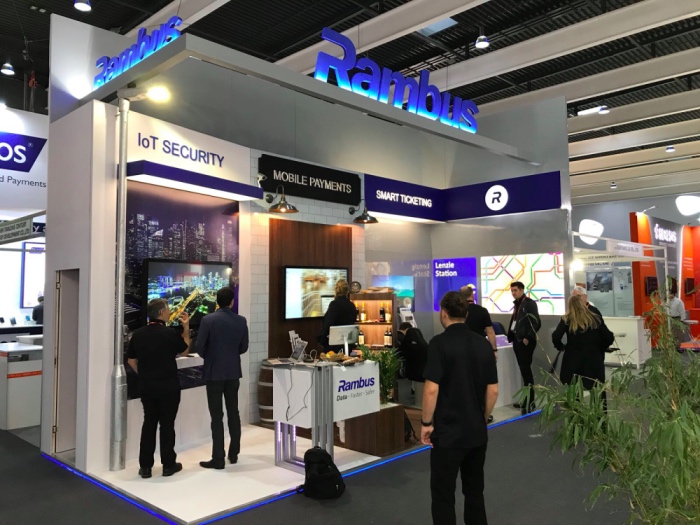
Rambus CryptoManager IoT Security Service
The Rambus CryptoManager IoT Security Service is a turnkey security solution for IoT Service providers and OEMs. Running on the Microsoft Azure IoT platform or AWS IoT platform, our one-stop-shop solution provides seamless device-to-cloud secure connectivity, device lifecycle management and advanced device monitoring capabilities to protect service high-availability and help mitigate a variety of attacks, including distributed denial of service (DDoS).

Our solution – which is pre-integrated with leading cloud Platform as a Service (PaaS) providers and chipset manufacturers – reduces the risk of devices being hijacked, copied, re-purposed, or even disabled (via a remote attacker) by leveraging strong authentication between the device and service.
Unified Payment Platform
Our Unified Payment Platform supports retailers in enriching the shopping experience by making the in-store, check-out and payment process hassle free – digitizing payment, gift and loyalty cards as well as coupons and receipts.
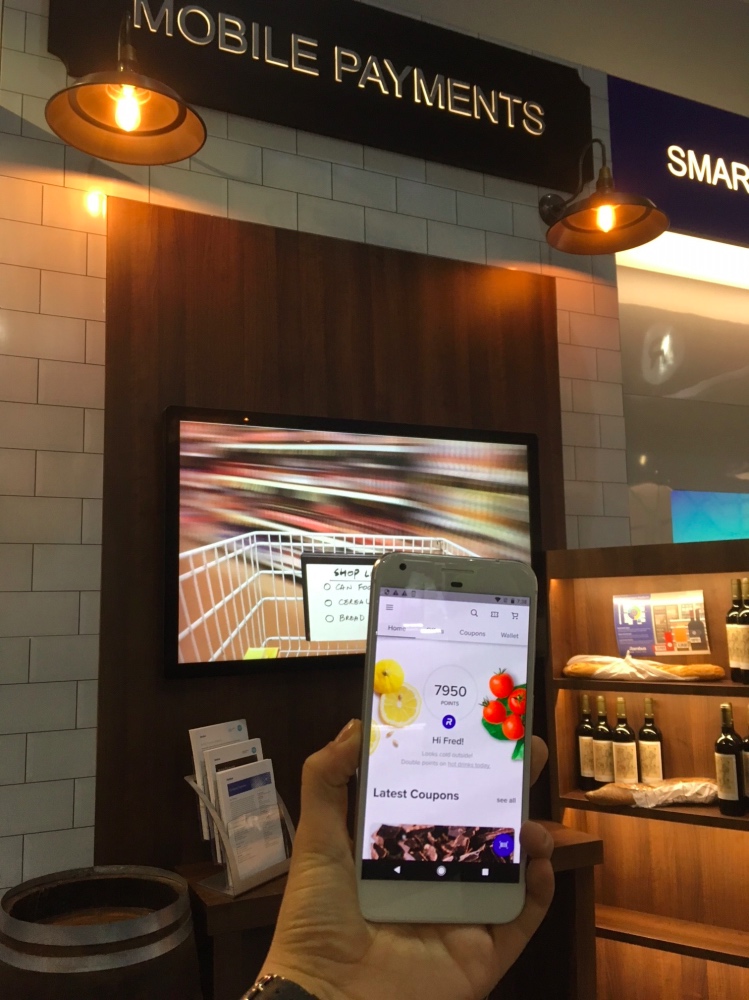
Experience the benefits of split payments, scan-and-go shopping, real-time redemption of loyalty points and in-aisle checkout with the Rambus white-label app.
Smart Ticketing
Our smart ticketing solutions, which employ host card emulation (HCE), offer the same “tap-and-go” convenience consumers expect from their mobile transactions.

With solutions from back-office software, to a secure digital ticket wallet service and a white-label ticketing app, our smart ticketing solutions are changing the way we get from point A to point B. At MWC 2018, we are providing a glimpse into the future of ticketless transport, where smartphones and wearables are helping to enable truly frictionless travel.
For more information about our solutions, please visit rambus.com/security.
Kevin Fogarty of Semiconductor Engineering recently sat down with Asaf Ashkenazi, Rambus VP of IoT Security Products, to discuss security in the age of the Internet of Things. As Fogarty notes, Rambus is now offering chip-to-cloud security, which is basically remote security as a service.
The idea, says Fogarty, is to install a key, a chip or third-party security engine, so that whenever a device is powered up and connected to the Internet, it automatically communicates with a server to identify and authenticate the device.

“The problem is there are so many areas of security that nothing can address all of it,” Ashkenazi told the publication. “But starting at the root of trust and adding chip-to-cloud communication is a big piece of [solving] this [issue].”
Indeed, as Ashkenazi points out, approximately 70% of IoT devices do not use encryption, while many can be accessed from the internet with the same password.
“So far, most of the attacks we’ve seen with the IoT haven’t been very sophisticated,” Ashkenazi elaborated. “Simple security features could have prevented those. But for an IoT product there is a real risk because there is less margin, a weaker CPU, less memory and the operating systems aren’t as robust. Devices are getting simpler, but security is getting more complicated.”
As we’ve previously discussed on Rambus Press, the widespread use of connected devices has created an attractive target for cyber criminals and other unscrupulous operators. IoT security should therefore be viewed as a primary design goal, rather than a tertiary afterthought. To be sure, consumers increasingly expect their devices to be protected out of the box, with seamless over-the air-updates (OTA) implemented securely.

However, OEMs need to be assured that securing smart home devices is not an insurmountable goal that negatively impacts profitability or time to market. As such, smart home devices should be protected by a turnkey security solution that can be easily implemented, maintained and upgraded to meet the evolving challenges of a dynamic threat landscape. More specifically, a comprehensive IoT security solution should include the following capabilities:
Secure boot: Secure boot utilizes cryptographic code signing techniques, ensuring that a device only executes code generated by the device OEM or another trusted party. Use of secure boot technology prevents hackers from replacing firmware with malicious versions, thereby preventing attacks.
Mutual authentication: Every time an IoT device connects to the network it should be authenticated prior to receiving or transmitting data. This ensures that the data originates from a legitimate device and not a fraudulent source. Cryptographic algorithms involving symmetric keys or asymmetric keys can be utilized for two-way authentication.

Secure communication (Encryption): Protecting data in transit between a device and its service infrastructure (the cloud). Encryption ensures that only those with a secret decryption key can access transmitted data. For example, a smart thermostat that sends usage data to the service operator must be able to protect information from digital eavesdropping.
Monitoring and analysis: Captures data on the overall state of the system, including endpoint devices and connectivity traffic. This data is then analyzed to detect possible security violations or potential system threats. Once detected, a broad range of actions formulated in the context of an overall system security policy should be executed, such as quarantining devices based on anomalous behavior.
Security lifecycle management: The lifecycle management feature allows service providers and OEMs to control the security aspects of IoT devices when in operation. Rapid over the air (OTA) device key(s) replacement during cyber disaster recovery ensures minimal service disruption. In addition, secure device decommissioning ensures that scrapped devices will not be repurposed and exploited to connect to a service without authorization.
Interested in learning more? You can check out our CryptoManager IoT Security Service product page here and download our eBook below.