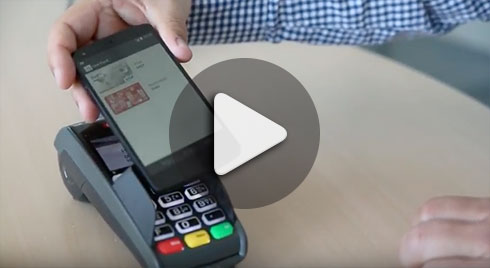
What is Host Card Emulation (HCE)?

At Rambus, we create cutting-edge semiconductor and IP products, providing industry-leading chips and silicon IP to make data faster and safer.
A new Worldpay survey of UK consumers confirms that half of those polled have used a contactless method to pay for goods at least once, with 40% of respondents opting for contactless payments a few times a week.

According to Ben Lobel of SmallBusiness, the survey also found that the advent of Apple Pay and Android Pay has prompted two thirds (67%) of 16-34 year olds to pay with their smartphones instead of cash or plastic. Perhaps not surprisingly, 54% of UK consumers expect their smartphones to replace cards as the primary method of payment within the next five years, while one third believe cash will become obsolete by 2020.
“‘The shift that we are seeing in terms of consumer preferences and what shoppers now expect from the high street is seismic and paying with cash is an inconvenience for many of today’s shoppers,” James Frost, chief marketing and commercial officer at Worldpay, explained. “While online stores have tended to changing expectations and delivered simplicity and flexibility through technology, physical stores are at risk of falling behind. From contactless busses to Waitrose’s first cashless store, the growing popularity of tap and go is a trend that all retailers will need to embrace or risk losing relevance.”
It should be noted that the above-mentioned Worldpay study was published just a few short months after a similar survey conducted by London & Partners found that nearly three quarters of those polled in the capital city believe digital transactions will replace traditional bills and coins by 2036.
“[Both] MasterCard and Visa have reported big rises in the number of contactless card payments, fueled by the use of smartphone payment apps,” reported Mark Blunden of the Evening Standard. “Contactless cards are used for about one in every 10 payments in the capital and Visa predicts that by 2020 about half of all transactions by Londoners will be on mobile. [In addition], MasterCard said contactless spending in the UK had more than tripled in the past year.”
According to the UK Cards Association, the increase in contactless card popularity can be attributed to a number of factors, including the growth of contactless transport ticketing and an increase in the payment limit to £30.
“With the amount spent using contactless cards almost trebling between 2014 and 2015 and the payment limit increasing to £30, it is clear 2015 was the year contactless went mainstream,” Graham Peacop, Chief Executive of The UK Cards Association, explained. “Whether buying a sandwich on the go, or paying for a round of drinks or a tube journey, contactless has become the default way people choose to pay for every day shopping.”
In addition, says Peacop, retailers are moving away from simply offering a traditional high street experience to embrace e-commerce and innovative ways of taking payments.
“At the same time, consumers are increasingly using their cards, and especially their contactless cards, for smaller and smaller purchases. With such convenience and flexibility, payment cards will continue to play a central role in the future,” he added.
Analysts at Juniper Research say the value of digital and physical goods purchased via mobile ‘OS-Pay’ platforms will increase by fifteen times in the next two years.
More specifically, a combination of in-app purchases and website retail payments is projected to drive annual spend via Apple Pay and Android Pay to $8 billion in 2018, up from $540 million this year (2016). In addition, more than 85% of remote goods payments are forecast to be made using mobile devices in 2021.
SUNNYVALE, Calif. – August 8, 2016 – Rambus Inc. (NASDAQ:RMBS) today announced it has successfully completed the acquisition of the assets of Semtech’s Snowbush IP. The closing purchase price totaled $32 million, including additional payments based upon specific new product sales through the end of 2022.
As announced in June, Rambus plans to integrate the Snowbush IP assets into its Memory and Interfaces Division to bolster its SerDes and IP offerings, addressing critical needs of the server, networking and data center market.
To learn more about Rambus and the Memory and Interfaces division, visit rambus.com/memory-and-interfaces.
Follow Rambus:
Company website: rambus.com
Rambus blog: rambusblog.com
Twitter: @rambusinc
LinkedIn: www.linkedin.com/company/rambus
Facebook: www.facebook.com/RambusInc
About Rambus Memory and Interfaces Division (MID)
The Rambus Memory and Interfaces Division develops products and services that solve the power, performance, and capacity challenges of the mobile, connected device, and cloud computing markets. Rambus enhanced standards-compatible and custom memory and serial link solutions include chips, architectures, memory and chip-to-chip interfaces, DRAM, IP validation tools, and system and IC design services. Developed through our system-aware design methodology, Rambus products deliver improved time-to-market and first-time-right quality.
About Rambus Inc.
Rambus creates cutting-edge semiconductor and IP products, spanning memory and interfaces to security, smart sensors and lighting. Our chips, customizable IP cores, architecture licenses, tools, services, software, training and innovations improve the competitive advantage of our customers. We collaborate with the industry, partnering with leading ASIC and SoC designers, foundries, IP developers, EDA companies and validation labs. Our products are integrated into tens of billions of devices and systems, powering and securing diverse applications, including Big Data, Internet of Things (IoT), mobile, consumer and media platforms. At Rambus, we are makers of better. For more information, visit rambus.com.
Note Regarding Forward-Looking Statements
This press release contains forward-looking statements within the meaning of the Private Securities Litigation Reform Act of 1995 as amended, including statements regarding the potential benefits and incorporation of the acquired technologies into the Rambus Memory and Interfaces division, expected addition to pro forma earnings within 18-24 months, growth opportunities of the SerDes market, and the ability to bolster the Rambus IP and product offerings. These forward-looking statements are based on current expectations, estimates, assumptions and projections that are subject to change. Actual results may differ materially from the forward-looking statements due to a variety of factors including, but not limited to, risks and uncertainties described from time to time in Rambus’ annual report on Form 10-K, quarterly reports on Forms 10-Q and other periodic filings with the Securities and Exchange Commission. All forward-looking statements are made as of the date of this press release and Rambus does not undertake any obligation to update any forward-looking statements based on new developments or changes in expectations.
In the first part of our blog series exploring EMVCo’s payment account reference (PAR), we provided an overview of the concept and explained why it has been introduced. In this second installment, we analyse the potential impact of PAR across the payments ecosystem.
Earlier this year, EMVCo introduced PAR – a ‘newly-defined data element that reduces reliance on primary account numbers (PAN) when managing security requirements and delivering value-added services.’
PAR has been introduced to overcome an inherent challenge of tokenization technology as it allows PAN-based and related token-based transactions to be linked together. This enables the payments acceptance community to consistently and securely deliver value-added services such as loyalty and couponing, manage regulatory requirements or provide transaction risk scoring, without relying on the PAN.
Although the idea underpinning PAR makes sense, industry feedback has been mixed so far. So, what does PAR really mean for the payments community and why is there industry hesitation?
One thing is for sure, implementing PAR is not going to be an easy ride
Firstly, PAR as a new and additional data element will need to be integrated into all authorization and clearing messaging.
PAR has a different length and format to the PAN, so merchants and acquirers will have to upgrade their back end systems to support and identify this new data element as the new index for merchant loyalty and acquirer risk management.
In addition, merchants will have to hold lookup tables to link a PAR with the original PAN and all of the various tokens that are associated with it. In practice, this means that merchants will hold data that maps the activity taking place within the token vault. In the specifications current format, this raises various regulatory and compliance issues regarding the management and protection of data.
Further complexity is introduced by the fact that EMVCo has updated the underlying EMV Specifications to introduce new ‘tags’ supporting PAR for all EMV cards and terminals, as well as the ‘OEM Pay’ solutions and mobile applications.
The consequences of this update are profound, as this may require a complete recertification process across the entire payments industry. For those in the United States who are currently involved in a complex and drawn-out certification process following the EMV liability shift in October 2015, the thought of recertification is a painful one.
Such complexity is naturally accompanied by high costs.
As PAR has been introduced to benefit merchants and acquirers, they will be expected to absorb the majority of the implementation costs. The key question, therefore, is whether the potential benefits justify the investment. In contrast, the issuer and processor community is set to gain little or no benefit from PAR, so any costs they face will be somewhat hard to swallow. As alternative options to PAR exist that also enable actors to deliver value-added services and regulatory requirements, there is a lot of work to do to convince the industry that the return on investment is sufficient.
It is not easy to introduce a brand new data element into the payments ecosystem. With applications to be recertified and system updates to be made, it will be many years until PAR is fully implemented across the entire payments industry. And if the industry feels compelled to drag its feet due to the lack of commercial imperatives, this process will be further elongated. More information is required, therefore, on the expected implementation timelines.
So, what does PAR mean for the payments industry? At present, the simple answer is that nobody is quite sure. More information on the benefits of PAR, as well as the compliance and regulatory issues that it has the potential to create across the entire payment ecosystem, is required. With such a wide-scale impact, you can expect to hear much more about PAR over the coming months.
To find out more about tokenization as a technology and its use for the protection of payment card data, watch our video or download our free white paper.