Security researchers Charlie Miller and Chris Valasek recently highlighted a series of automotive vulnerabilities when they hacked a Chrysler jeep driven by Wired journalist Andy Greenberg. Indeed, the duo managed to (wirelessly) assume control over dashboard functions, steering, transmission and brakes.
Search Results for: security
CryptoManager Provisioning
Home > You searched for security > Page 200
The Rambus CryptoManager Provisioning is a secure supply chain solution for semiconductor and device manufacturers, enabling insertion of keys and other secure data. Designed to seamlessly integrate into existing manufacturing flows with minimal interruption, CryptoManager Provisioning currently secures over 2 billion devices per year (and counting).
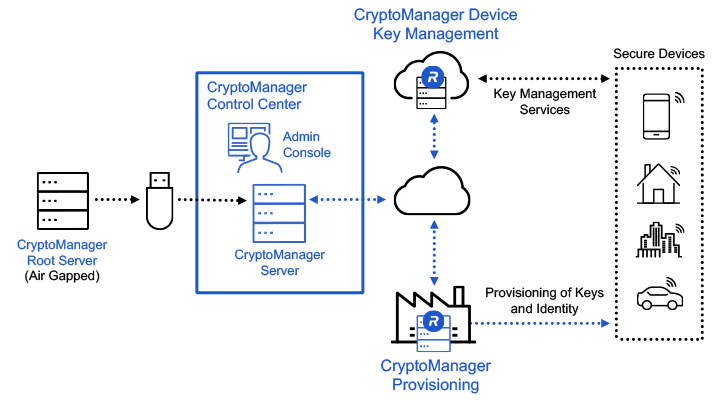
How CryptoManager Provisioning works
CryptoManager Provisioning enables the secure insertion of cryptographic keys and other sensitive data throughout a distributed supply chain, including both captive and 3rd party (untrusted) manufacturing locations. CryptoManager Provisioning capabilities cover a broad range of secure operations, including key delivery and programming, protection of debug and other sensitive ports, and feature configuration for chips and devices. It supports provisioning of device-specific information to any on-chip secure enclave, including the Rambus family of CryptoManager Root of Trust cores.
Security starts in the CryptoManager Control Center. It enables simple and intuitive administration for secure provisioning of high value keys and data into semiconductor devices. Removing the human element out of key injection, secret cryptographic keys are protected end-to-end and injected automatically, enabling manufacturing integrity and security. As the keys are only known to the semiconductor OEM (and not others), they can be guaranteed secure. These cryptographic keys are the foundation of device security: device authentication, attestation, and unique identification.
CryptoManager Provisioning works in conjunction with CryptoManager Device Key Management to provide an end-to-end security solution for chips and devices. CryptoManager Device Key Management is a cloud-basedsoftware platform that enables customers to build and deploy key management services that leveragehardware-provisioned keys and certificates in semiconductors and devices over the entire device lifecycle.
CryptoManager Provisioning is a foundational product in any secure supply chain ecosystem.
Solution Offerings
- Cluster support for high availability and scalability
- Dynamic SKU management
- Ability to provision secure data to any secure IP core or chipset
- Comprehensive system monitors and alerts
- Secure browser-based management console
- Business continuity/disaster recovery
- Meets manufacturing critical performance requirements
- Advanced key and data management
- Verify manufacturing volumes, yields, and configurations
- Monitor production status, availability, and inventory levels
- Protect against cloning, reverse engineering, counterfeiting, and overbuilding
- Secure offline Root Authority for managing system permissions and authorizations
- Provision cryptographic information securely in untrusted environments
- Advanced encrypted key and data storage
- Two-factor user authentication
CryptoManager Provisioning Equipment
- Root Authority (optional)
- Server (Cluster)
- Appliance (Cluster)
CryptoManager Control Center
Full Documentation
- Root Authority Guide
- Service Guide
- Appliance Guide
- Admin Console API Guide
Support
- 24×7 Infrastructure Support
- Software Maintenance
| CryptoManager Control Center | The CryptoManager Control Center is a security control system that works in conjunction with an off-line Root Authority. It manages the distribution of data assets with the appropriate authorizations to connected CryptoManager Appliances. It includes an easy-to-use Administration Console for operators to centrally manage the Infrastructure across multiple manufacturing sites. |
| CryptoManager Appliance | The Appliance is a tamper-resistant, rack-mounted server, deployed in high-volume manufacturing facilities or cloud services data centers, that provides local security and handles the distribution and programming of secret keys and device configuration data. It also delivers secure production logs and system health data to the Control Center. The appliance is designed to integrate with existing test equipment. |
Protecting Safety, Revenue and Brand: Combating Counterfeit Semiconductors in the Automotive Supply Chain
The counterfeit market for semiconductors is real, sizable and growing. Industry analysts peg the current market for fake semiconductors at $75B. Counterfeit chips pose great risk to driver comfort and safety, to say nothing of the severe negative consequences they present to automaker revenues and brand. The good news is there are immediate and cost-effective measures available to secure the semiconductor supply chain and stop counterfeiters in their tracks.Use Cases
Personalization
Large OEM customers requesting personalization, customer specific data preparation and feature customization of standard parts challenge the chipmakers ability to minimize inventory overhead and improve operating efficiencies.
Secure Key Provisioning
With mobile devices housing more and more sensitive data that is utilized in a wide variety of applications, chip and device companies must meet the complex security requirements for each potential use case or capability.Debug Access Control
The CryptoManager solution provides a method for chip and device companies to authenticate the device and authorize the provisioning of the debug enable/disable operation for each device.
News
Webinars
Related Markets & Applications
SCA Resistant Cores with DPA and FIA

Home > You searched for security > Page 200
Rambus SCA (Side Channel Attack) Resistant Hardware Cores prevent against the leakage of secret cryptographic key material through DPA (Differential Power Analysis) and against sabotage through FIA (Fault Injection Attacks) when integrated into an SoC.
These superior performance cores are easily integrated into SoCs and FPGAs, providing robust side-channel resistance across different security and performance levels. The SCA Resistant Hardware Cores support industry standard classic cryptographic algorithms such as AES, 3DES, SM4, SHA-2, SHA-3, RSA, and ECC, as well as the quantum safe cryptographic algorithms ML-DSA and ML-KEM. In addition to DPA resistance, Rambus offers select accelerators with additional FIA (Fault Injection Attack) resistance. Select cores are Common Criteria and NIST FIPS 140-3 certified.
| Solution | Description |
|---|---|
| QSE-IP-86 DPA | Fast Quantum Safe Engine for ML-KEM (CRYSTALS-Kyber) and ML-DSA (CRYSTALS-Dilithium) with DPA |
| PKE-IP-85-DPA(-FIA) | Fast Public Key Engine with DPA or with DPA and FIA |
| AES-IP-3X-DPA(-FIA) | AES Authenticated Encryption Accelerator with DPA or with DPA and FIA |
| ICE-338-DPA | Fast Inline Cipher Engine, AES-XTS/GCM, SM4-XTS/GCM, DPA |
| HMAC-SHA-256-DPA | HMAC SHA-2 engine, 224 & 256 Mode, DPA |
| HMAC-SHA-256-512-DPA | HMAC SHA-2 engine, 224, 256, 384 & 512 Mode, DPA |
| HMAC-IP-59-DPA | SHA-3 engine w/ HMAC, DPA SHA-3/SHAKE/cSHAKE/KMAC |
| SHA-IP-57-DPA | SHA-3 engine, w/o HMAC, DPA SHA-3/SHAKE/cSHAKE/KMAC |
How SCA Resistant cores with DPA and FIA work
The SCA Resistant Hardware cores offer chipmakers an easy-to integrate technology-independent soft-macro security solution with built-in side-channel resistance for cryptographic functions.
The SCA Resistant Hardware Cores implement highly-efficient digital SPA, DPA, CPA, DEMA, CEMA and TA countermeasures, delivering the highest level of performance and security while meeting silicon area and power budget targets.
The FIA countermeasures project against effects of various (non-) invasive Fault Injection Attacks, such as voltage, clock, temperature, glitch, light, laser and EM attacks.
The soft macro SCA cores improve time-to-market through being SCA pre-validated, avoiding unpredictable and time-consuming validation cycles They are easy to integrate into various SoC and FPGA architectures and development flows, and are all designed to maximize performance versus silicon area requirements. The Rambus IP cores pass all NIST CAVP vectors.
Introduction to Side-Channel Attacks
Side-channel attacks conducted against electronic gear are relatively simple and inexpensive to execute. Such attacks include simple power analysis (SPA) and Differential Power Analysis (DPA). As all physical electronic systems routinely leak information, effective side-channel countermeasures should be implemented at the design stage to ensure protection of sensitive keys and data.
Solution Offerings
- Superior performance cryptographic cores optimized for performance, area, and security applications
- AES-32 cores with SCA protection run at 1 clock cycle per AES round, outperforming any existing solution by a factor of 2
- Protect leakage of secret keys while in use, providing orders of magnitude higher protection than standard cores
- Extensively validated using the Test Vector Leakage Assessment (TVLA) methodology revealing no leakage beyond 100 million traces
- Protected against SPA, DPA, DEMA, CPA, CEMA and TA SCA attacks
- Protect against effects of various (non-)invasive Fault Injection Attacks, such as voltage, clock, temperature, glitch, light, laser and EM attacks
- Digital countermeasures: portable to any FPGA or ASIC technology
- Common Criteria certified
- NIST CAVP certified
- SCA (DPA & FIA) Resistant Core in Verilog RTL Source code
- SDC constraints synthesis input for FPGA or ASIC synthesis
- Documentation
- Test bench and vectors
- Support and integration assistance
- TVLA Report
Protecting Electronic Systems from Side-Channel Attacks
Side-channel attacks comprise a wide range of techniques including Differential Power Analysis, Simple Power Analysis, Simple Electromagnetic Analysis, Differential Electromagnetic Analysis, Correlation Power Analysis and Correlation Electromagnetic Analysis. An effective layer of side-channel countermeasures should therefore be implemented via hardware (DPA resistant cores), software (DPA resistant libraries) or both. After layered countermeasures have been implemented, systems should be carefully evaluated to confirm the cessation of sensitive side-channel leakage.
Inventions
DPA Countermeasures
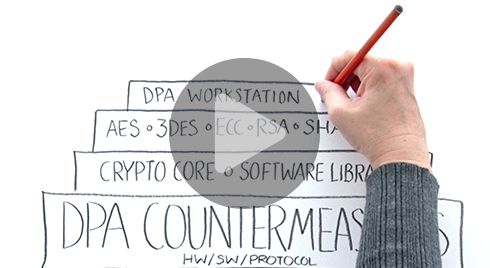
DPA Countermeasures are fundamental techniques for protecting against Differential Power Analysis (DPA) and related side-channel attacks. Consisting of a broad range of software, hardware, and protocol techniques, DPA Countermeasures include reducing leakage, introducing amplitude and temporal noise, balancing hardware and software, incorporating randomness, and implementing protocol level countermeasures.
Resources
Videos
Hardware-based encryption market revenue to hit $36.4 billion
There are a number of ways for companies to secure data – whether on the perimeter or within the local area network (LAN). However, as ABI Research analysts recently confirmed, the most fundamental method in a defense-in-depth model is hardware encryption.
“The advantage of hardware-based solutions is that they bypass many of the typical drawbacks of software-based solutions like performance degradation or vulnerability to attacks aimed at the encryption key stored in memory,” the analysts explained.
“Because encryption is available at drive-level, this solution is not dependent on any software or operating system used, and usually cannot be turned off by users. Examples of storage products that use hardware-based encryption include hard drives, self-encrypting drives and USB flash drives.”
According to ABI Research, a number of industry players, including Rambus, offer innovative and interesting solutions in the hardware-based encryption market. Indeed, organizations across all sectors face an increasing number of regulations and requirements to protect data from unauthorized access – both internally and externally.
“One of the key sectors where hardware encryption will be rapidly adopted is healthcare,” said Monolina Sen, ABI Research’s Senior Analyst in Digital Security.
“Health organizations are likely to be vulnerable targets because they are slower to adopt measures like keeping personal information in separate databases that can be closed off in the event of an attack.”
More specifically, says Sen, more and more healthcare organizations can be expected to choose hardware-based encryption technologies, along with other security measures, to ensure that data remains encrypted to all but those authorized to access it.
“Government, defense, and intelligence agencies are also under intense pressure to comply with a lengthening list of legislative requirements and protocols designed to protect sensitive data in transit and at rest,” Sen concluded.
Additional sectors where hardware encrypted products will be adopted include financial services, the consumer electronics sector, communication networking security, as well as the automotive and transportation sector. In total, ABI Research expects the global hardware encryption market revenue to hit $36.4 billion by the end of 2015.
CryptoFirewall Verifier and Consumable Core
Home > You searched for security > Page 200
Security
CryptoFirewall Verifier and Consumable Core
How CryptoFirewall Verifier Core works
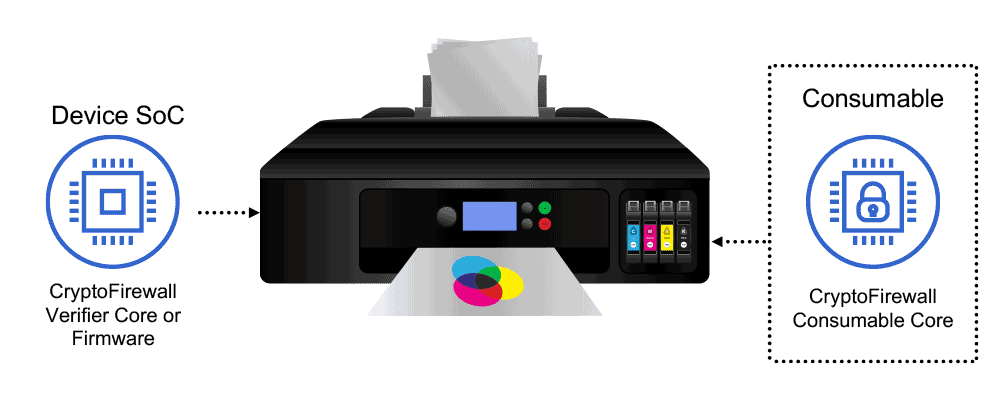
The Verifier core is a robust, anti-counterfeiting hardware core designed to provide authentication with the highest level of tamper resistance.
The core can be used in conjunction with the CryptoFirewall Consumable core as part of a complete consumable protection system. It integrates into the device SoC and communicates to the CryptoFirewall Consumable core to authenticate and verify system integrity of the consumable or peripheral.
The Verifier core monitors the balances of the usage counters within the Consumable core, denying authentication once the balance reaches zero.
Anti-Tampering Technologies
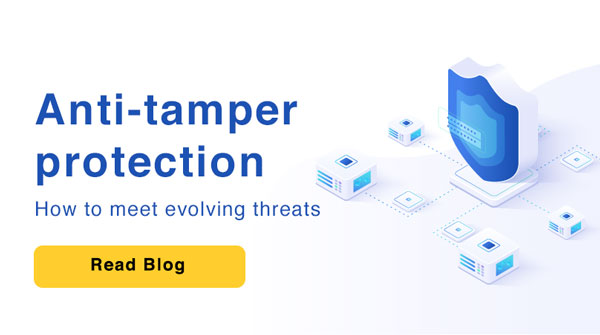
The design of chip anti-tamper protection needs to adapt and scale with rising threats. Adversaries range from high school hackers to well-funded state actors. Given the threats, it’s useful to think about anti-tamper countermeasures as a hierarchy of safeguards that parallel the type, effort and expense of attacks. Watch this webinar to learn the eleven kinds of tampering attacks and their required skills and resources, and countermeasures for each of these attacks.
How CryptoFirewall Consumable Core works
Using field-proven, integrated anti-tamper security technologies, the Consumable core works in conjunction with either the CryptoFirewall Verifier core or Verifier firmware to provide consumers and manufacturers assurance of authenticity.
Secure device authentication: Each consumable or peripheral contains a low-cost security chip with the Consumable core that communicates with either a CryptoFirewall Verifier core or with Verifier firmware on the system-side SoC to authenticate and verify system integrity.
Secure usage authentication: The core contains usage counters with balances to authorize and track usage. Balances can be securely decremented with each use, and counters cannot be reset without a strict authentication process.
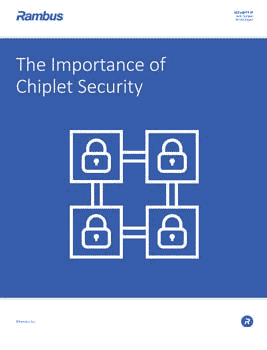
The Importance of Chiplet Security
Chiplets are gaining significant traction as they deliver numerous benefits beyond what can be accomplished with a monolithic SoC in a time of slowing transistor scaling. However, disaggregating SoCs into multiple chiplets increases the attack surface which adversaries can exploit to penetrate safeguards to data and hardware. With chiplets, the risks of hardware-based trojans and exploits such as man-in-the-middle attacks all rise. To realize the many benefits of chiplets, designers should use a design for security approach, and implement security safeguards anchored in hardware.
Solution Offerings
Part of a complete solution to protect against a broad range of attacks including:
- Software bug vulnerabilities
- Reverse engineering
- Glitching/fault induction
- Power analysis (SPA/DPA)
- Test/debug mode exploits
- Protocol attacks
- Microprobing
- Cryptanalysis
- Focused ion beam analysis
- Imaging/microscopy
- Software emulation
- Insider attacks
Secure device authentication
Secure usage authentication
Gate-level netlist targeted to vendor-specified cell library
Full technical documentation:
- Interface specifications
- Integration guides
- Validation guides
- Manufacturing test and personalization specs
Test and Verification:
- Verification models
- Emulation boards
- Functional verification tests
- System and validation tests
Resources
News
Licensed Countermeasures
Home > You searched for security > Page 200
Countermeasure Techniques
Flexible licensing options are available, including no-cost licenses for academic research. Countermeasures to SPA and DPA are covered by our patents, and include a broad range of hardware and software-based techniques:
Leakage reduction: techniques to make the set or sequence of operations independent of the key as well as hardware and software balancing techniques to reduce variation in the power consumption for different data.
Noise introduction: techniques for adding different types of noise into the power consumption measurements available to the attacker.
Obfuscation: by keeping algorithms secret, the attacker is forced to perform reverse engineering along with power analysis. While we do not recommend this countermeasure, it is better than having no countermeasure at all.
Incorporating randomness: includes techniques for randomizing the data manipulated by the device in a way that still produces the correct result and encompasses techniques such as the masking or blinding of data and keys.
Protocol level countermeasures: are applicable when there is flexibility to modify cryptographic protocols used by the device. Protocols are modified so that secrets can be continually refreshed and updated during the lifetime of the device, protecting them from leak exposure.
Countermeasure Licensees
Many of the world’s leading technology companies license our DPA countermeasures, including:
Boeing
Brite Semiconductor
Broadcom
CEC Huada
CyOne Security
EM Microelectronic
Entrust
Epson
Infineon
Marvell
MediaTek
Microchip
Microsoft
Nvidia
Nuvoton
Qualcomm
Raytheon
Samsung
Silicon Labs
Socionext
StarChip
STMicroelectronics
Synamedia
Thales
Tiempo
Tongxin Microelectronics
Utimaco
Visa
Western Digital
Wisekey
Winbond
Xilinx
Introduction to Side-Channel Attacks
Side-channel attacks conducted against electronic gear are relatively simple and inexpensive to execute. Such attacks include simple power analysis (SPA) and Differential Power Analysis (DPA). As all physical electronic systems routinely leak information, effective side-channel countermeasures should be implemented at the design stage to ensure protection of sensitive keys and data.
Solution Offerings
- Leakage reduction
- Noise introduction
- Obfuscation
- Incorporating randomness
- Protocol level countermeasures
The trademarked Licensed DPA logo identifies that a product is covered by a DPA countermeasures license from Rambus Cryptography Research. The logo provides customers with the comfort of knowing that products contain countermeasures that are properly licensed.

Protecting Electronic Systems from Side-Channel Attacks
Side-channel attacks comprise a wide range of techniques including Differential Power Analysis, Simple Power Analysis, Simple Electromagnetic Analysis, Differential Electromagnetic Analysis, Correlation Power Analysis and Correlation Electromagnetic Analysis. An effective layer of side-channel countermeasures should therefore be implemented via hardware (DPA resistant cores), software (DPA resistant libraries) or both. After layered countermeasures have been implemented, systems should be carefully evaluated to confirm the cessation of sensitive side-channel leakage.
Inventions
DPA Countermeasures
DPA Countermeasures are fundamental techniques for protecting against Differential Power Analysis (DPA) and related side-channel attacks. Consisting of a broad range of software, hardware, and protocol techniques, DPA Countermeasures include reducing leakage, introducing amplitude and temporal noise, balancing hardware and software, incorporating randomness, and implementing protocol level countermeasures.
Resources
Videos
- « Go to Previous Page
- Page 1
- Interim pages omitted …
- Page 198
- Page 199
- Page 200
- Page 201
- Page 202
- Interim pages omitted …
- Page 246
- Go to Next Page »