
With the rising value of AI/ML spanning training and inference models, data, and the AI hardware itself, the threats from adversaries are greater than ever. As such, a security strategy for AI/ML workloads and hardware needs to offer far more than secure boot and authentication. Rambus security expert, Bart Stevens will discuss how a hardware root of trust can be the foundation for AI/ML security through defense in depth, partitioning of secure operations, and state-of-the-art protections from side channel attacks.
Search Results for: security
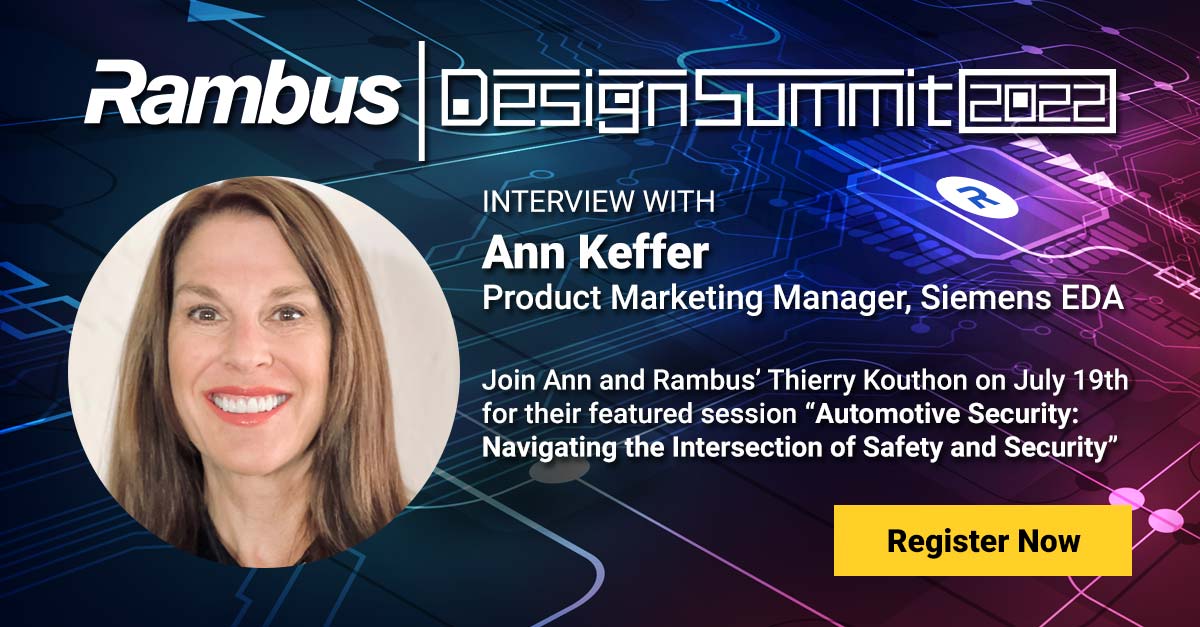
Rambus Design Summit Interview Series: Ann Keffer
We’re so excited that Ann Keffer, Product Marketing Manager at Siemens EDA, will be joining us on the (virtual) stage at Rambus Design Summit!
Ahead of the show, we talked to Ann about autonomous driving, what she loves to do in her free time, and growth drivers for the Siemens EDA business. Read on for the full interview below, and join us next week to see Ann’s presentation as well as other sessions covering chip and IP solutions for the data center, edge, automotive and IoT devices including the acceleration and security of AI/ML applications!
Question: Tell us a bit about yourself and your career path.
Ann: I started my career at Hewlett Packard working in R&D as a software developer for their proprietary operating system after graduating with a BS in computer science and math. I moved into management and held management positions in several business units. In 2012 I was recruited to Galil Motion Control, who manufactures motion controllers and PLCs, as head of Product Management and Marketing reporting to the President. In 2014 I joined the robot manufacturer Adept Technology, now part of Omron, as Director of Product Management and Marketing reporting to the CSO where we launch Adepts first autonomous robot. In 2016 I was hired by Cadence Design Systems as a Marketing Director in their IP group and after a year moved to the verification group as Director of Product Management for functional safety. In 2019 I joined Siemens to work in product management for a newly acquired copy called Austemper who developed tools for functional safety verification which is where I am now!
For fun I like to run and cycle and my hobbies include sculpting and drawing!
Question: What do you see as the big growth drivers for the Siemens EDA business?
Ann: The automotive market is a big one for sure. But big growth areas are AI/ML, cloud, 5G are other big growth areas.
Question: What’s the biggest challenge your customers face?
Ann: The complexities of achieving safety and security on large designs targeted for AV/EVs! It’s a challenging task and it’s a new market that I predict will realize changes that may increase the complexity of achieving safeness. Time-to-certification is definitely a challenge as making chips/SoCs safe and secure can add many months to the development cycle of a chip.
Question: As we move more towards autonomous driving, what impact are you seeing in the design of automotive electronics?
Ann: The challenge of getting safety and security certified to the specification of all of the standards we talked about in our presentation!
Question: We’re excited to have you at RDS this year! What key takeaways do you want your audience to walk away with?
Ann: Thank you so much for inviting me, I am honored to be at RDS!! Key takeaway is this:
Addressing the intersection of safety and security is a challenge, and together, Rambus and Siemens made certain the RT-640 achieved the necessary security and safety levels to allow any automotive SoC design using this IP to fulfill it’s required use cases.
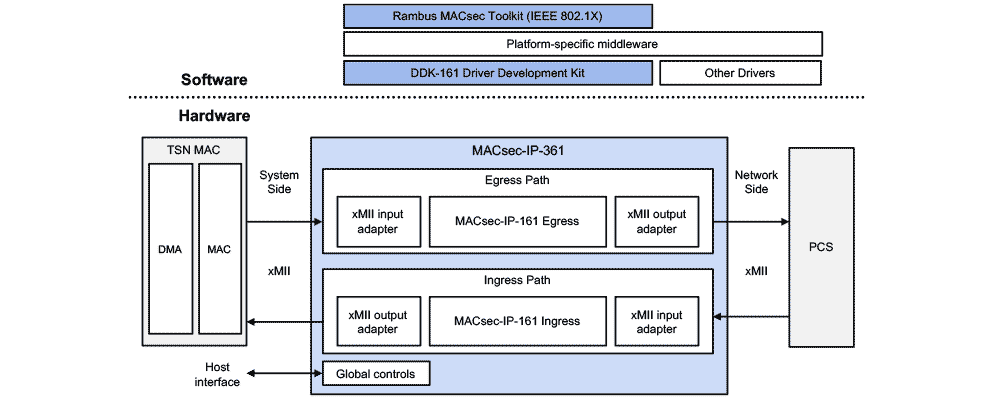
MACsec-IP-361
 Contact
 Product Brief
 Security Certifications

Rambus Design Summit

Countdown to RDS 2022 
SAE levels of automation in cars simply explained (+Image)
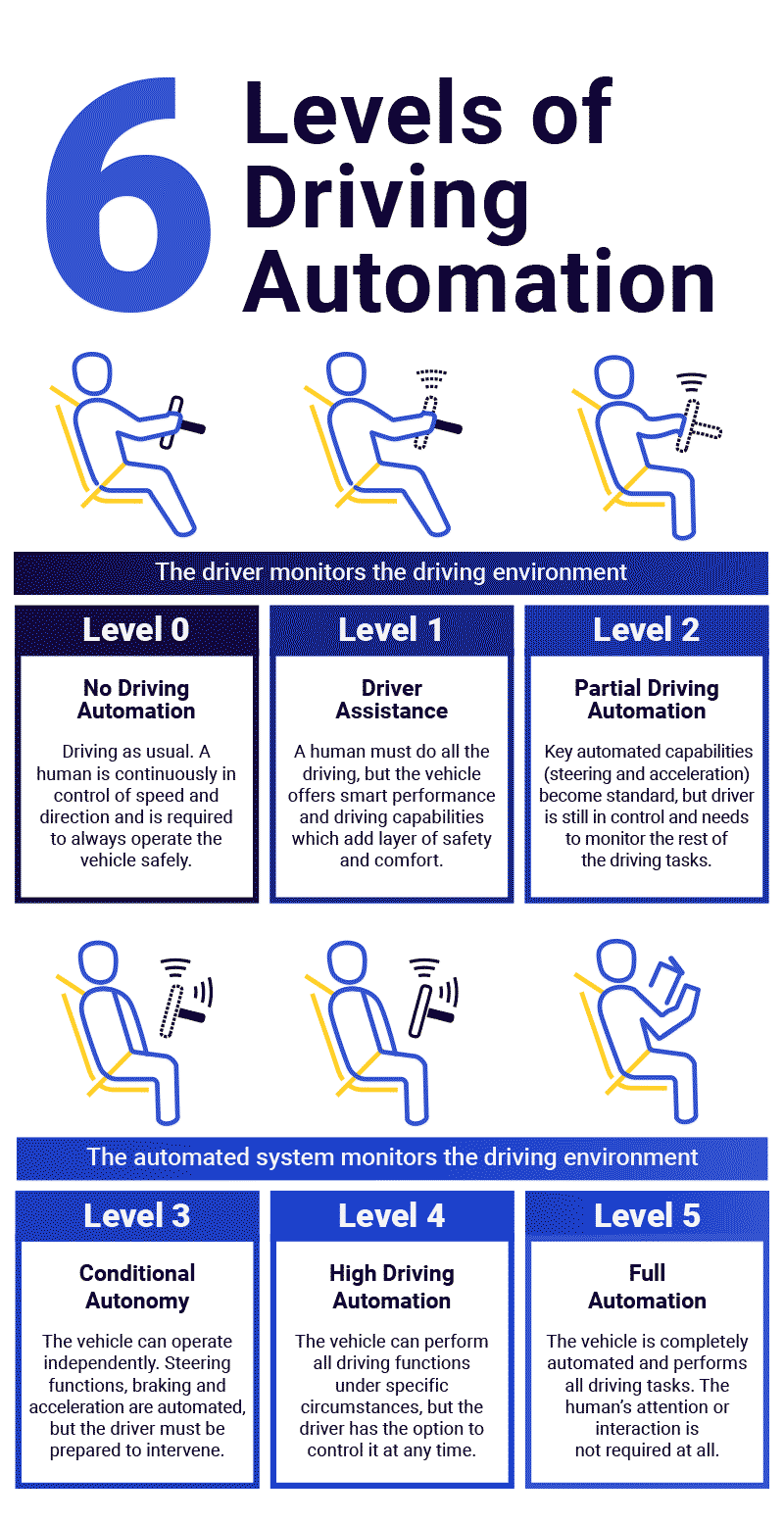
Formerly known as the Society of Automotive Engineers, SAE International is a global professional association and standards organization. SAE International focuses primarily on global transport industries such as aerospace, automotive, and commercial vehicles. In 2014, SAE International created the following six levels of driving automation which have since been adopted by the U.S. Department of Transportation
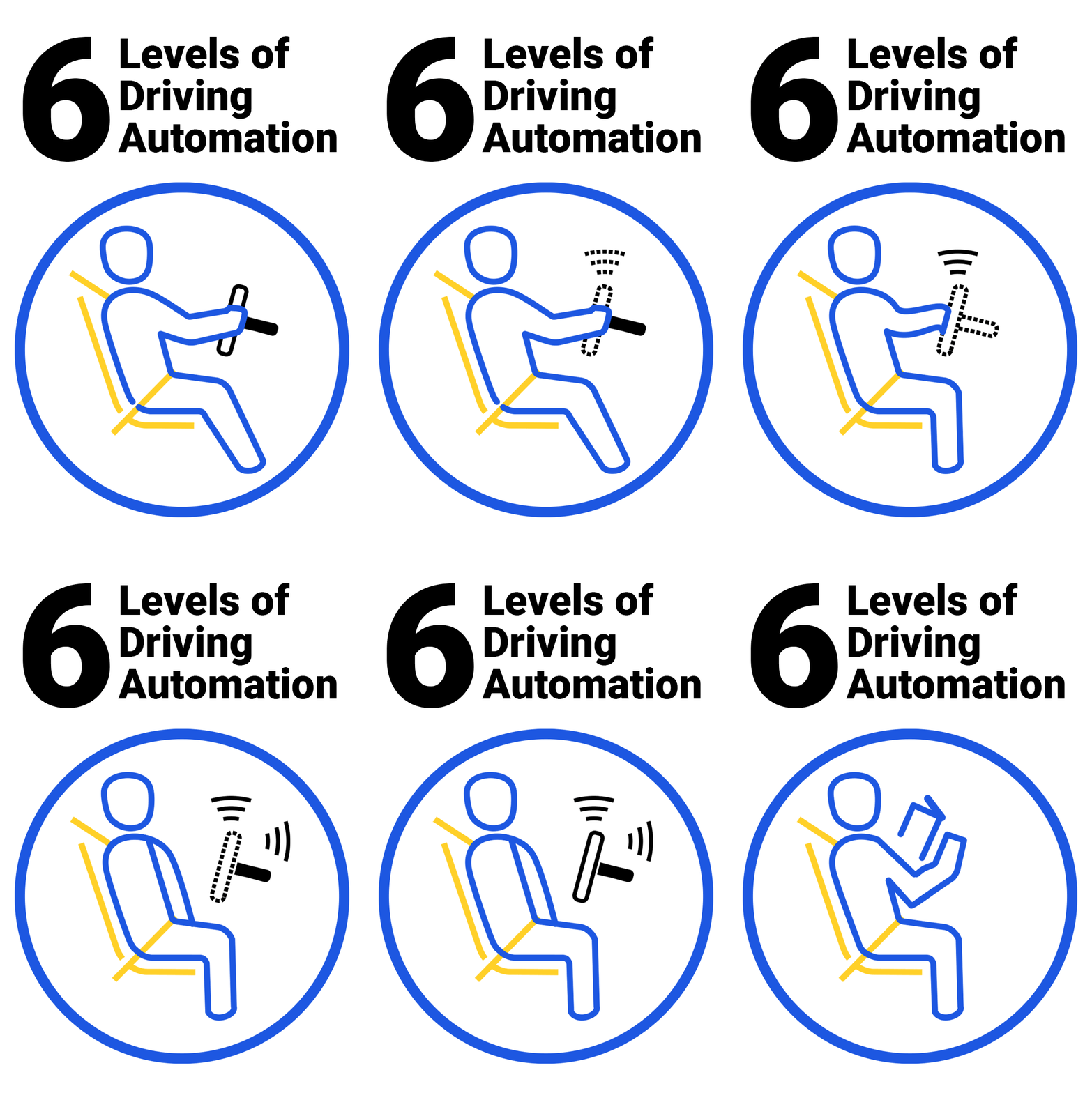 Autonomous vehicle technology leverages a combination of AI-powered algorithms, specialized cameras, and sensors to navigate and drive. These typically include lidar, radar, sonar, GPS, and inertial navigation systems. Self-driving cars analyze the data generated by these sensors to plot navigational paths and react in real-time by stopping, speeding up, slowing down, and avoiding objects.
Level 0: No driving automation
At Level 0, vehicles completely lack any driving automation technology. The driver is always engaged, and entirely responsible for operating the vehicle. This includes steering, accelerating, braking, parking, and any other necessary maneuverers or actions to drive or halt the vehicle.
Some Level 0 vehicles may offer limited or momentary driver assistance features, such as warnings and alerts, or even emergency safety interventions. However, these are not considered autonomous functions—so drivers must remain fully attentive and engaged. Examples of limited or momentary driver assistance include automatic emergency braking, forward collision warning, and lane departure warning.
Level 1: Driver assistance
At Level 1, automotive systems provide continuous assistance with acceleration, braking, or steering. Specific examples of Level 1 driver assistance technologies include adaptive cruise control and lane keeping assistance.
Level 1 driver assistance systems operating individually aren’t considered autonomous technology by either the SAE or US National Highway Traffic Safety Administration (NHTSA). However, adaptive cruise control and lane keeping assistance systems operating simultaneously qualify as Level 2 automation.
Both Level 1 and Level 2 technology require drivers to remain attentive and fully engaged when operating a motor vehicle.
Level 2: Partial driving automation
At Level 2, vehicles provide partial automation by continuously helping drivers with acceleration, braking, and steering. Level 2 vehicles are typically equipped with advanced driver assistance systems (ADAS) that can take control—in specific scenarios—over the above-mentioned functions.
In 2014, Tesla Motors announced its first version of Autopilot, which later expanded to support autonomous steering, braking, speed adjustment, and parking capabilities. In October 2020, Tesla rolled out the first version of its full self-driving beta (FSD Beta) software and continues to release updates at a steady cadence. Despite the introduction of additional features, Tesla’s Autopilot is still classified as Level 2 partial driving automation technology.
The Highway Driving Assist system is another example of real-world Level 2 partial driving automation. Highway Driving Assist systems are installed in vehicles manufactured by Genesis, Hyundai, and Kia. Although these cars require drivers to keep their hands on the steering wheel, the driving assist systems actively steer, accelerate, and brake when traveling on highways.
BlueCruise—a new hands-free partial driving system from Ford—is a third example of real-world Level 2 partial driving automation. BlueCruise allows drivers to take their hands off the steering wheel on certain approved highways in the United States and Canada.
Level 3: Conditional driving automation
At Level 3, vehicles autonomously handle all driving tasks. However, drivers must always be available to take the wheel if ADAS requires assistance or suddenly stops functioning effectively. Level 3 conditional driving automation systems have been developed by several major automotive companies, including Audi.
Although Audi never received approval for its traffic assistance technology, Honda managed to successfully sell a Level 3 traffic jam assistance system. Limited to Japanese roads and the Legend flagship sedan, the system was rolled out to drivers as an optional and paid upgrade.
In early 2022, Mercedes-Benz announced plans to introduce Level 3 autonomous driving capabilities in the U.S. Dubbed Drive Pilot, the technology—which was recently approved for use on certain German highways—supports speeds up to 60 kph (37 mph) and can be used to semi-autonomously navigate in heavy traffic or traffic jams. If approved, drivers will be able to take their hands off the steering wheel and stream videos, send e-mails, and communicate with colleagues.
Level 4: High driving automation
At Level 4, autonomous vehicle systems are completely responsible for all driving and navigational tasks. These self-driving cars can autonomously transport passengers who do not need to be engaged or ready to take control of the vehicle.
However, Level 4 high driving automation systems are typically limited to specific geographic locations—and cannot travel outside of designated service areas or during dangerous weather conditions. Level 4 high driving automation is particularly well suited for driverless taxis and buses on designated routes, trucks transporting goods within specific geographic boundaries, as well as airport passenger and cargo (luggage) shuttles.
Level 5: Full driving automation
At Level 5, autonomous vehicles take full control of all driving and navigational tasks. Passengers simply set a destination and can work, sleep, watch movies, and play games. In the future, vehicles equipped with Level 5 full driving automation systems will operate independently and universally in all weather conditions and roadways.
Infographic
What level of autonomy do most vehicles have now?
Most cars and trucks on the road today feature limited levels of autonomy that span Levels 0 to 2. However, automakers have already announced Level 3 autonomous driving cars—and are working to develop and deploy Level 4 self-driving trucks as well as commercial robotaxis. According to Accenture, vehicles with full-on self-driving capabilities could start hitting highways as early as 2030.
Self-driving cars reduce the risk of accidents and collisions by implementing safeguards, alerting drivers, and taking full control of a vehicle if necessary. Moreover, self-driving cars automatically detect and react to other vehicles, bicyclists, pedestrians, construction zones, potholes, traffic accidents, and traffic jams. Perhaps most importantly, self-driving cars enforce safety standards that may be deliberately or accidentally ignored by human drivers.
Additional Resources:
– Other blogs around automotive & security:
- Automotive Security: Protecting vehicle electronic systems
- Connected vehicles face cyber terrorism threat
- Autonomous Vehicles: Everything about self-driving cars explained
- AI Requires Tailored DRAM Solutions: Part 2
What is OTA in automotive? Over the air updates explained.
Over-the-air (OTA) programming refers to the ability to download applications, services, and configurations over a mobile or cellular network. Over-the-air (OTA) programming is used to automatically update firmware, software, and even encryption keys. Specific OTA categories include:
- Software over-the-air (SOTA)
- Firmware-over-the-air (FOTA)
- Over-the-air service provisioning (OTASP)
- Over-the-air provisioning (OTAP)
- Over-the-air parameter administration (OTAPA)
Here are some other subtopics we will cover in this article:
How do OTA updates work?
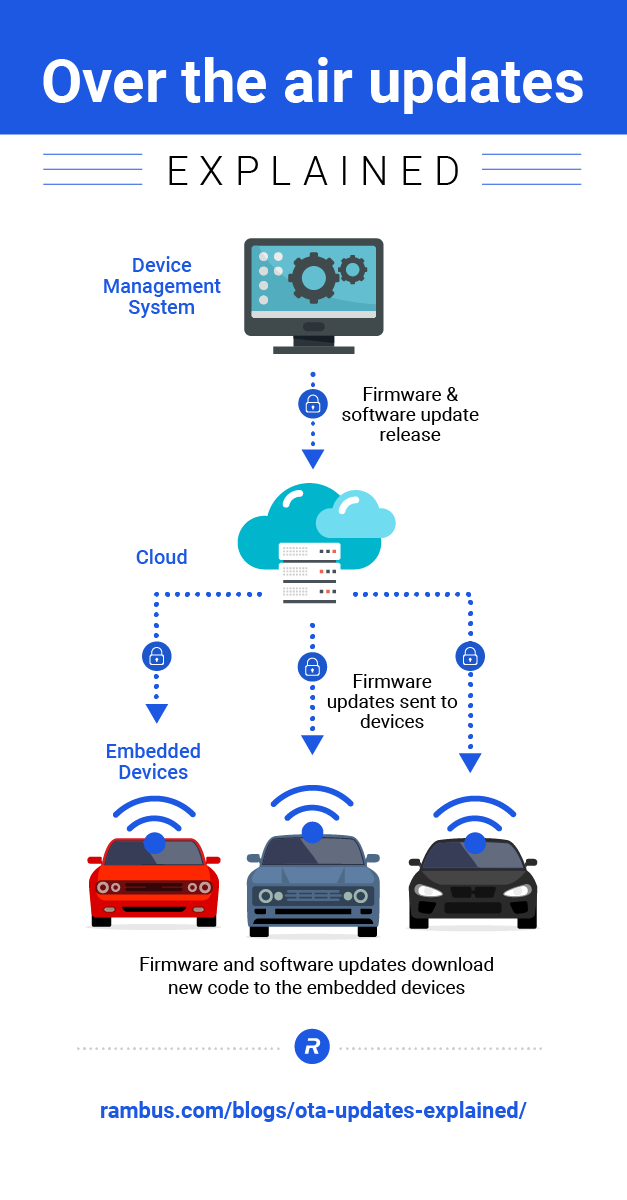
A device management system operated by the manufacturer issues a new software or firmware update. The update is uploaded to the cloud where it is queued, downloaded, and verified by the target device over a cellular or mobile connection. Once verified, the device typically triggers an alert that prompts the owner to approve or decline the update. After confirming approval—whether manually or automatically—the system installs the update and sends back diagnostic information to the manufacturer.
Software over-the-air updates are now quite common in the automotive market, with major vehicle manufacturers routinely rolling out SOTA upgrades for infotainment and navigation systems. SOTA can also update software controlling a vehicle’s physical components or electronic signal processing systems. In contrast to SOTA, firmware-over-the-air upgrades have only been implemented at scale by a small number of automotive manufacturers, including Tesla and NIO. This is because FOTA updates typically demand more computing power, faster mobile connections, and higher levels of security.
Most automakers are already designing vehicle hardware to support software updates. This enables manufacturers to shift to a revenue model that is based on services—rather than a one-time sale of a car or truck. According to Gartner analysts, half of the top 10 global automakers will offer unlocks and capability upgrades via software updates by 2023. It should be noted that Tesla began monetizing OTA upgrades in 2019 when it offered Model 3 owners an acceleration boost—from 4.6s to 4.1s—for $3,000.
How do connected cars get updates?
Most cars with infotainment systems can receive software updates. Some automotive operating systems, such as BMW’s OS 7/8, Mercedes MBUX, and Tesla, continuously scan for OTA updates in the cloud. Once identified, the update is downloaded, verified, and run by the telematics control unit (TCU) of a connected vehicle.
TCUs wirelessly connect cars and trucks to cloud services and other vehicles with V2X standards over a cellular network (4G/5G). The TCU also collects essential vehicle telemetry data, including geographical position, speed, vector, engine information, and connectivity strength.
Why would my car need a software OTA update?
OTA updates—which improve the driving experience and create safer roads—are delivered remotely and do not require a trip to a dealership or mechanic. These updates can be grouped into two primary categories: infotainment and drive control.
Infotainment updates refresh map information, upgrade audio capabilities, and optimize user interfaces, streaming services, and apps. Although infotainment updates significantly improve the in-car experience, they are not mission-critical.
In contrast, drive control OTA updates directly affect the ability of a vehicle to operate safely and efficiently. These updates typically include system enhancements or fixes for powertrain systems, chassis systems, brakes, and advanced driver assistance systems (ADAS). Drive control OTA updates—which may also improve range and charging for electric vehicles (EVs)—are generally considered critical or required.
Most automakers have already updated new vehicle hardware to support software updates. For example, Tesla pre-designs hardware and software to accommodate future function expansion requirements. New functions, along with full lifecycle updates, are introduced at a steady cadence via software upgrades.
How to address over-the-air automotive security challenges?
Unsecured automotive over-the-air updates are susceptible to multiple threats and attacks such as spoofing, tampering, repudiation, escalation of privileges, and information leakage. These threats can be mitigated by encrypting software updates; using a signed certificate containing the public key of the entity requesting the update; digitally signing updates after encryption; securing all network transactions with TLS public key authentication (signed by a trusted Certificate Authority); and (clients) performing hostname verification to ensure they are connecting a verified server.
Additional mitigation techniques include only delivering updates to authorized devices; the tamper-proof logging of all important events; the initialization of SOTA/FOTA updates with a secure boot mechanism; software update systems that are designed to “fail gracefully” in the case of a denial-of-service (DoS) attack; the utilization of anti-malware protection such as whitelists and in-memory protection; and ensuring that compliant SOTA/FOTA software update systems clear all shared resources of sensitive data and keys that were temporarily stored during software updates.
In addition to the above guidelines, the National Highway Traffic Safety Administration (NHTSA) has published official OTA update recommendations in its “Cybersecurity Best Practices for the Safety of Modern Vehicles” report. According to the NHTSA, vehicle manufacturers should:
- Maintain the integrity of OTA updates, update servers, the transmission mechanisms, and the updating process in general.
- Take into account, when designing security measures, the risks associated with compromised servers, insider threats, men-in-the-middle attacks, and protocol vulnerabilities.
What company makes the security technology for OTA updates?
Rambus automotive embedded hardware security modules (HSMs) can help manufacturers adhere to the NHTSA’s recommendations. In addition to securing SOTA/FOTA upgrades, these HSMs provide secure boot, secure debug capabilities, and work with other security functions such as MACsec, IPsec, and TLS embedded protocol engines to protect network traffic in cars. To operate properly, components such as electronic control units (ECUs) and other systems must run the manufacturer intended firmware—without tampering. A root of trust ensures firmware is valid and can be securely updated when needed.
Rambus offers embedded HSM (root of trust) variants for both ASIL-B (RT-640) and ASIL-D (RT-645) that are specifically designed for the functional safety requirements of ISO 26262, an international automotive electronics system standard. The Rambus RT-640 Embedded HSM recently received Automotive Safety Integrity Level B (ASIL-B) ISO 26262 certification. Certified ASIL-B compliance is a critical requirement for automotive manufacturers and their suppliers to ensure vehicle systems meet necessary safety levels. Integrated into an automotive SoC, the ASIL-B certified RT-640 silicon IP design provides powerful cryptographic functions, state-of-the-art safety mechanisms, and anti-tamper technologies to protect critical automotive electronics and data.
From a holistic perspective, Rambus end-to-end security solutions comprise a tightly integrated ecosystem that enables simple, rapid, and secure integration into automotive supply chains. Chips and devices can be securely provisioned at the time of manufacture with CryptoManager Provisioning and securely managed through cloud-based services over the entire lifetime of a vehicle. The cloud-based Rambus CryptoManager Device Key Management platform also enables automakers and partners to deliver Feature-as-a-Service (FaaS) by leveraging provisioned cryptographic keys and identities.
Additional Resources:
– Other blogs around Over-The-Air updates (OTA):
1. Securing connected vehicles with Rambus CryptoManager
2. Securing intelligent transportation systems
3. How not to get pwned @ automotive cyber-security
4. Securing chips for the IoT
5. Mitigating DDoS attacks with secure IoT endpoints
6. The challenge of securing smart homes
7. Hack the planet: Security concerns about the IoT
– White Paper: Navigating the Intersection of Safety and Security
– Market page: Automotive Solutions
– Products for Automotive Applications:
- RT-640 Embedded HSM ISO 26262 ASIL-B
- RT-645 Embedded HSM ISO 26262 ASIL-D
- MACsec Protocol Engines
- IPsec Protocol Engines
- MIPI CSI-2 Controller
- MIPI DSI-2 Controller